Table of Contents
- Kinesiology Tape vs Compression Sleeve for Daily Training
- Quick Comparison: Kinesiology Tape vs Compression Sleeve vs GO Sleeves
- Kinesiology Tape: Best for Directional Support and Competition Days
- Compression Sleeves: Best for Recovery and Swelling Management
- What Daily Trainers Actually Need: Movement Care
- GO Sleeves: Kinesiology Tape + Compression in One Sleeve
- Kinesiology Tape vs Compression Sleeve: Which Should You Use?
- How to Add Movement Care to Your Training Routine
- FAQs
- Train at Your Best. Every Day.
Kinesiology Tape vs Compression Sleeve for Daily Training
If you've been comparing kinesiology tape vs compression sleeve for your training, you're asking the right question. Kinesiology tape and compression sleeves solve different problems — and most comparison guides treat them as if you have to pick one. Tape gives you directional, proprioceptive support that guides how your joints move. Compression gives you steady pressure that reduces swelling and aids recovery. Both are useful tools. But they're built for different jobs.
If you train every day, you've probably used both — and hit their limits. Tape peels off by the second game. Sleeves bunch behind your knee during a deep squat. Neither is designed to work all day, every day, across full ranges of motion.
This guide breaks down exactly what each option does well, where each falls short, and why a growing number of athletes are using a third option — one that does both at the same time.
Quick Comparison: Kinesiology Tape vs Compression Sleeve vs GO Sleeves
| Kinesiology Tape | Compression Sleeve | GO Sleeves (Both) | |
|---|---|---|---|
| Directional Support | ✓ Yes | ✗ No | ✓ Yes |
| Compression | ✗ No | ✓ Yes | ✓ Yes |
| Full Range of Motion | ✓ Yes | Partial | ✓ Yes |
| Stays Put During Sweat | ✗ Peels off | Slides down | ✓ Grips skin |
| Safe for Daily Use | ✗ Skin irritation | ✓ Yes | ✓ Yes |
| Reapplication Needed | ✗ Every session | ✓ No | ✓ No |
| Works During Activity | ✓ Yes | Partially | ✓ Yes |
| Works for Recovery | ✗ No | ✓ Yes | ✓ Yes |
| Cost Over Time | $$$ (single use) | $ (reusable) | $$ (reusable) |
GO Sleeves are the only product on the market that combines embedded kinesiology strips with a compression sleeve in a single wearable. More on that below.
Kinesiology Tape: Best for Directional Support and Competition Days
Kinesiology tape creates directional pull on skin and fascia. When applied correctly along muscle fiber orientation or joint lines, it enhances proprioceptive feedback. Your nervous system gets clearer information about body position and movement quality.
For short-term directional support during competition or specific training sessions, tape serves this job well.
The challenge is daily use.
Where Kinesiology Tape Falls Short
Application takes time. Taping a knee properly requires 10–15 minutes and specific technique — cut the strips to the right length, apply with appropriate tension, smooth out wrinkles, position precisely along anatomical landmarks. Most athletes skip steps or guess at placement, which eliminates the benefit.
It falls off. Sweat, skin oils, and repeated joint flexion cause tape to peel within hours. By the end of a tournament day or long training session, edges are curling. By evening, it's bunched under your kneecap or wrapped around your calf.
Cost adds up quickly. Quality kinesiology tape runs $15–25 per roll. If you're taping daily for training, you're spending $50–100 monthly on a single joint. Multiple joints? The expense compounds fast.
Skin gets irritated. Daily application and removal damages skin. Athletes with sensitive skin develop reactions to adhesive. The areas where tape contacts skin most frequently become raw or inflamed.
Tape provides excellent directional support for single events or competitions. It's a short-term tool, not a daily one.
Compression Sleeves: Best for Recovery and Swelling Management
Compression sleeves apply uniform pressure around a joint. This reduces swelling by encouraging fluid movement out of the area. The snug fit provides warmth and psychological comfort.
For post-workout recovery or managing existing inflammation, compression serves this job well.
Where Compression Sleeves Fall Short
Standard compression doesn't guide movement quality. Most traditional compression sleeves apply the same pressure in all directions. While this provides some proprioceptive feedback from the snug fit, it doesn't give directional guidance about joint alignment or movement patterns. You get general awareness but no specific cueing to help correct tracking issues.
Range of motion suffers. Tight elastic material bunches behind joints during deep flexion. Volleyball players report restrictions getting low for digs. Weightlifters feel it in the bottom of squats. Basketball players notice it during defensive stances.
Sleeves migrate during hard work. Most compression sleeves slide down the leg during sprints, jumps, or changes of direction. You're constantly hiking them back up.
Compression provides useful support for recovery and swelling management. It's a post-activity tool — not a during-movement one.
What Daily Trainers Actually Need: Movement Care
Tape helps when you need directional cueing. Compression helps when you need recovery support. But if you're training every day, you need something that works every day. That's movement care.
Movement care is the practice of maintaining optimal tissue health and joint function before problems develop. It's proactive, everyday care for people who keep moving.
Think about dental care. You brush your teeth twice daily to prevent cavities. You don't wait for decay to start. Daily maintenance prevents the crisis.
Movement care works the same way — supporting your body's mechanics continuously, during training, between sessions, and throughout recovery, so inflammation and dysfunction don't develop in the first place.
GO Sleeves: Kinesiology Tape + Compression in One Sleeve
GO Sleeves addresses the daily movement care job that tape and compression aren't designed to handle — by combining both technologies in a single sleeve.
Embedded silicone patterns create directional fascial stretch. The patterns align with muscle fiber orientation and joint lines, providing proprioceptive enhancement similar to kinesiology tape. As you move, the silicone grips skin and creates focal tension points that improve nervous system feedback about position and alignment. You get directional support without daily reapplication.
Graduated compression supports both circulation and mobility. Instead of uniform pressure, the design uses directional compression and graduated zones — higher pressure at specific support points, lighter pressure where mobility matters most. This maintains full range of motion while supporting healthy tissue function.
Adhesive backing keeps the sleeve locked in place. The silicone patterns grip skin without slipping, even during hours of sweating and intense movement. No migration. No constant adjustment.
The Georgetown College study validated these design principles. Athletes wearing GO Sleeves showed 28% lower pain scores compared to standard support options. User surveys reinforce this — 60% reported less pain and 58% experienced reduced inflammation.
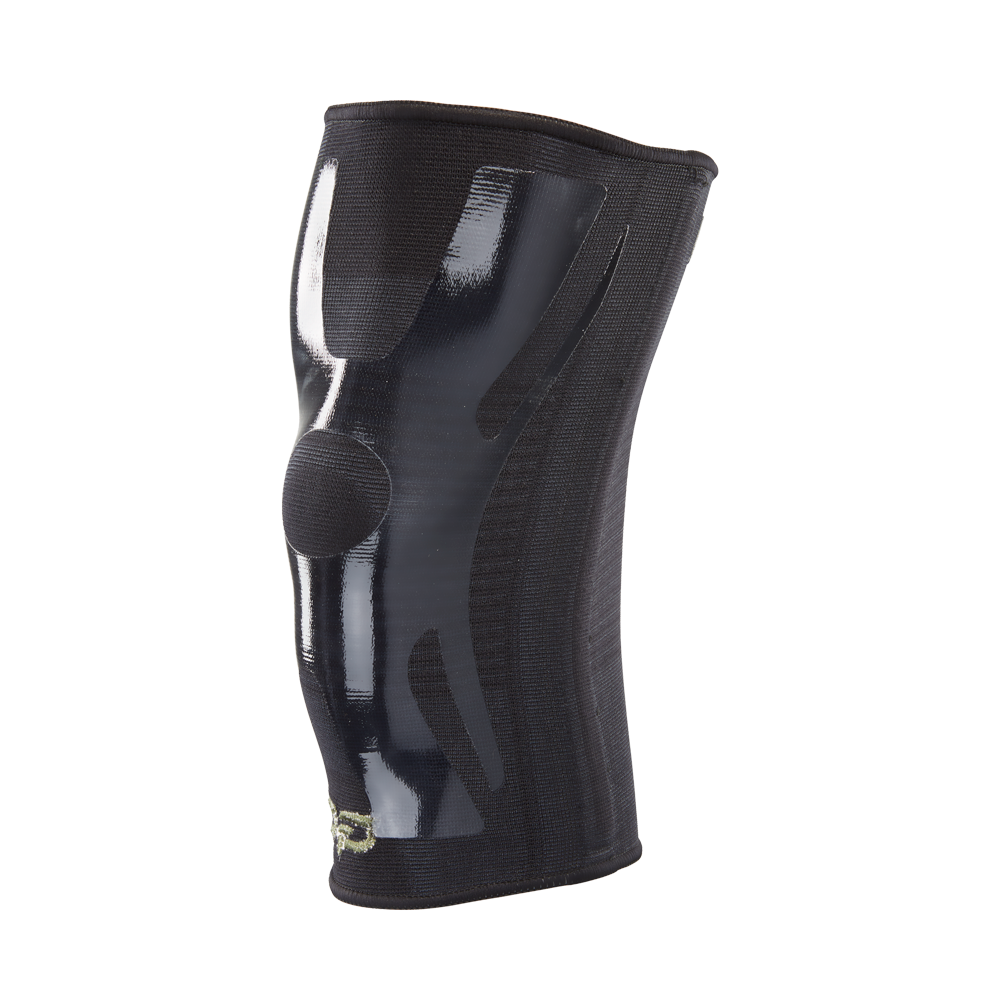 GO Sleeves combine embedded silicone kinesiology strips with graduated compression — delivering the benefits of kinesiology tape and a compression sleeve in a single reusable product.
Kinesiology Tape vs Compression Sleeve: Which Should You Use?
The right support depends on what you're trying to accomplish.
Use kinesiology tape for:
Short-term directional support during competition or important events
Specific taping protocols under physical therapy guidance
Targeted intervention for known tracking issues during rehab
Use a compression sleeve for:
Managing post-workout swelling between training sessions
Warmth and light support during low-intensity recovery work
Situations where you don't need deep ranges of motion
Use GO Sleeves for:
Daily training when you need consistent support across sessions
Support that works for hours without reapplication or adjustment
Preventing problems through better mechanics, not just managing existing pain
Activities demanding full mobility combined with proprioceptive enhancement
How to Add Movement Care to Your Training Routine
Movement care works best when integrated into your existing training schedule.
Before activity: Put sleeves on 20–30 minutes before training. The fascial manipulation begins working. By the time you start your warm-up, proprioceptive feedback is already enhanced.
During training: The embedded patterns help maintain better joint tracking as fatigue sets in. You're supporting good movement patterns under load.
Between sessions: For tournament days or multiple workouts, keep sleeves on between activities. You stay warm without restricting circulation.
Recovery periods: When dealing with acute inflammation after hard sessions, wear sleeves overnight. The enhanced lymphatic drainage works while you sleep. You wake up with reduced swelling.
Post-injury support: As you return from injury, sleeves provide proprioceptive feedback that helps reestablish good mechanics.
Tape still has value for competition-day support. Compression still works for targeted recovery. Movement care becomes what you do daily — the system that keeps you training consistently.
FAQs
Kinesiology tape vs compression sleeve: which is better for knee pain?
It depends on the type of knee pain. Kinesiology tape is better when you need directional support that guides joint tracking — useful for issues like patellar misalignment or IT band tightness. Compression sleeves are better for reducing post-workout swelling and providing warmth during recovery. For daily training, GO Sleeves combine both approaches in one product, making them more practical than using either alone.
Can you wear a compression sleeve every day?
Yes, most compression sleeves are safe for daily use. The main limitation for athletes is that standard compression sleeves can restrict range of motion during intense activity and tend to migrate during sprints or jumps. A sleeve with embedded kinesiology support — like GO Sleeves — is specifically designed for all-day, every-day wear because the silicone patterns grip the skin and stay put.
How long does kinesiology tape last on your knee?
Kinesiology tape typically lasts 3–5 days under normal conditions, but that drops significantly for athletes. Sweat and repeated joint flexion cause the edges to lift within hours of intense activity. Most athletes find they need to re-tape between sessions during multi-day tournaments, which adds up in both time and cost. Compression-kinesiology sleeves avoid this problem entirely.
Can you use kinesiology tape over a compression sleeve?
Technically yes, but it's not effective. Kinesiology tape needs direct contact with skin to create the fascial pull that generates proprioceptive feedback. Applied over a sleeve, the tape loses most of its directional effect. GO Sleeves solve this problem by building the kinesiology function into the sleeve itself through embedded silicone strips.
What's the difference between a knee sleeve and a knee brace?
A knee brace uses rigid or semi-rigid components to restrict joint movement — useful after ligament injuries or surgery when stability is the priority. A knee sleeve is flexible and works by providing compression, warmth, and proprioceptive feedback without limiting range of motion. Athletes typically prefer sleeves during training because they don't restrict the movement patterns needed for sport.
Are GO Sleeves the same as kinesiology tape?
No — but they do the same job, and more. Kinesiology tape creates directional support through adhesive strips applied directly to skin. GO Sleeves replicate this through embedded silicone patterns inside the sleeve that grip skin and create directional fascial stretch as you move. The difference is that GO Sleeves also provide graduated compression, don't require daily reapplication, and stay in place during athletic activity in a way that tape doesn't.
Train at Your Best. Every Day.
You've worked too hard to have knee pain sideline your game. Whether you're playing five sets of volleyball, grinding through back-to-back basketball practices, or putting in miles on the road — your body needs support that keeps up with you.
GO Sleeves are the only knee sleeve that combines embedded kinesiology strips with graduated compression in a single product. The result: directional support that guides your joint tracking, compression that keeps blood and lymphatic flow moving, and a grip that doesn't quit even deep in the fourth quarter.
No re-taping between games. No bunching behind your knee during a defensive stance. No choosing between mobility and support.
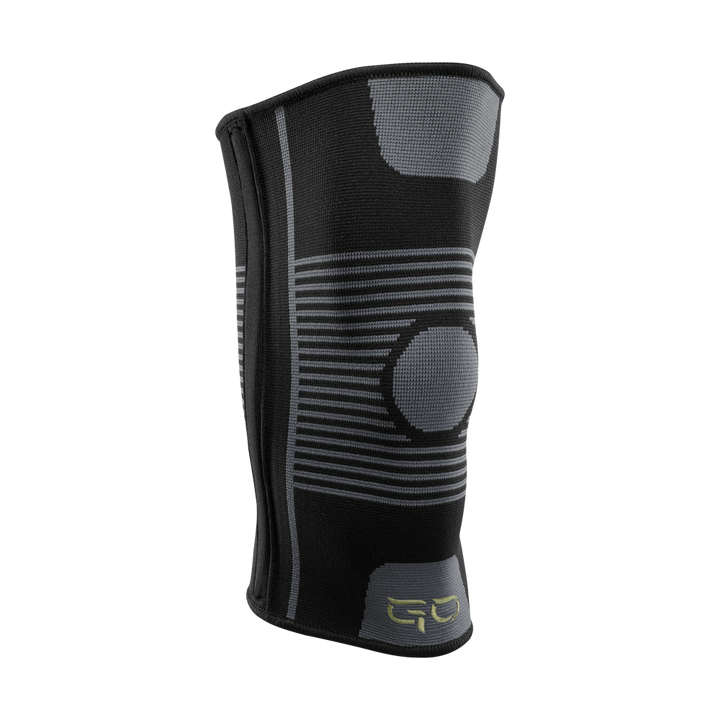
GO Sleeves for Knee — Built for Athletes Who Train Every Day
The embedded silicone kinesiology patterns target patellar tracking, quad support, and key ligaments — the same approach prescribed by physical therapists, without the single-use tape.
GO Kinesiology + Compression Knee Sleeve
$89.95
Don’t let knee pain sabotage your plans! Reduce pain, swelling, and soreness in and around your knee—and accelerate your body’s ability to recover and rebound so you can keep moving. Unlike compression sleeves which just compress, GO Sleeves® Knee Sleeves… Read More
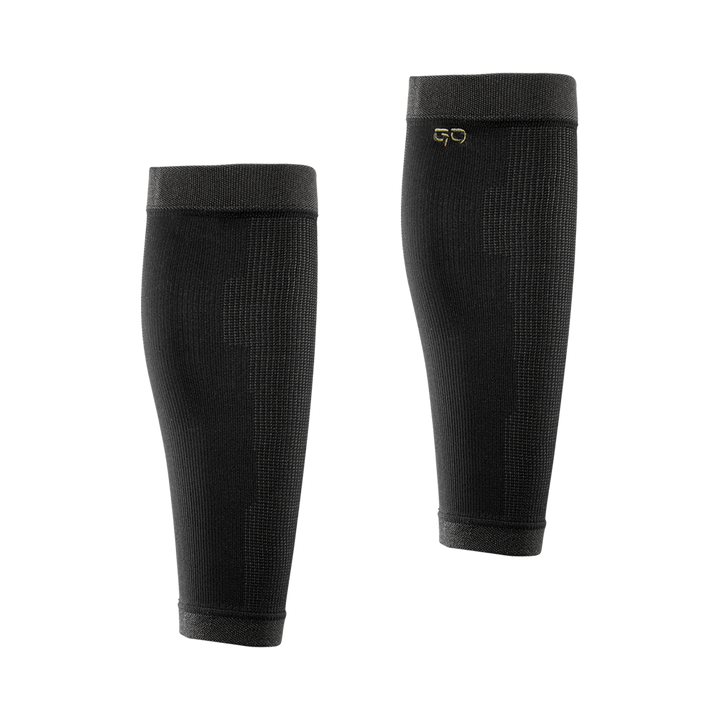
GO Sleeves for Calves — Protect Your Achilles Through Every Stride
Maintain Achilles health and enhance proprioception during running, jumping, and cutting. Designed for athletes who spend hours on their feet.
GO Kinesiology + Compression Calf Sleeves
$99.95
Just pull them on, and off you go! GO Sleeves® Calf Sleeves are the world’s only compression sleeves with built-in kinesiology strips to secure, correct, and support key ligaments, tendons, and muscles in and around your calf and shin. Unlike… Read More
GO Sleeves for Elbow — Stay in the Game, Not on the Sideline
Reduce tendon stress during throwing, lifting, and overhead movements. Built for the pickleball player, the tennis player, and the lifter who refuses to back off.
GO Kinesiology + Compression Elbow Sleeve
$89.95
Accelerate recovery and reduce pain, swelling, and soreness related to Golf and Tennis Elbow with the world’s only compression sleeves with built-in kinesiology strips to secure, correct, and support key ligaments, tendons, and muscles in and around your elbow. Unlike compression… Read More

45-day risk-free trial. Free size exchanges. Free shipping over $40.
Medical Disclaimer: The information provided in this article is for educational purposes only and does not constitute medical advice, diagnosis, or treatment. Always seek the advice of your physician or other qualified health provider with any questions you may have regarding a medical condition or injury.