Table of Contents
What's the pro-athlete secret for faster calf muscle recovery, better endurance, and less pain? Tendon and ligament support with muscle compression. It’s not magic, it’s science.
When running, working out, or performing in high-intensity activities, your muscle fibers and their surrounding connective tissues undergo microscopic damage and inflammation. This happens especially after a new workout or doing activities you aren’t used to. It’s commonly called Delayed Onset Muscle Soreness, or DOMS. Muscle soreness usually begins 6-8 hours after activity and can last up to 24-48 hours after exercise. This kind of pain is a good thing, it’s a sign you’re getting stronger. As the fibers repair themselves, they become larger than before. That repair process is exactly what calf muscle recovery depends on — and it's also exactly what you can speed up.
However, pro-athletes and people with high-performance goals don’t have time to wait around for sore muscles to recover. Here are a few tips even everyday athletes can put to work to work for them.
Tip 1: Muscle Compression
Leg compression sleeves do a few things to aid in faster calf muscle recovery and pain relief:
- First, they combat the effects of gravity by helping blood get back to the heart and lungs for nutrients and oxygen. Blood can’t pool where it’s being squeezed.
- Second, compressing muscles causes the veins to dilate, which increases the amount of blood flowing through your muscles. The more fresh blood your muscles have, the more nutrients and oxygen they get. At the same time, lactic acid, waste products, and low-oxygenated blood are more quickly removed. Simply said, compression helps good blood get in and bad blood get out.
- The third benefit of compression is that it extends your endurance. During activity, your muscles get fatigued, which often results in a shorter workout time. Compression reduces vibration and prevents swelling, giving you more time to train at peak performance.
We’re only halfway there – now let’s talk about support.
Tip 2: Kinesiology Tape
Since the 1970’s, athletes have used kinesiology tape, or KT or Rock Tape, to reduce pain and swelling while providing support to tendons, ligaments, and muscles. The elasticity and stickiness of kinesiology tape lifts the skin from the tissues below it. This causes nerve receptors in the skin to alter signals to the brain. Even with limited tension, kinesiology tape lets you turn “off” and turn “on” muscles so that you don’t receive pain signals while strengthening or relaxing specific muscles. Sounds magical, doesn’t it? We’re not making this up. There are plenty of studies (here’s one) that demonstrate the benefits of improved strength and range of motion that athletes have experienced while using kinesiology tape.
Tip 3: GO Sleeves Combines Both
Here's the problem with choosing between compression and kinesiology tape: you shouldn't have to.
Compression handles blood flow, swelling, and endurance. Kinesiology tape handles pain signaling and muscle activation. Most athletes either pick one or juggle both — wearing a compression sleeve for training, then separately taping up for extra support, reapplying that tape every few days as it wears out or peels.
GO Sleeves Calf Sleeves build both into a single product. The graduated compression does the job of a traditional compression sleeve — supporting blood flow, reducing swelling, and extending endurance during activity. At the same time, built-in silicone kinesiology strips replicate the skin-lifting, nerve-signaling effect of kinesiology tape, without the reapplication, the adhesive residue, or the recurring cost of buying new rolls.
You get the calf muscle recovery benefits of both methods, in one sleeve you can wear repeatedly for months instead of days.
Your Calf Muscle Recovery Protocol
Compression and kinesiology support work best when you actually use them consistently, not just after a hard workout when your calves are already screaming.
Before activity: Put your GO Sleeves Calf Sleeves on 20-30 minutes before training. This primes proprioceptive feedback and gets graduated compression working before your muscles take on load, not after.
During activity: Keep them on through your workout, run, or competition. The compression reduces vibration and muscle oscillation with every stride, which is exactly what delays fatigue and protects against the microtrauma that leads to DOMS in the first place.
After activity: This is where most people stop, but it's actually one of the most important windows. Keep your sleeves on for 1-2 hours post-workout while you're still moving around — walking, stretching, or just going about your day. The continued compression helps flush metabolic waste and lactic acid out of the muscle faster than rest alone.
Consistency matters more than any single session. Athletes who build this into their routine recover faster session over session, not just after one particularly hard workout.
FAQs
How long does calf muscle recovery usually take after a hard workout?
DOMS typically peaks 24-48 hours after activity and resolves within a few days as muscle fibers repair themselves. Wearing compression consistently during and after training can shorten that window by helping flush waste products and maintain blood flow to the area.
Should I wear compression sleeves even when my calves aren't sore?
Yes — compression works best as a proactive tool, not just a reactive one. Wearing GO Sleeves Calf Sleeves during activity helps prevent the vibration and swelling that lead to soreness in the first place, rather than only treating it after the fact.
Is kinesiology tape better than a compression sleeve for calf recovery?
They're not competing tools — they work through similar mechanisms (skin stretch to influence nerve receptors and support tissue), but a sleeve provides both that effect and compression in one reusable product, without the reapplication tape requires.
Can compression sleeves actually improve athletic performance, or just recovery?
Both. By reducing vibration and swelling during activity, compression can extend how long you train at peak effort before fatigue sets in — which is part of why pro athletes wear them during competition, not just after.
How do I know if my calf pain is normal DOMS or something more serious?
Normal DOMS is a dull, generalized soreness that peaks within 1-2 days and improves with movement. Sharp, localized pain, sudden onset with a "pop," or pain that doesn't improve after several days may indicate a strain or tear and warrants seeing a doctor.
The Bottom Line
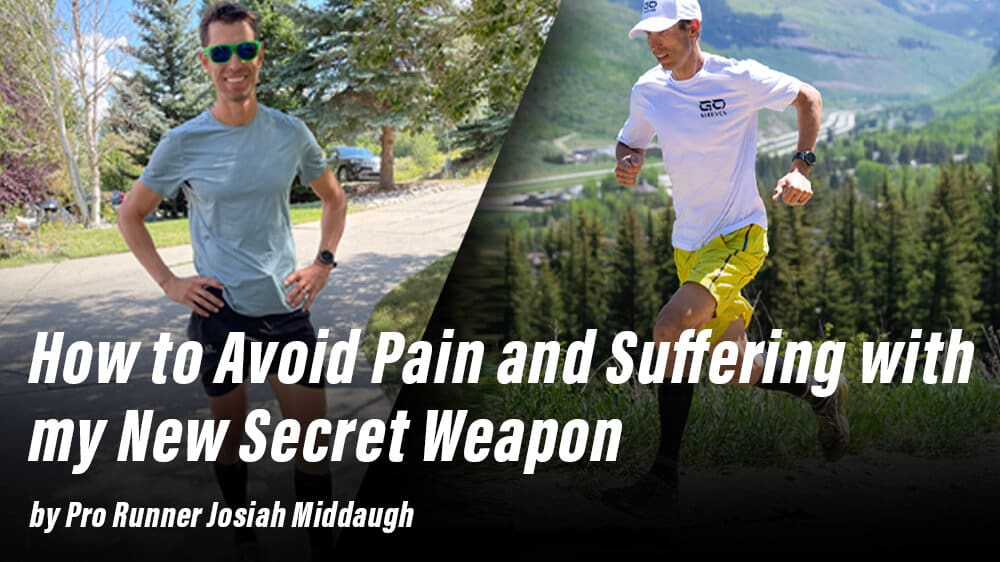
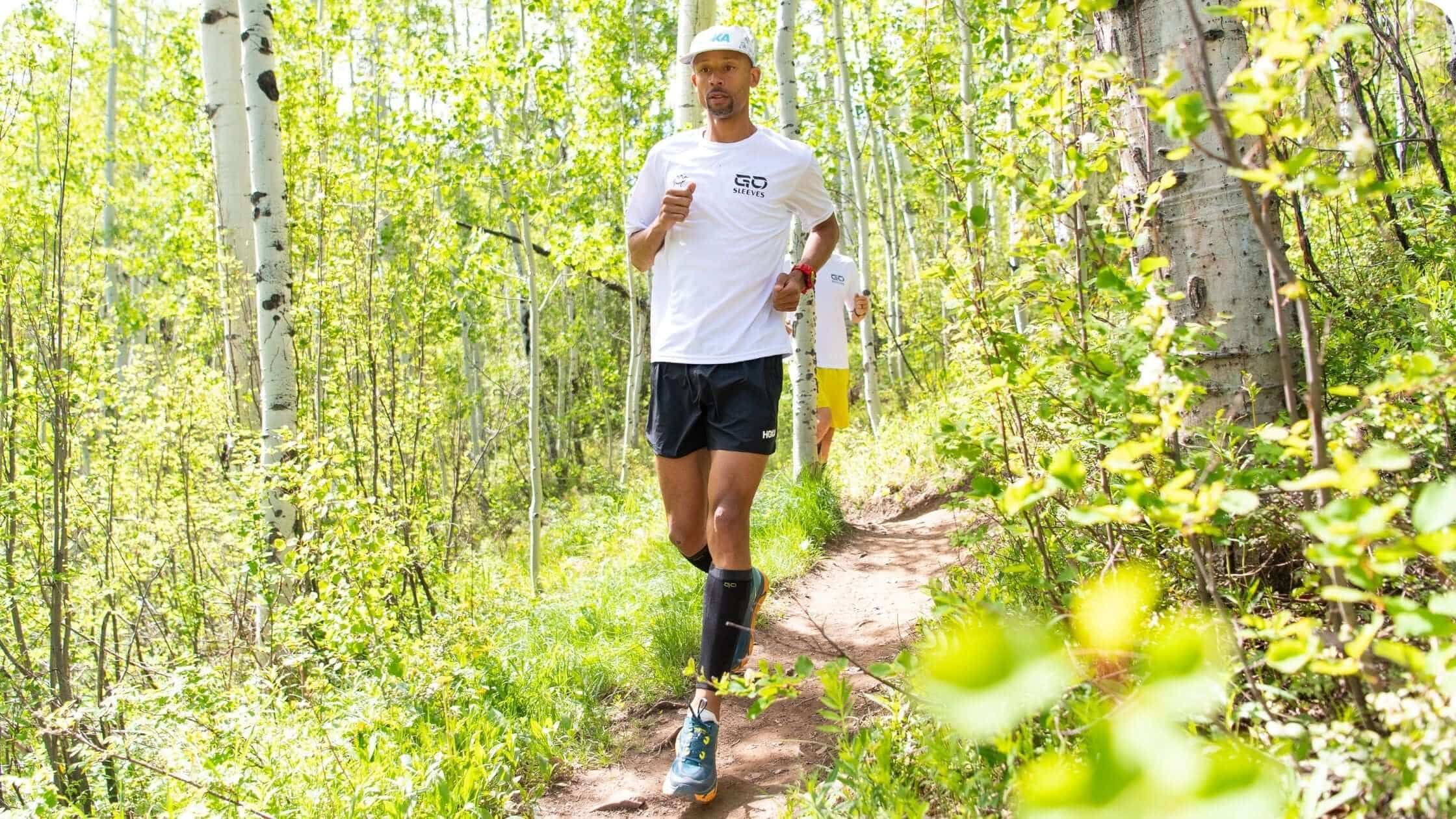
Pro-athletes use both methods. World Champion Runner Joseph Gray and Professional Triathlete Josiah Middaugh, both members of the GO Sleeves family, both use GO Sleeves Calf Sleeves during training, recovery, and competition to support muscles and tendons, aid in a speedy recovery, resulting in training at high levels of consistency.
Both exceptional athletes credit GO Sleeves for helping them train harder, faster, and for longer periods of time. When it comes to their individual experiences with GO Sleeves, Joseph is regularly using the Calf Sleeves to alleviate soreness from high-volume training and accelerate post-workout recovery. He also uses GO Sleeves Knee Sleeves to fight inflammation as needed. Josiah similarly uses the products to mitigate calf muscle and Achilles tendon tightness and to accelerate recovery.
GO Sleeves is the first and only compression product to incorporate the same kinesiology taping technology used by doctors, chiropractors, and physical therapists to support key joints, ligaments, and tendons. Athletes get all the benefits of a physical therapist’s tape session without the recurring cost of an office visit and/or tape applications. That combination — compression plus kinesiology support — is what real calf muscle recovery looks like for athletes who can't afford downtime.
Medical Disclaimer: The information provided in this article is for educational purposes only and does not constitute medical advice, diagnosis, or treatment. Always seek the advice of your physician or other qualified health provider with any questions you may have regarding a medical condition or injury. Never disregard professional medical advice or delay in seeking it because of something you have read on this website.