Table of Contents
- "Go the Distance" Was Playing When the Dog Hit
- From Runner’s Knee to High-Performance Training
- Why He Switched from KT Tape to a Calf Compression Sleeve
- Training with Calf Sleeves: Performance and Prevention
- The Moment That Put It to the Test
- After a dog bite mid-run, Joe’s sleeve showed the impact — his leg didn’t.How a 2:39 Marathoner Uses Calf Sleeves Today
- Come Along on Joe's Training Journey
- Who Should Consider a Calf Compression Sleeve for Running
- FAQs
For runners logging high mileage, the right calf compression sleeve for running can make the difference between consistent training and recurring injury.
Joe Berg is a 2:39 marathoner who relies on a calf compression sleeve for running to support performance, recovery, and injury prevention. He runs 70 miles per week and has been wearing GO Sleeves since 2022 as part of his training and recovery routine.
While most runners think in terms of compression, Joe wasn’t looking for another standard sleeve — he was looking for something that actually supported how his body moves.
This is his story — from managing runner’s knee and calf pain to an unexpected moment that put his gear to the ultimate test.
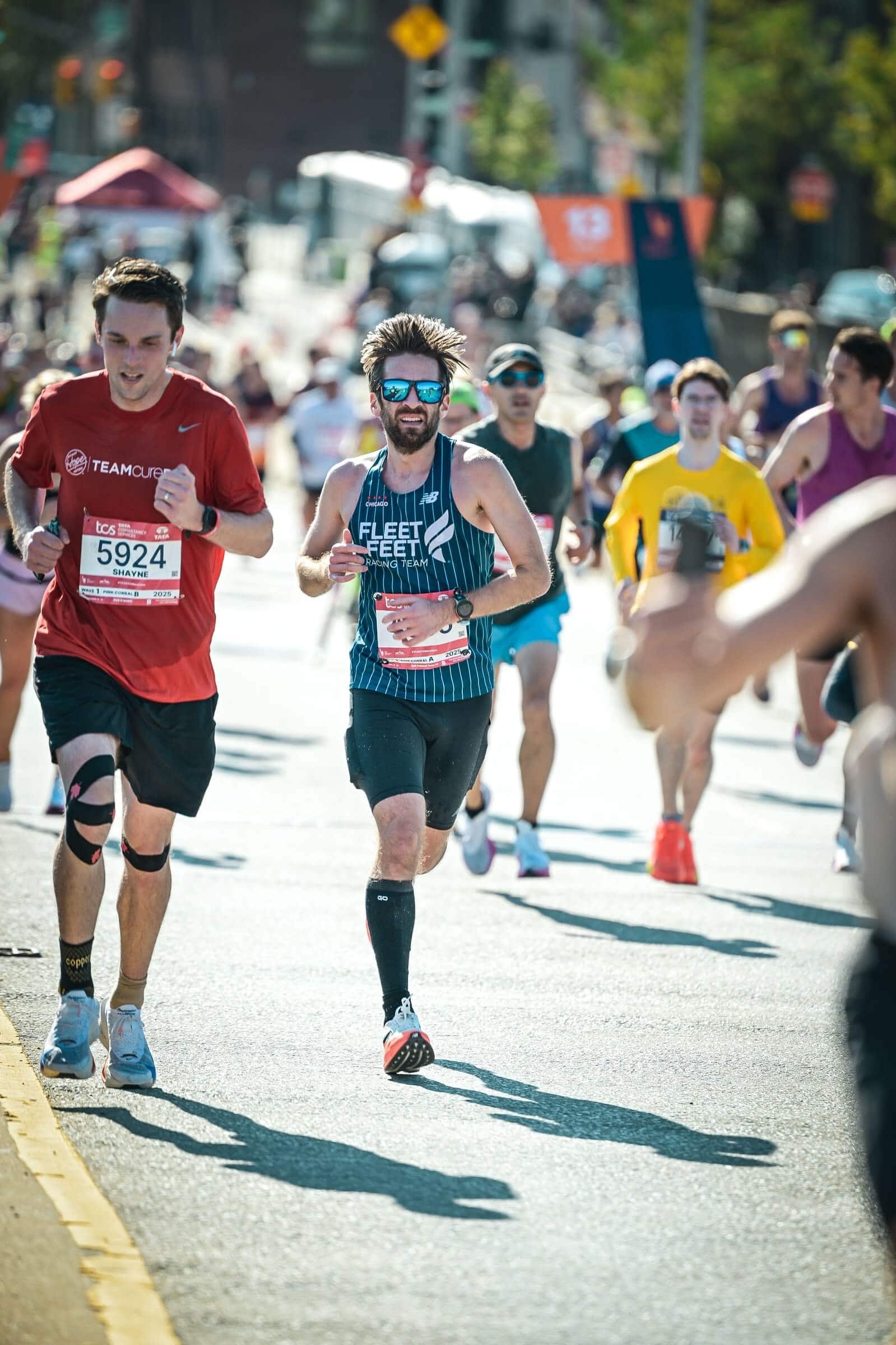 Joe has worn GO Sleeves consistently since 2022 during marathon training.
"Go the Distance" Was Playing When the Dog Hit
Joe Berg was less than 20 seconds into an eight-mile Tuesday morning run when the leash snapped.
He heard the dog before he saw it — paws on the pavement behind him, closing in fast. By the time he turned, the teeth had already found his left calf. He felt the pressure, the clamp of the bite, and then something strange: nothing else. No searing pain. No wet feeling. He stood there on a quiet suburban street in the Chicagoland area while the owner scrambled to regain control, "Go the Distance" from Rocky still playing in his headphones, and looked down at his leg.
The sleeve had a hole in it. His skin did not.
"I could feel the bite," Joe told us. "But I don't see any blood. Not even a faint mark. Not even a scratch. And I'm looking at this giant hole in the sleeve thinking — they're going to think I'm making this up."
From Runner’s Knee to High-Performance Training
At a 2:39 marathon, Joe is not experimenting. He’s precise about what he keeps and what he throws out.
He ran a 3:30 his first time, convinced himself he could break three hours, and spent the next six years finding out exactly what that would require — a personal coach, 70-mile weeks, two physical therapists, a calf injury that nearly pulled him from the New York Marathon, and a lot of Tuesday mornings before most people are awake. He has run Chicago, Berlin, Boston, and New York. He is currently training for Grandma's Marathon in June, with London and Tokyo still on his list.
He has been wearing GO Sleeves since 2022.
Why He Switched from KT Tape to a Calf Compression Sleeve
That part started with runner's knee — the kind that nags through PT appointments and refuses to fully resolve. He tried compression sleeves. None of them held up on a run, and none of them addressed what KT tape addressed, which was the tracking pattern at the knee itself. The problem with KT tape was the leg hair, and the second-guessing: did I put this on right? Is it shifted? He kept researching. One night, a Google search for KT tape brands surfaced a compression sleeve with kinesiology taping technology built into the fabric.
"I'm like, why am I getting an ad for a compression sleeve? And then I read the description and I'm like — oh my God, that is genius. Why don't more companies do this?"
He ordered it. Within three to four weeks, the runner's knee was gone. He gave that first sleeve to his father before the Berlin Marathon when his dad's arthritis flared. He never got it back. "I'm not getting that back, am I?" He bought another knee sleeve without a second thought.
Training with Calf Sleeves: Performance and Prevention
The calf sleeves came later, when a sharp left calf pain appeared at the end of a ten-mile run during New Zealand training — the kind that starts manageable and comes back twice as bad the next day. He was registered for a half marathon through the Hobbiton set from Lord of the Rings, a hilly farm course where the terrain never flattens, and he had been specifically told to avoid hills during calf recovery. He went on the GO Sleeves website at 11pm and ordered immediately. He finished that race. He kept wearing the sleeves after it — not because the calf pain lingered, but because the compression felt right and the precaution felt smarter than going without.
"Even though I wasn't really experiencing calf pain, I still kept wearing them. One, as a precaution, and two — I actually really liked what they gave me."
That was three years ago. He still has that original pair.
The Moment That Put It to the Test
Back to Tuesday morning.
After the bite, Joe walked back to his house two doors away, grabbed his phone, and called the police while he took the sleeve off to look at his leg. The officer who arrived was skeptical. So was the second one. Joe held up the sleeve with the hole in it and tried to explain: this is not a normal calf sleeve, and it just saved me from going to the hospital.
"They're looking at my leg going, where did you get bit? I'm like — exactly."
The dog owner showed up at Joe's door later that day to apologize again and promised a new leash. The bite was reported to the county, as required. There were no charges. There was no hospital visit. There was no mark on Joe's leg.
The police left. Joe laced back up and went out to finish his run — this time wearing one sleeve from the replacement pair he'd just ordered and one from the original pair he'd had for three years. He got four miles in, stopped, looked at his leg one more time, and still saw nothing.
"It had to be because I was wearing this sleeve. The dog bit into it, ripped it down, ripped a hole in it — but because I was wearing that, I saved myself a trip to the hospital. And I definitely wouldn't have been able to do my run."
He finished the eight miles.
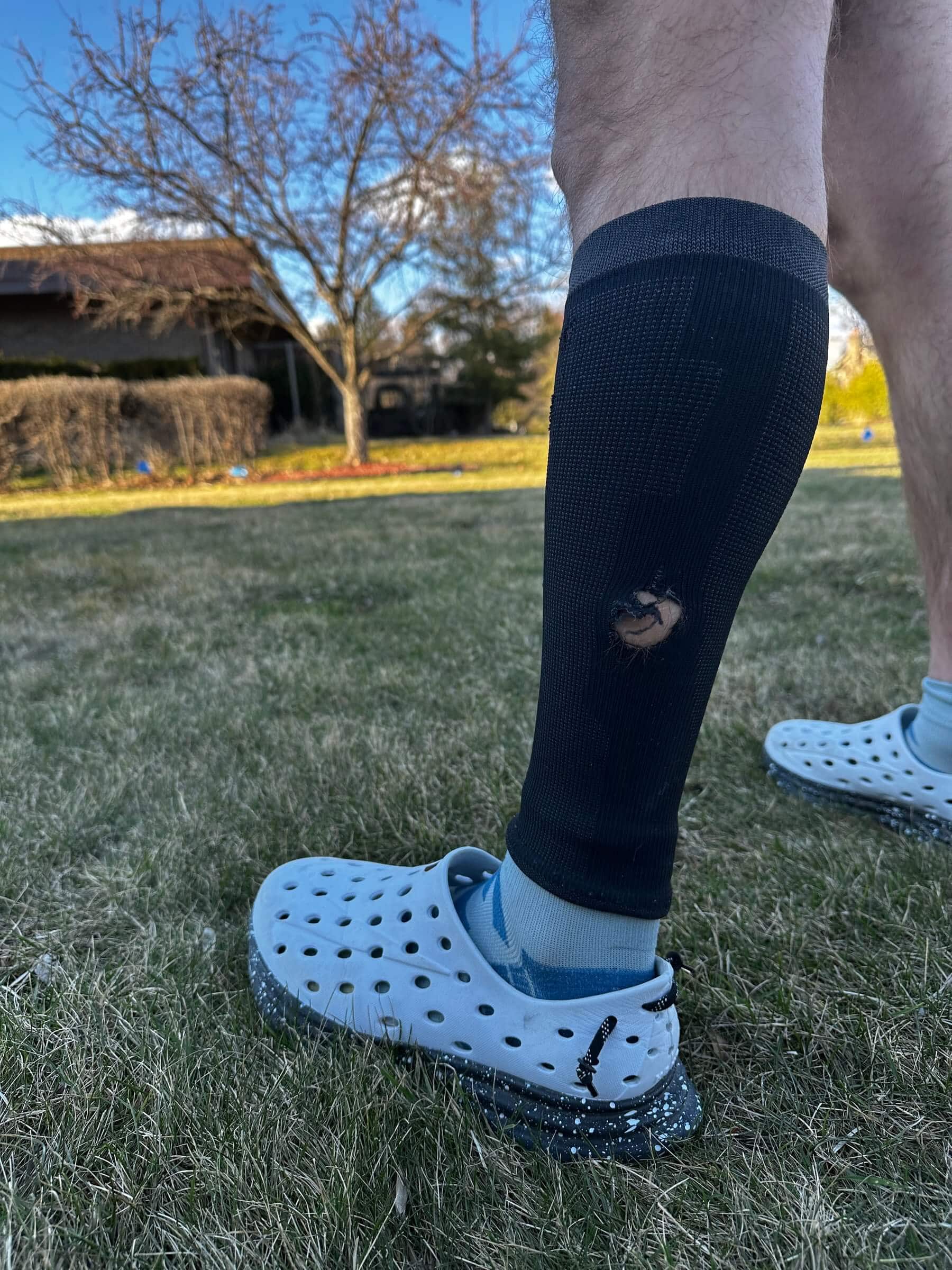 After a dog bite mid-run, Joe’s sleeve showed the impact — his leg didn’t.
How a 2:39 Marathoner Uses Calf Sleeves Today
After a dog bite mid-run, Joe’s sleeve showed the impact — his leg didn’t.When we asked him what keeps him going — what a 2:39 marathon is actually about at this point — he didn't hesitate for long.
"To get better. And to see how far I can go with this. If my limit's not three hours or 2:55, then what is it? That's something I want to discover."
He still runs 70 miles a week. Wednesdays are always hard — intervals or tempos, sleeves always on. Long runs on Saturdays, currently sitting at 18 miles as Grandma's gets closer. Easy days he reads how the legs feel and decides from there. The sleeves go on first thing in the morning if he didn't sleep in them, stay on through the run, and often stay on through the rest of the day until he doesn't feel like he needs them anymore.
We asked what he tells other runners when they ask about the sleeves. He said he's had the conversation plenty of times with runners dealing with recurring calf problems.
"I say, hey, these sleeves I'm wearing right now aren't normal compression sleeves. They're much more than that. And then they're like, wait, really?"
He said the same thing to the police officers on a Tuesday morning in the Chicagoland suburbs, standing on the sidewalk in his running kit with a hole in his sleeve and not a scratch on his skin.
They believed him eventually.
Come Along on Joe's Training Journey
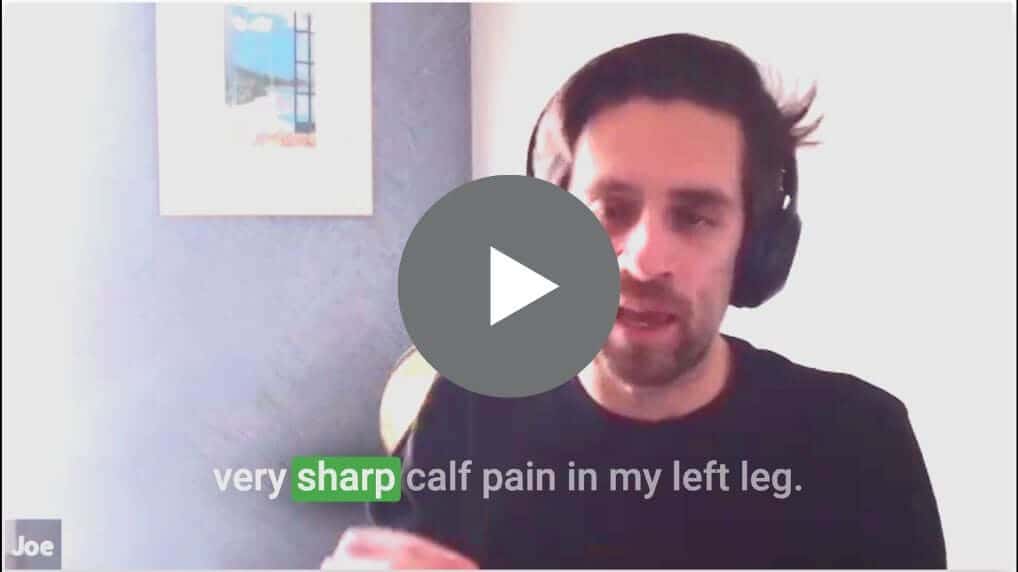
Hear directly from Joe — a 2:39 marathoner — as he shares how GO Sleeves helped him keep running through calf pain and stay consistent in his training.
Who Should Consider a Calf Compression Sleeve for Running
Runners like Joe aren’t looking for shortcuts — they’re looking for consistency. A calf compression sleeve for running may be especially helpful for:
- Runners managing recurring calf tightness or strain
- Marathon training at higher mileage (40–70+ miles per week)
- Athletes transitioning from KT tape to a more consistent solution
- Runners looking for support during both performance and recovery
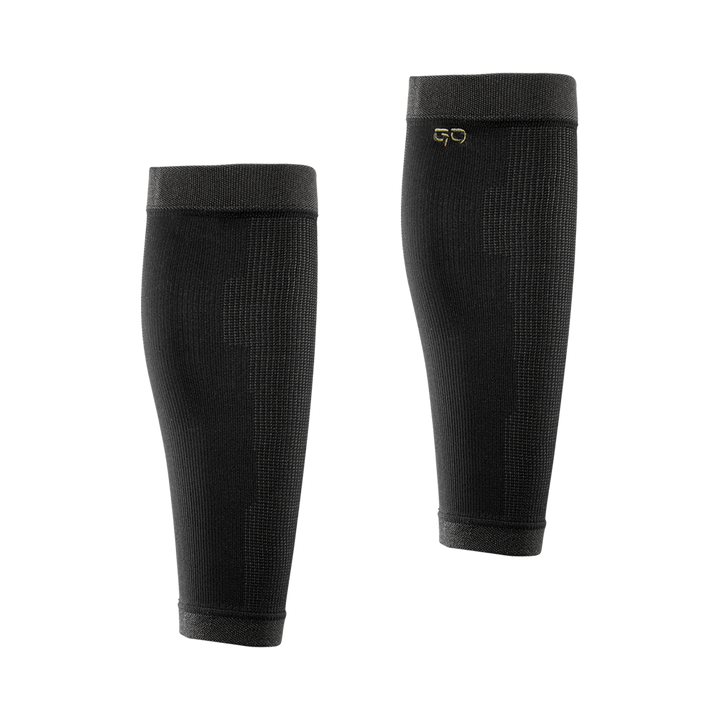
GO Sleeves combine compression with integrated kinesiology taping support — designed to move with the body, not restrict it.
GO Kinesiology + Compression Calf Sleeves
$99.95
Just pull them on, and off you go! GO Sleeves® Calf Sleeves are the world’s only compression sleeves with built-in kinesiology strips to secure, correct, and support key ligaments, tendons, and muscles in and around your calf and shin. Unlike… Read More
If you're managing a recurring injury or returning to training after a setback, working closely with your physician or physical therapist before adding new gear or changing your protocol is always worth the conversation. The right support works best as part of a broader care plan — not a substitute for one.
FAQs
Do calf compression sleeves for running really help with performance?
Calf compression sleeves can support running performance by improving circulation and reducing muscle fatigue over long distances. For high-mileage runners, they’re often used to maintain consistency in training rather than create a noticeable speed increase in a single run.
What makes a calf compression sleeve for running different from regular compression sleeves?
Most traditional compression sleeves provide uniform pressure, but don’t address how the body moves during a run. GO Sleeves are designed with integrated kinesiology taping support, which helps guide movement patterns while still providing compression — offering a more dynamic form of support.
Should you wear a calf compression sleeve for running or just for recovery?
Many runners use calf sleeves both during runs and for recovery. Wearing them during a run can provide support and stability, while keeping them on afterward may help reduce soreness and support recovery between sessions.
Are calf compression sleeves better than KT tape for runners?
KT tape can provide targeted support, but it often requires precise application and frequent reapplication. A calf compression sleeve for running offers a more consistent and reusable alternative, especially for runners training multiple days per week.
Who should consider using a calf compression sleeve for running?
Runners who experience recurring calf tightness, fatigue, or strain — especially during higher mileage training — may benefit from using a calf compression sleeve. They can also be useful for runners returning from injury or looking to prevent setbacks during marathon training.
Can you wear calf compression sleeves all day?
Some runners choose to keep their sleeves on after training, especially on long run or workout days. As long as the fit is comfortable and not overly restrictive, extended wear can be part of a broader recovery routine.
What makes a calf compression sleeve for running different from regular compression sleeves?
A typical calf compression sleeve for running applies uniform pressure to support circulation, but it doesn’t actively support how your body moves. GO Sleeves are designed with integrated kinesiology taping support, which helps guide movement patterns while still providing compression — offering a more dynamic and consistent form of support during both training and recovery.
Medical Disclaimer: The information provided in this article is for educational purposes only and does not constitute medical advice, diagnosis, or treatment. Always seek the advice of your physician or other qualified health provider with any questions you may have regarding a medical condition or injury. Never disregard professional medical advice or delay in seeking it because of something you have read on this website.