Table of Contents
If you’re trying to figure out how to prevent runners knee, the answer isn’t rest — it’s fixing the mechanics that cause it. Runner's knee isn't a single injury. It's a pattern — poor patellar tracking leads to friction, friction leads to inflammation, inflammation leads to the kind of pain that makes you dread stairs. The cycle repeats until you address the root cause.
Patellofemoral pain syndrome (PFPS) is the clinical name for it, and it's the most common knee condition in active adults. A 2018 systematic review and meta-analysis reported an annual prevalence of 22.7% in the general adult population and found that PFPS accounts for a significant share of all knee complaints across age groups.¹ Among runners specifically, it constitutes roughly 25% of all knee injuries seen in clinical settings.²
The pain usually develops gradually. First run feels fine. Second run, slight discomfort behind the kneecap. By the third week, you're limping down stairs and wondering if you'll ever run pain-free again.
This guide breaks down exactly why it happens, how to prevent it, and what to do if you're already dealing with it.
What Causes Runner’s Knee?
The Biomechanics: Why Your Knee Hurts
To understand how to prevent runner’s knee, you need to understand what causes it. Runner’s knee isn’t random — it’s a mechanical problem driven by how your kneecap moves under load.
Your kneecap sits in a groove on your femur called the trochlear groove. When everything's aligned, the patella glides smoothly through this groove as you bend and straighten your knee. When alignment is off, your kneecap tracks laterally — pulling toward the outside instead of staying centered. That creates friction between the cartilage on the back of your kneecap and the cartilage in the groove.
Friction leads to irritation. Irritation leads to inflammation. Inflammation leads to pain.
The impact problem. Every time your foot hits the ground during a run, your knee absorbs significant force. During running, vertical ground reaction forces range from 1.5 to 3 times your body weight, depending on speed and foot-strike pattern.³ For a 170-pound runner, that's up to 510 pounds of force per footstrike. Over thousands of strides per run, uneven load distribution from poor tracking creates real damage.
The muscle imbalance problem. Poor patellar tracking almost always involves muscle weakness or imbalance. Your VMO (vastus medialis oblique) — the inner quad muscle — pulls the kneecap medially to keep it centered. When it's weak relative to your outer quad, the kneecap drifts laterally. Weak glutes compound the problem by allowing the femur to rotate inward during footstrike, throwing off knee alignment. A tight IT band pulls the kneecap further out of line.
The training error trigger. Even with underlying imbalances, runner's knee often doesn't flare up until you increase weekly mileage too fast, add hills or speed work without proper progression, change running surfaces, or log miles in worn-out shoes. The mechanical stress exceeds what your body can absorb, and pain develops.
Common symptoms include pain around or behind the kneecap (especially going downstairs or downhill), stiffness after sitting for long periods (sometimes called the "theater sign"), grinding or popping sensations, and pain that worsens during or after running.
How to Prevent Runner’s Knee
Fix the Mechanics Before Pain Starts
Learning how to prevent runners knee isn’t about avoiding running — it’s about identifying and correcting the movement patterns that place excess stress on the knee before they turn into pain. Prevention is movement care in practice — addressing the underlying biomechanics before your body forces you to stop.
Strengthen your VMO. This is the muscle that matters most for patellar tracking. Terminal knee extensions — wrapping a resistance band behind your knee and extending fully through the last 30 degrees — target the VMO specifically. Three sets of 15–20 reps daily. Wall sits with a small ball squeezed between your knees add hip adduction, which fires the VMO even harder. The VMO activates most in the final 30 degrees of knee extension and during adduction. These exercises target both.
Build your glutes. Your glutes control femoral rotation. Strong glutes keep the thigh bone aligned during footstrike. Single-leg glute bridges (3 sets of 12–15 per leg), clamshells (3 sets of 20 per side), and lateral band walks (3 sets of 10 steps each direction) all build the hip stability that prevents the inward femoral rotation driving poor tracking.
Improve flexibility where it matters. Foam roll the outside of your thigh (IT band/TFL) for 2–3 minutes per side daily. Stretch your hip flexors — kneeling lunge position, pushing hips forward, holding 60 seconds per side. A tight IT band pulls the kneecap laterally. Tight hip flexors change the angle of force through the knee. Address both.
Fix your running form. Even with strong muscles, poor form causes tracking issues. Increase your cadence — most runners overstride, and shorter, quicker steps (aiming for 170–180 steps per minute) reduce impact forces at the knee. Focus on landing under your center of mass instead of reaching out in front. If you hear loud footfalls, you're overstriding.
Manage training load intelligently. The 10% rule — increasing weekly mileage by no more than 10% per week — exists for a reason. Build your aerobic base before adding interval training or hills. Follow hard training days with easy recovery days. Slight knee discomfort after a run is a warning. Take a rest day. Don't push through.
Support patellar tracking during runs. This is where tools that enhance proprioceptive feedback come in. Your body's ability to sense joint position degrades under fatigue — which is exactly when tracking breaks down. GO Sleeves Knee Sleeves use embedded kinesiology taping patterns that manipulate fascia beneath the skin, activating mechanoreceptors to enhance proprioception. Better proprioceptive signaling means better patellar tracking, even as fatigue sets in during longer runs. The directional fascia manipulation guides the kneecap through the correct path with every stride, reducing the friction that causes runner's knee in the first place.
Unlike kinesiology tape — which costs $15–20 per roll, degrades during activity, and requires a degree to apply correctly — GO Sleeves provide consistent mechanical support every time you pull them on.
If You Already Have Runner's Knee
Rest alone might reduce inflammation temporarily, but if the underlying tracking issues remain, pain returns the moment you resume running. You need to fix the mechanics, not just wait it out.
Week 1–2: Reduce volume and manage inflammation. Cut mileage by 50%. Ice for 15–20 minutes after runs. Consider NSAIDs short-term if appropriate (talk to your doctor). Start VMO and glute strengthening immediately — these exercises don't stress the patellofemoral joint when done correctly.
Week 3–4: Rebuild movement patterns. Gradually increase mileage while maintaining strengthening work. Focus on cadence and form cues during every run. If pain returns above a 3 out of 10, scale back. Wear compression that supports tracking during and after runs.
Week 5–6 and beyond: Build resilience. Continue strengthening indefinitely. The exercises that fix runner's knee are the same ones that prevent it. Build them into your routine the way you'd build brushing your teeth into your morning — non-negotiable, daily, automatic.
When to see a doctor. If pain persists beyond 6–8 weeks despite consistent strengthening and form correction. If pain is severe (7+/10) even with rest. If your knee gives out, locks, or you feel/hear popping or tearing. Imaging may be needed to rule out structural issues.
Working with a sports medicine physician or physical therapist can help you identify your specific biomechanical patterns and build a plan that fits where your body is right now. The smartest runners don't try to figure it all out solo.
Best Exercises to Prevent Runner’s Knee
These exercises are commonly recommended by physical therapists to correct the muscle imbalances that cause runner’s knee. The most effective exercises to prevent runner’s knee target the muscles that control patellar tracking — especially the VMO and glutes.
- Terminal knee extensions:
Strengthens the VMO to improve kneecap alignment. Wrap a resistance band behind your knee and extend fully through the last 30 degrees. Perform 3 sets of 15–20 reps. - Wall sits with ball:
Activates the VMO through hip adduction. Hold a wall sit while squeezing a ball between your knees for 30–45 seconds. Repeat for 3–4 sets. - Glute bridges:
Builds hip stability and prevents inward femoral rotation. Perform single-leg glute bridges for 3 sets of 12–15 reps per leg. - Clamshells:
Strengthens the glute medius to control knee alignment. Lift your top knee while keeping hips stable. Perform 3 sets of 15–20 reps per side. - Lateral band walks:
Improves hip stability during movement. Step side to side with a resistance band for 10–15 steps each direction. Complete 3 sets.
What Actually Works for Preventing Runner’s Knee
What works:
- Fixing patellar tracking (not just reducing pain)
- Strengthening VMO and glutes consistently
- Managing training load before pain escalates
- Improving running mechanics (cadence, stride)
What doesn’t work long term:
- Rest alone
- Ignoring early symptoms
- Using compression alone without fixing mechanics
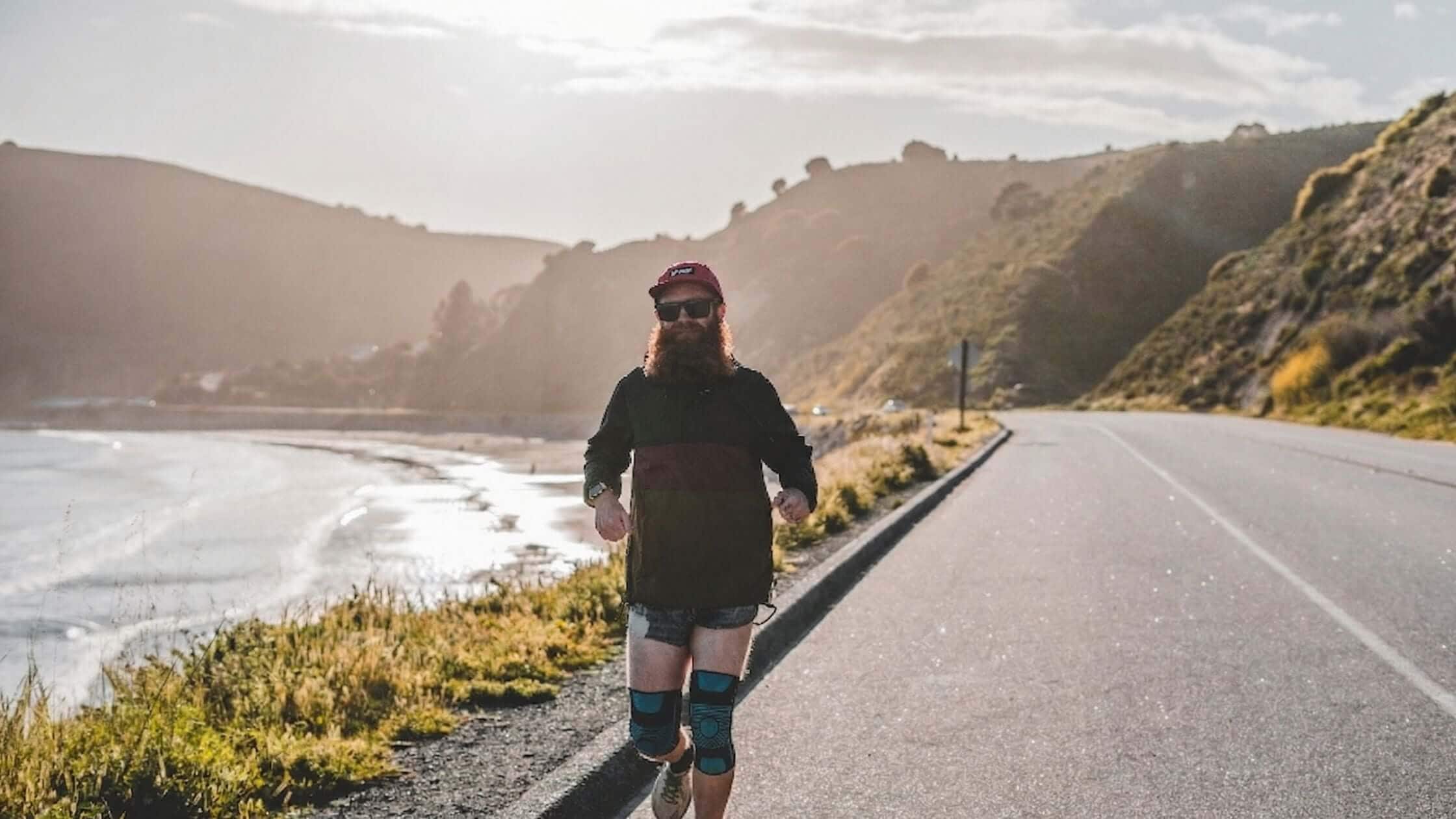 GO Sleeves Knee Sleeve provides movement-based support to help maintain alignment during running.
GO Sleeves Knee Sleeve provides movement-based support to help maintain alignment during running.Support Your Knees While You Fix the Root Cause
Fixing the mechanics is what prevents runner’s knee long term — but during runs, especially as fatigue sets in, your form can break down. That’s when additional support can make a difference.
GO Sleeves Knee Sleeves are designed to support patellar tracking through embedded kinesiology taping patterns that stimulate proprioception. As your muscles tire, enhanced proprioceptive feedback helps maintain better alignment, reducing the friction that leads to pain.
Unlike traditional compression sleeves, which apply uniform pressure, GO Sleeves are engineered to guide movement — supporting your knee through every stride without restricting it.
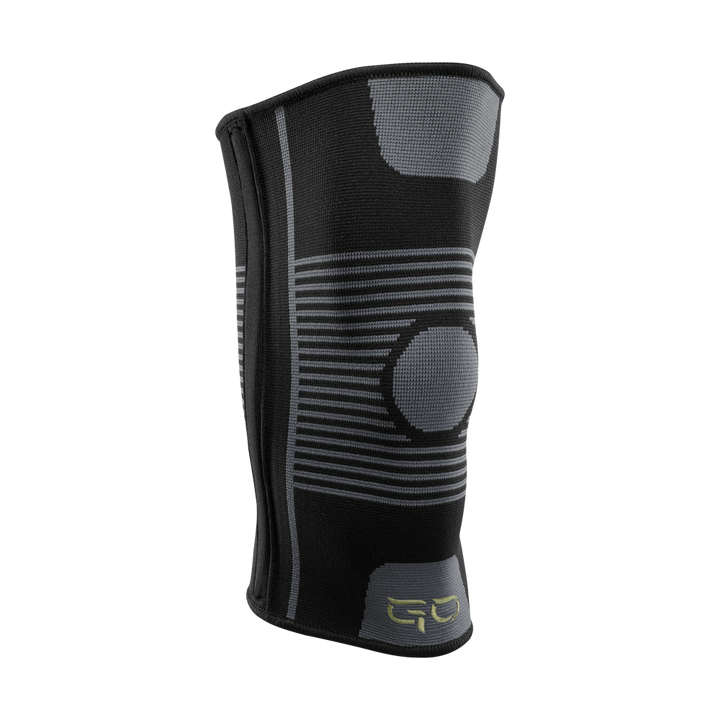
GO Kinesiology + Compression Knee Sleeve
$89.95
Don’t let knee pain sabotage your plans! Reduce pain, swelling, and soreness in and around your knee—and accelerate your body’s ability to recover and rebound so you can keep moving. Unlike compression sleeves which just compress, GO Sleeves® Knee Sleeves… Read More
Why Many Runners Also Use Calf Sleeves
Many runners dealing with knee pain also wear calf sleeves — not just for comfort, but because fatigue in the lower leg can impact how force travels up the chain.
When your calves tire, your mechanics change. That can increase stress on the knee, especially during longer runs or higher mileage weeks.
GO Sleeves Calf Sleeves are designed to support circulation and provide proprioceptive feedback that helps maintain more consistent movement patterns from the ground up.
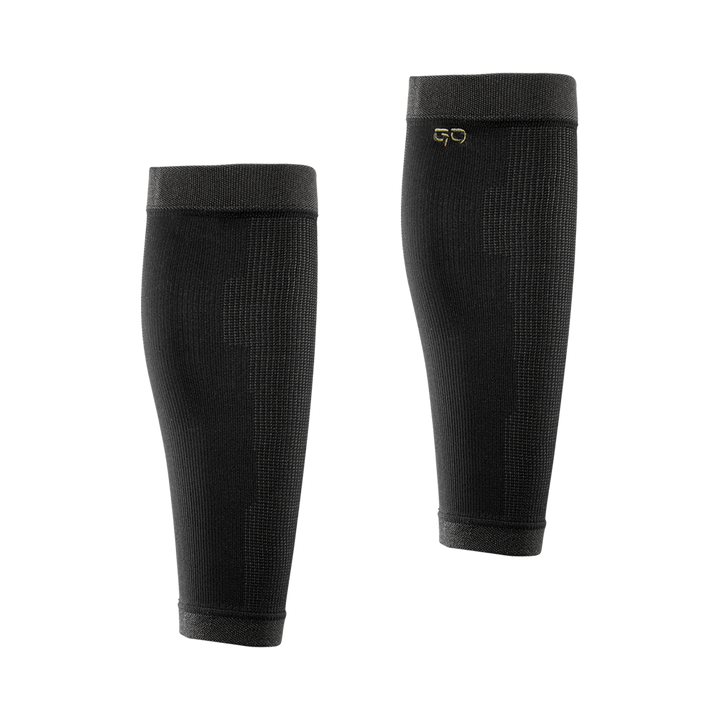
GO Kinesiology + Compression Calf Sleeves
$99.95
Just pull them on, and off you go! GO Sleeves® Calf Sleeves are the world’s only compression sleeves with built-in kinesiology strips to secure, correct, and support key ligaments, tendons, and muscles in and around your calf and shin. Unlike… Read More
FAQs
Can I keep running with runner's knee?
If pain is mild (2–3 out of 10) and does not worsen during your run, you can usually continue with reduced mileage while addressing the underlying mechanics. If pain increases during or after running, it is best to stop and focus on recovery.
How long does runner's knee take to heal?
Most cases improve within 4–6 weeks with proper treatment. More severe cases can take several months, especially if the underlying mechanics are not addressed.
Will runner's knee go away on its own?
Usually not. Rest may reduce inflammation temporarily, but if the underlying mechanics are not corrected, the pain typically returns when you resume running.
What exercises are best for runner’s knee?
The best exercises are those that improve patellar tracking and hip stability. These include terminal knee extensions, glute bridges, clamshells, wall sits, and lateral band walks.
What is the fastest way to fix runner’s knee?
The fastest way to fix runner’s knee is to correct the underlying mechanics. This includes strengthening the VMO and glutes, improving running form, and reducing training load. Rest alone is not enough.
What causes runner’s knee in runners?
Runner’s knee is caused by poor patellar tracking, where the kneecap moves out of alignment during motion. This is typically driven by muscle imbalances, weak glutes, and training errors that increase stress on the knee.
Is runner's knee the same as IT band syndrome?
No. Runner's knee is pain behind or around the kneecap from tracking issues. IT band syndrome is pain on the outside of the knee from friction between the IT band and the lateral femoral condyle. Both often share root causes — weak glutes, poor hip control — so the strengthening exercises overlap.
Do compression sleeves help prevent runner’s knee?
Standard compression sleeves provide general support but do not address the mechanics that cause runner’s knee. Sleeves that enhance proprioception may help support better tracking during movement, but they should be used alongside strengthening and proper training.
The Bottom Line
How to prevent runners knee comes down to this: runner’s knee develops from poor patellar tracking. Poor tracking comes from muscle imbalances, weak hip control, tight tissues, and training errors. Fix those things, and you fix runner’s knee.
This is what movement care looks like for runners — not a product, not a program, but a daily discipline. Strengthen your VMO and glutes. Improve flexibility. Run with proper form. Manage training load intelligently. Support your mechanics with tools that enhance proprioception.
The goal isn't to stop running. It's to give your body the care it needs so you never have to.
If you're dealing with persistent knee pain or returning from a long layoff, talk to your physician or a sports medicine provider before jumping back into full training. They can evaluate your specific mechanics and help you build a return plan that protects the progress you've made.
References
- Smith BE, Selfe J, Thacker D, et al. Incidence and prevalence of patellofemoral pain: A systematic review and meta-analysis. PLoS ONE. 2018;13(1):e0190892.
- PM&R KnowledgeNow (AAPM&R). Patellofemoral Syndrome. Updated May 23, 2024.
- Comparison of ground reaction forces as running speed increases between male and female runners. Frontiers in Bioengineering and Biotechnology. 2024.
- Lauersen JB, Bertelsen DM, Andersen LB. The effectiveness of exercise interventions to prevent sports injuries: A systematic review and meta-analysis of randomized controlled trials. British Journal of Sports Medicine. 2014;48(11):871–877.
Medical Disclaimer: The information provided in this article is for educational purposes only and does not constitute medical advice, diagnosis, or treatment. Always seek the advice of your physician or other qualified health provider with any questions you may have regarding a medical condition or injury. Never disregard professional medical advice or delay in seeking it because of something you have read on this website.