Table of Contents
- The Anatomy: The Train on the Tracks
- Why the Train Derails (The Fatigue Factor)
- Descending a flight of stairs is one of the most common movements that exposes knee tracking problems.
- Why Standard Sleeves Don't Fix It
- The GO Sleeves Solution: "Guide Rails" for Your Knee
- Your Descent Protocol
- FAQs
- The Bottom Line
Whether it's a mountain trail, a stairwell, or the walk down your driveway, knee pain going down stairs and other descents often gets written off as 'just getting older' — but it's rarely that simple. You just crushed the climb. Your lungs are burning, but your legs feel strong. You reach the summit, take in the view, and start the descent. That’s when it starts.
A dull, grinding ache behind your kneecap. A sharp pinch when you step down a tall rock. By the time you reach the car, your knees are screaming.
Sound familiar even without a summit involved? The same grinding hits people on a parking garage ramp, a flight of stairs at work, or the last mile of a downhill run — the trigger isn't the mountain, it's the descent.
We often blame this on "bad knees" or simply getting older. We say, "Well, it’s all bone-on-bone down there."
The Truth: It’s likely not your bones. More likely, it’s your tracking. Your knee joint is getting "derailed" by fatigue. And unlike arthritis (which is structural), tracking issues are mechanical, which means they are fixable. Yes!
Here is why gravity is hurting you, and how to stay on track.
The Anatomy: The Train on the Tracks
Think of your knee joint like a train system.
The Train: Your Patella (Kneecap).
The Tracks: The Trochlear Groove (the notch in your thigh bone where the kneecap sits).
When you bend your knee perfectly, the train glides smoothly down the center of the tracks. It’s frictionless. But if the train gets pulled slightly to the left or right, the wheels start grinding against the rails. That grinding sound? That’s the "crepitus" (crunching) you hear. That grinding pain? That’s "Runner's Knee" (Patellofemoral Pain Syndrome).
Why the Train Derails (The Fatigue Factor)
Most people think the kneecap slips out of place. Actually, it’s usually the track underneath it that moves.
When you are hiking downhill, running, or descending stairs, your Femur (thigh bone) is under immense load. To keep the femur stable, you rely on your Glute Medius (your outer hip muscle). The problem: The glute medius is often the first muscle to get tired. When your glutes fatigue (usually halfway through the run or hike), they stop holding the femur straight. The femur rotates internally (inward).
The Result: The "track" twists underneath the "train." Suddenly, your kneecap isn't gliding in the center anymore. It’s grinding against the outer edge of the groove. You don't feel this immediately. But after 5,000 steps? The inflammation is raging. This is exactly why knee pain going down stairs often feels worse than climbing them — descending relies on eccentric control that fatigued glutes can no longer provide.
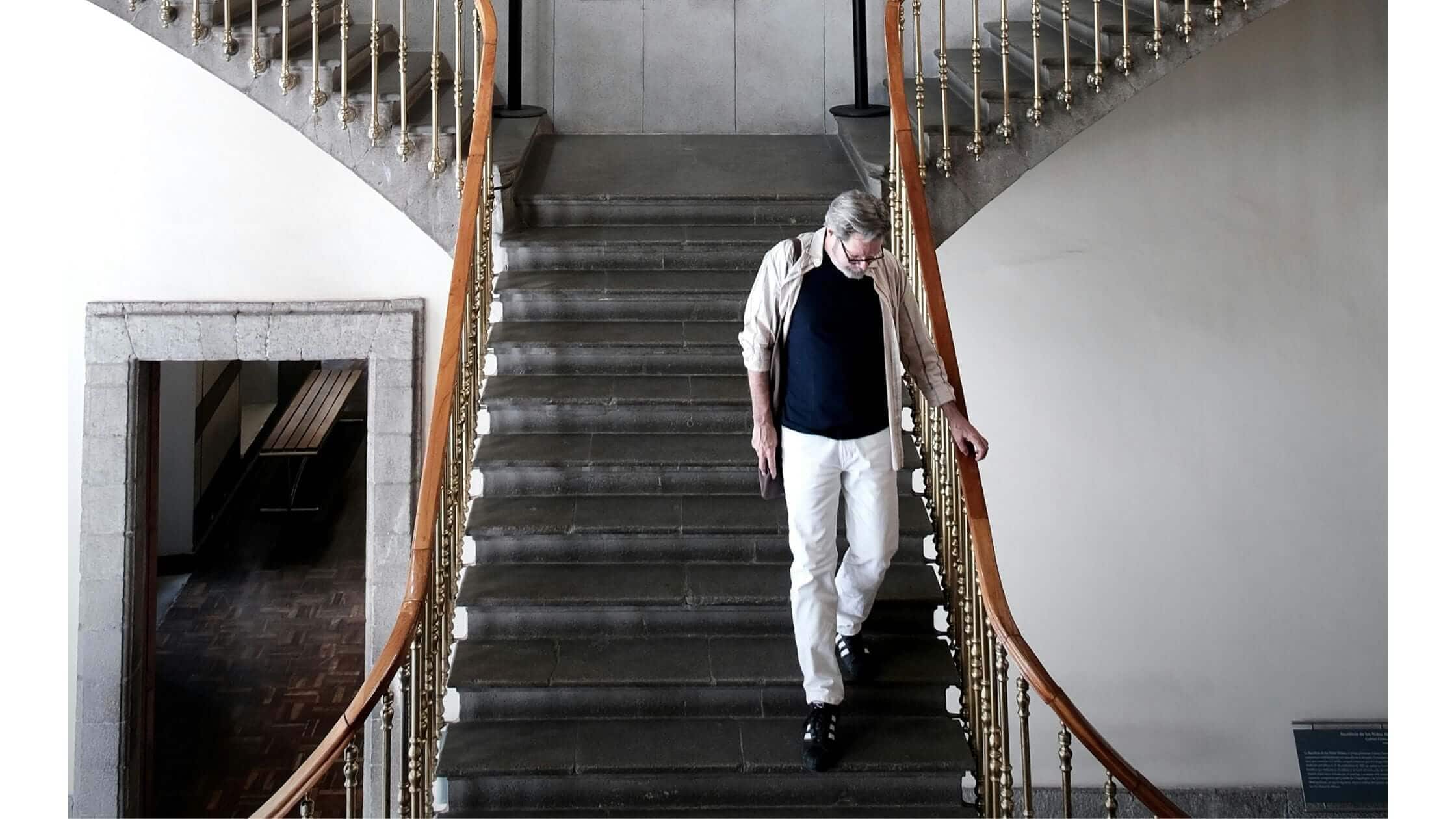 Descending a flight of stairs is one of the most common movements that exposes knee tracking problems.
Descending a flight of stairs is one of the most common movements that exposes knee tracking problems.Why Standard Sleeves Don't Fix It
This is why buying a cheap neoprene tube at the drugstore rarely solves the problem. It's also why generic knee braces rarely stop knee pain going down stairs — they add compression (warmth and swelling control), not tracking correction. That feels nice, but it doesn't fix the mechanics. Squeezing a derailed train doesn't put it back on the tracks.
To stop the pain, you need to stop the femur from rotating inward. You need Proprioceptive Guidance.
The GO Sleeves Solution: "Guide Rails" for Your Knee
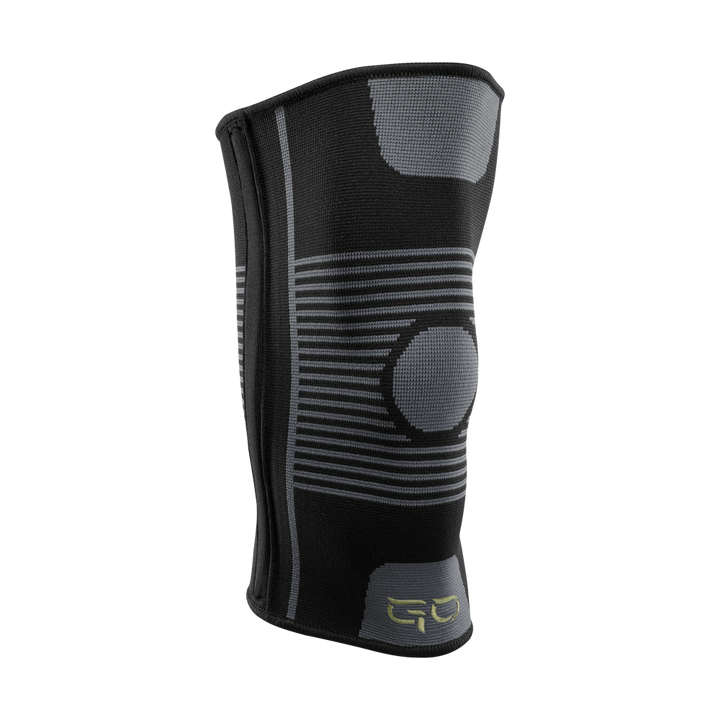
GO Sleeves Knee Sleeves are designed specifically for this mechanical breakdown. The silicone kinesiology strips built into the sleeve act as an external set of "guide rails."
1. The Glute Connection (Proprioception)
It sounds like magic, but it’s neurology. The silicone patterns on the sleeve grip your skin, stimulating the mechanoreceptors around the knee and thigh. This enhanced sensory feedback wakes up your brain. It screams: "Hey! We are drifting inward! Correct it!" Because your brain has better data, it keeps your glutes engaged longer, preventing that internal femoral rotation that causes the grinding.
2. The "Floating" Effect
The pattern is designed to lift and support the patella. While it doesn't physically force the bone into place (no sleeve can do that), the tactile cueing encourages the surrounding muscles (Vastus Medialis Oblique and Quads) to fire in sync. Balanced firing means a balanced pull on the kneecap. Instead of the outer quad pulling the kneecap off-track, the muscles work together to keep it gliding centrally.
GO Kinesiology + Compression Knee Sleeve
$89.95
Don’t let knee pain sabotage your plans! Reduce pain, swelling, and soreness in and around your knee—and accelerate your body’s ability to recover and rebound so you can keep moving. Unlike compression sleeves which just compress, GO Sleeves® Knee Sleeves… Read More
Your Descent Protocol
Don't let knee pain going down stairs — or hills, or trails — ruin your day.
Engage the Hips: Before you start descending, do 10 side-leg lifts to wake up your glutes. Remind them they have a job to do.
Suit Up Early: Put your GO Sleeves on before the pain starts. Proprioception works best as prevention. The goal is to keep the train on the tracks from Step 1, not to try and fix it after it has crashed.
Shorten Your Stride: When going downhill, keep your steps short and quick. Long, heavy strides increase the impact force and the demand on your glutes.
Trust the Feedback: As you move, feel the sleeve on your skin. If you feel the pressure shifting, check your knees—are they diving in? Push them out.
FAQs
Why does knee pain going down stairs feel worse than going up?
Going down relies on your glutes and quads controlling the descent (eccentric loading), not just powering you forward. When those muscles fatigue, your femur rotates inward and your kneecap starts grinding against the track instead of gliding down the center — a problem that barely shows up on the way up.
Is knee pain going downhill always arthritis?
Not necessarily. Arthritis is a structural, bone-on-bone issue, while tracking problems are mechanical — caused by fatigued glutes letting the femur rotate. Tracking issues are usually fixable with the right feedback and strength work, which isn't true of arthritis.
Will hiking poles help with knee pain on the way down?
They can help by reducing impact load and giving your upper body more control over pace, but they don't fix the underlying tracking issue. Pair poles with glute activation and proprioceptive support for the actual fix.
Should I strengthen my quads or my glutes for knee tracking issues?
Both, but the glute medius is usually the missing piece. It's what keeps your femur from rotating inward as you fatigue — most people over-focus on quad strength and skip the hip work that actually prevents the derailing.
How fast will GO Sleeves help with knee tracking pain?
The proprioceptive feedback works immediately — you'll feel the sleeve cueing your muscles the first time you wear it. But lasting change also depends on building glute and quad strength over time, so think of the sleeves as immediate support plus a long-term training aid, not an instant fix.
The Bottom Line
You don't have to accept "grinding knees" as the price of admission for being active. It's not about numbing the pain; it's about fixing the path.
Fatigue, not age, is usually what derails your tracking — and once your glutes stop holding the line, gravity does the rest. The fix isn't more rest or a thicker knee brace; it's giving your body better feedback so it can correct itself before the pain starts.
Knee pain going down stairs isn't a life sentence; it's a fixable tracking problem. Keep the glutes on. Keep the train on the tracks. Enjoy the way down — whether that's a mountain trail, a stairwell, or just your driveway.
Medical Disclaimer: The information provided in this article is for educational purposes only and does not constitute medical advice, diagnosis, or treatment. Always seek the advice of your physician or other qualified health provider with any questions you may have regarding a medical condition or injury. Never disregard professional medical advice or delay in seeking it because of something you have read on this website.