Table of Contents
- Why Athletes Try Combining Supports
- The Limits of Layering
- The Baseline Approach: Integrated Movement Care
- When Layering Makes Sense (With a Baseline)
- The Decision Framework
- A lifter wears GO Knee Sleeves for built-in tracking and compression — no layering knee support required.
- How This Fits Your Routine
- The Integrated Alternative: GO Knee Sleeves
- FAQs
- The Bottom Line
If you've ever wondered whether layering knee support — tape, sleeve, and brace, all at once — actually helps, you're not the only one standing in your gym bag trying to figure it out. You've tried kinesiology tape. It helps, but peels off halfway through the day. You've tried compression sleeves. They're comfortable, but don't give you the directional support you need. Now you're standing in your gym bag looking at both and wondering — can you layer them? Tape over the sleeve? Would that give you the best of both?
Athletes do this all the time during tournaments or heavy training blocks. Tape for tracking. Sleeve for warmth. Brace for stability. Stack them all and hope for maximum protection.
Here's what actually happens. Combining tools creates bulk, restriction, and diminishing returns. The tape peels under the sleeve. The sleeve bunches under the brace. You spend 30 minutes getting ready to train and your knee feels like it's wrapped in a sleeping bag.
Tape, sleeves, and braces work for specific jobs. An integrated movement care system handles daily training better than layering.
Why Athletes Try Combining Supports
The logic makes sense. Each tool does something different. This is exactly why layering knee support feels intuitive — each tool seems to solve a piece of the puzzle the others don't. Tape provides directional pull. Compression adds warmth and pressure. Braces offer rigid stability. If one is good, three must be better.
Tournament athletes layer supports hoping to cover all bases. The knee has been achy all season. Big competition this weekend. Better safe than sorry.
Tape plus sleeve is the most common combination. Tape goes on first for directional cueing along the patellar tendon. Sleeve pulls over it for compression and warmth. The idea is you get proprioceptive enhancement from tape and circulation support from compression.
Sleeve plus brace shows up during rehabilitation phases. The sleeve provides warmth and mild compression. The brace adds rigid stability for an unstable joint. Used together under medical guidance after injury or surgery.
All three at once is the kitchen sink approach. Maximum protection for high-stakes moments. Tape for tracking, sleeve for compression, brace for stability. Athletes use this when they're injured but still need to compete.
Short-term for specific events, layering can serve a purpose. Daily for regular training? That's where the problems start.
The Limits of Layering
Combining supports introduces complications that often outweigh the benefits.
Bulk affects your mechanics. Multiple layers add material around the joint. This changes how your leg moves through space. Your stride adjusts. Your gait compensates. The very mechanics you're trying to protect start degrading because of the support itself.
Over-compression restricts circulation. Stacking a compression sleeve under a brace or over tape creates zones of excessive pressure. Blood flow gets limited exactly when tissues under load need maximum oxygen delivery. You're protecting the joint but starving the muscles.
Materials don't work well together. Tape peels faster under a sleeve because the fabric creates friction during movement. Sleeves migrate more easily under braces because rigid components push against elastic material. Each layer compromises the effectiveness of the others.
Setup becomes time-consuming. Proper tape application takes 10-15 minutes. Add a sleeve. Add a brace with straps and hinges. You're spending 30 minutes preparing your knee before you can start training. That's not sustainable for daily use.
Cost compounds quickly. Quality kinesiology tape costs $15-25 per roll. Compression sleeves run $30-50. Braces range from $50 to several hundred dollars. Layering all three means you're investing heavily in a complicated system that still doesn't address the root issue — maintaining good mechanics during training.
Dependency risk increases. The more support you add externally, the less your body practices maintaining stability naturally. Proprioceptive systems and stabilizing muscles get less feedback. When you eventually remove the supports, your knee has less capacity than before.
Layering supplements a weak baseline. It's not a complete system for daily training. These are the exact reasons layering knee support rarely holds up under daily use, even when it works for a single event.
The Baseline Approach: Integrated Movement Care
Instead of layering knee support with three separate tools that each do one job partially, start with a system built for daily use that handles all three functions.
GO Sleeves integrates the key benefits of tape, compression, and light bracing into a single tool designed for before, during, and after activity.
Embedded silicone patterns create directional fascial stretch like kinesiology tape. The patterns align with the quadriceps tendon and patellar ligament. As you move, they grip skin and provide focal tension that enhances proprioceptive feedback. You get the directional cueing of tape without daily reapplication or peeling issues.
Graduated compression supports circulation like compression sleeves, but with directional zones instead of uniform pressure. Higher compression at support points. Lighter compression where mobility matters. Blood flow stays strong during activity. No over-compression from layering.
Lightweight guidance provides mechanical support like braces but without bulk or restriction. The embedded patterns guide patellar tracking without rigid components that limit range of motion. You get stability without immobilization.
The Georgetown College study showed 28% lower pain scores in athletes using GO Sleeves compared to standard knee support options. User surveys found 60% reported less pain during daily training use. These results come from an integrated system, not layered tools fighting each other.
When Layering Makes Sense (With a Baseline)
An integrated movement care baseline eliminates most needs for layering. But specific situations might warrant adding a supplemental tool temporarily.
Start with GO Sleeves for daily training. This becomes your consistent foundation. Wear before activity to prime proprioception. During training to maintain tracking under fatigue. After sessions to support recovery.
Skip tape entirely. The embedded silicone patterns provide the directional support and proprioceptive cueing that tape offers, without the peeling, reapplication, or skin irritation. For competition days, the same sleeves you train in work for events. No additional layers needed.
Add brace only for medically directed rehabilitation. If recovering from surgery or significant ligament injury under medical supervision, you might wear GO Sleeves under a prescribed brace short-term. The sleeve maintains proprioceptive feedback. The brace provides prescribed immobilization. Follow your physician's guidance on duration and weaning protocol.
Skip stacking for healthy training. If your knee is healthy and you're training normally, the integrated system handles the job. Adding layers creates unnecessary complexity without additional benefit.
The Decision Framework
Different scenarios require different approaches to knee support.
Daily training: GO Sleeves provide integrated support. No layering needed.
Tournament day: GO Sleeves handle competition the same way they handle training. The embedded patterns provide directional support for high-stakes moments. No tape required.
Mild recovery between sessions: GO Sleeves alone support tissue health and circulation.
Acute rehabilitation: GO Sleeves under medically prescribed brace if directed by your physician. Short-term use only during recovery phase.
The integrated approach wins for sustainable training. Layering serves specific, temporary situations under guidance.
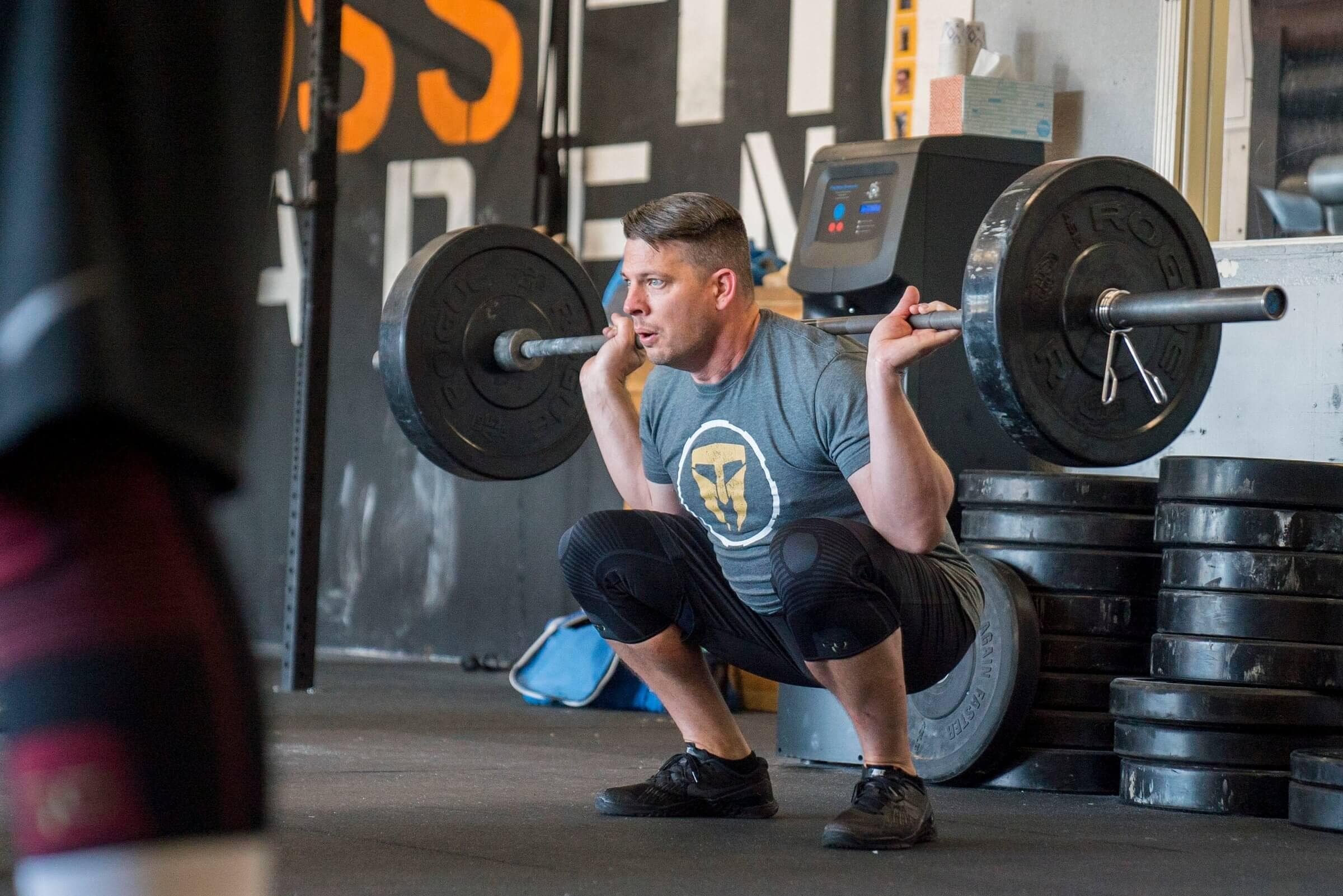 A lifter wears GO Knee Sleeves for built-in tracking and compression — no layering knee support required.
A lifter wears GO Knee Sleeves for built-in tracking and compression — no layering knee support required.How This Fits Your Routine
Movement care with an integrated tool simplifies your daily approach.
Before activity. Put GO Sleeves on 20-30 minutes before training. One tool. One application. Proprioception enhances. Tissues warm up. You're ready.
During training. The embedded patterns maintain patellar tracking as fatigue sets in. Full range of motion stays available. No bulk. No migration. No adjustment. Works the same whether you're training or competing.
After sessions. Keep sleeves on for recovery periods. Enhanced lymphatic drainage continues working. Inflammation stays managed.
Under medical care. If rehabbing injury, wear sleeves under prescribed brace as directed. Wean off brace as stability returns. Maintain sleeve baseline throughout.
Simple beats complicated for daily consistency. Consistency is what keeps you training without breaking down.
The Integrated Alternative: GO Knee Sleeves
Everything above points to the same conclusion: the problem isn't tape, sleeves, or braces individually — it's stacking them.
GO Knee Sleeves are built to replace that stack with one tool. Embedded silicone patterns provide the directional, tape-like tracking cues along the quadriceps tendon and patellar ligament — no reapplication, no peeling, no skin irritation. Graduated compression zones support circulation the way a sleeve should, without the uniform squeeze that restricts blood flow under a brace or extra layer. And the lightweight guidance offers the mechanical support a brace provides, minus the bulk and restricted range of motion.
One tool, worn before training to prime proprioception, during training to maintain tracking under fatigue, and after to support recovery — the same sleeve for every phase, instead of a different combination for each one.
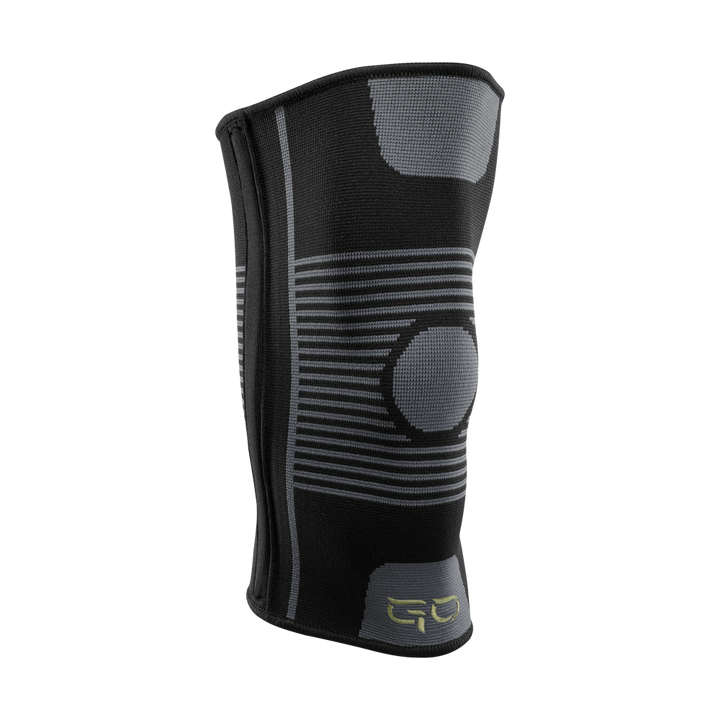
GO Kinesiology + Compression Knee Sleeve
$89.95
Don’t let knee pain sabotage your plans! Reduce pain, swelling, and soreness in and around your knee—and accelerate your body’s ability to recover and rebound so you can keep moving. Unlike compression sleeves which just compress, GO Sleeves® Knee Sleeves… Read More
FAQs
Can you wear kinesiology tape under a compression sleeve?
Yes, but tape peels faster under sleeve friction during movement. An integrated movement care sleeve with embedded patterns provides tape-like directional cueing without reapplication or peeling issues.
Can you wear a sleeve under a knee brace?
Yes for short-term rehabilitation under medical guidance, but layering adds bulk that affects mechanics. Movement care sleeves provide guidance and stability without brace restriction for daily training use.
Does layering knee supports improve performance?
Layering often creates bulk, restricts range of motion, and causes materials to work against each other. A baseline movement care system handles proprioception, circulation, and stability in one integrated tool without the complications of stacking.
Why does tape peel under sleeves?
Sleeve fabric creates friction against tape adhesive during joint flexion and extension. Silicone patterns embedded directly in movement care sleeves grip skin for hours without peeling or requiring reapplication.
When does layering make sense?
Layering rarely improves outcomes for healthy training. The only exception is wearing movement care sleeves under a medically prescribed brace during short-term rehabilitation under physician guidance.
Can GO Sleeves replace tape for daily training?
GO Sleeves provides the directional fascial stretch and proprioceptive cueing that tape offers, but without daily reapplication, skin irritation, or peeling. The embedded silicone patterns work continuously across training sessions.
What is the best baseline support for consistent training?
An integrated movement care system that combines directional guidance, graduated compression, and proprioceptive enhancement in one tool. This eliminates the need to layer separate tools that each do one job partially.
The Bottom Line
Layering knee support — tape under a sleeve, a sleeve under a brace — feels like it should add up to more protection. In practice, it usually adds up to more bulk, more setup time, and worse mechanics.
An integrated system does the job of all three without asking them to fight each other. Save actual layering for the specific situations that call for it — a medically prescribed brace during rehab — and let one well-designed tool handle the rest.
Simple beats complicated for daily consistency. That's what keeps you training without breaking down.
Medical Disclaimer: The information provided in this article is for educational purposes only and does not constitute medical advice, diagnosis, or treatment. Always seek the advice of your physician or other qualified health provider with any questions you may have regarding a medical condition or injury. Never disregard professional medical advice or delay in seeking it because of something you have read on this website.