Table of Contents
If tendonitis recovery has felt like an endless loop of resting, returning, and flaring up again, you're not broken — you're just stuck in a trap most athletes fall into.
It’s the same cycle every time.
You feel that sharp pinch in your Achilles, knee, or elbow. You do what you’ve always been told to do: You stop. You rest for two weeks. You ice it. You wait for the pain to vanish. And it works! You walk out the door feeling 100%. You start your run or your match. Then, 20 minutes in… it’s back. Usually sharper than before.
Welcome to The Rest Trap.
Millions of athletes get stuck here for months (or years). They treat their injury like a wound that needs to close, when they should be treating it like a system that needs to be upgraded.
If you are stuck in the cycle of "Rest, Return, Flare-up," here is the science of why it’s happening—and how to finally break out.
The Lie: "It’s Just Inflammation"
For decades, we called everything "Tendonitis" (inflammation of the tendon). The standard prescription was R.I.C.E. (Rest, Ice, Compression, Elevation) to kill the inflammation.
But modern sports science has found that most chronic issues aren't inflammation—they are Tendinopathy(degeneration). That distinction matters, because real tendonitis recovery depends on treating the right problem.
Think of a healthy tendon like a fresh, strong rubber band. Tendinopathy is when that rubber band gets dried out and frayed.
Here is the kicker: Inflammation goes away with rest. Degeneration does not.
When you rest a degenerated tendon completely, it doesn't repair itself. It just gets weaker. It loses its tolerance for load. So when you return to your sport, you are asking a weaker tendon to do the same amount of work. Result: Immediate failure.
The Truth: Motion is Lotion (and Medicine)
Tendons are stubborn. Unlike muscles, which are red and full of blood vessels, tendons are white tissue. They have terrible blood supply.
Because they don't have a direct superhighway of blood delivering nutrients, they rely on mechanical loading to squeeze fluids in and out—like a sponge. This mechanical loading process is the real engine behind tendonitis recovery.
If you don't move: The sponge stays dry. Waste products stay trapped. No fresh nutrients enter. The tissue stagnates.
If you move too much: You tear the fibers faster than they can heal.
The "Sweet Spot" is somewhere in the middle. We call this Load Management. You need to stress the tissue enough to stimulate repair, but not enough to cause damage.
How to Escape the Trap (3 Steps)
These three steps are the fastest path to tendonitis recovery — no more guessing.
1. Stop "Passive" Resting
Unless you have a catastrophic tear, total bed rest is usually the enemy. You need Active Recovery. This means moving the joint through its range of motion without high impact.
Runner with Achilles pain? Don't run, but do heel raises.
Tennis elbow? Don't serve, but do grip exercises. You have to signal to your body: "We are still using this part. Send resources here."
2. Dampen the "Muscle Oscillation"
This is where most people fail. They try to move, but their mechanics are sloppy because they are in pain. Every time your foot hits the pavement or your racket hits the ball, a shockwave travels up your limb.
If your muscles are fatigued or undertrained, they can't absorb that shock effectively. Instead, the energy reverberates through the tissue—a phenomenon known as muscle oscillation. These micro-vibrations wreak havoc on an injured tendon, constantly re-aggravating the insertion point.
This is where GO Sleeves bridge the gap. The built-in silicone strips act as a stabilizer. They hug the muscle belly, securing the tissue against the skin. This significantly reduces oscillation on impact. It’s similar to how a compression short stabilizes the hamstrings, but more targeted. By dampening the vibration, you allow the tendon to function without the extra "noise" and irritation that usually flares it up.
3. Biokinetic "Alignment" (The Tracking Fix)
You don't need the sleeve to carry the weight for you; you need it to help you carry it correctly.
When you are in pain, your body compensates. You limp slightly. Your knee dives in. Your arch collapses. This poor tracking puts shear force on the tendon—twisting it rather than loading it linearly. That twist is often what prevents healing.
GO Sleeves correct the tracking. The kinesiology strips provide continuous tactile feedback (proprioception) to your skin. This heightened sensation cues your brain to correct your form in real-time.
The Result: You perform your rehab exercises with cleaner mechanics. The load goes through the tendon exactly how it was designed to, stimulating repair without the damaging shear forces of bad form.
Your New Protocol: "Load, Flush, Repeat"
If you want to fix that nagging tendon, stop icing it on the couch.
Warm It Up: Tendons love heat. Cold makes them stiff and brittle. Keep the area warm (compression sleeves are great for maintaining local tissue heat).
Load It (Eccentrics): Research shows that "eccentric" exercises (slowly lengthening the muscle under load) are the gold standard for tendon repair.
Example: Standing on a step and slowly lowering your heel down for a count of 3.
Wear Support: Put on your GO Sleeves before you start moving. The biokinetic support ensures that as you load the tendon, you are tracking perfectly.
Flush It: After training, keep the sleeves on. The graduated compression helps pump out the metabolic waste created during the workout, speeding up the "sponge" effect.
This routine is what tendonitis recovery actually looks like: load, support, flush, repeat.
GO Sleeves for Every Stage of Tendonitis Recovery
Tendonitis doesn't care what joint it hits. Achilles this season, elbow next, knee after that. That's why GO Sleeves built a full lineup instead of one generic sleeve — because tendonitis recovery isn't one-size-fits-all.
Elbow Sleeve
Built for tennis elbow, golfer's elbow, and anywhere repetitive gripping or swinging aggravates the tendon insertion point. The compression dampens oscillation on every swing.
GO Kinesiology + Compression Elbow Sleeve
$89.95
Accelerate recovery and reduce pain, swelling, and soreness related to Golf and Tennis Elbow with the world’s only compression sleeves with built-in kinesiology strips to secure, correct, and support key ligaments, tendons, and muscles in and around your elbow. Unlike compression… Read More

Knee Sleeve
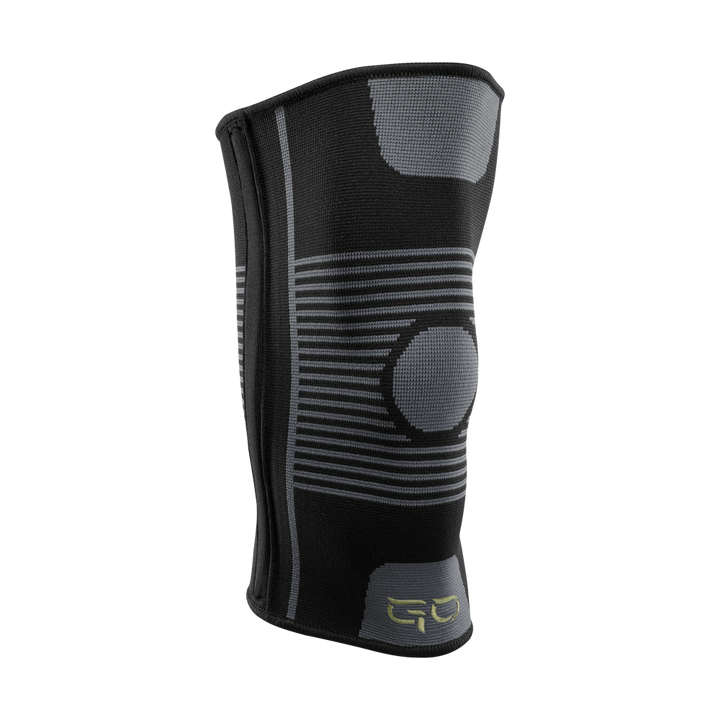
Stabilizes patellar tracking so your knee stops compensating mid-stride, which is exactly the kind of shear force that keeps a degenerated tendon from healing.
GO Kinesiology + Compression Knee Sleeve
$89.95
Don’t let knee pain sabotage your plans! Reduce pain, swelling, and soreness in and around your knee—and accelerate your body’s ability to recover and rebound so you can keep moving. Unlike compression sleeves which just compress, GO Sleeves® Knee Sleeves… Read More
Calf Sleeve
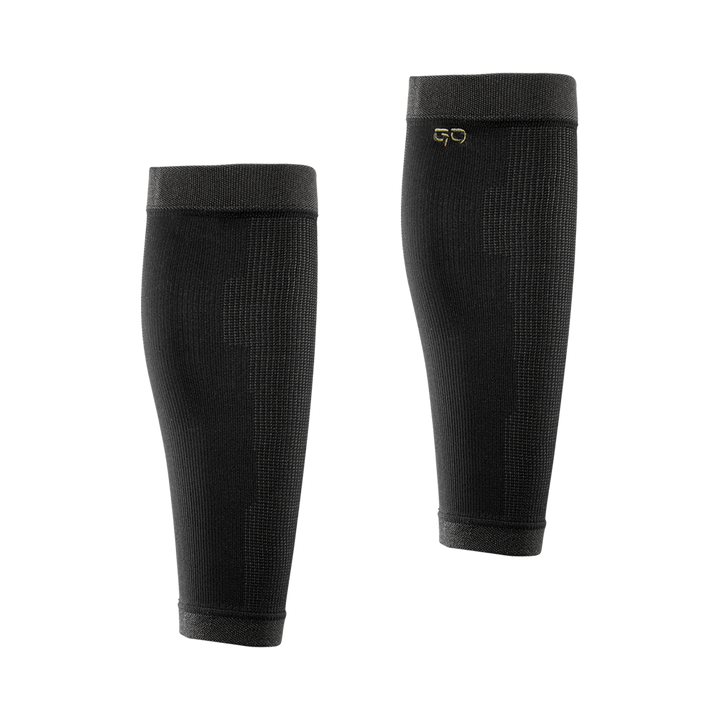
Supports the Achilles and calf complex for runners stuck in the rest-return-flare cycle, keeping the tissue warm and loaded correctly.
GO Kinesiology + Compression Calf Sleeves
$99.95
Just pull them on, and off you go! GO Sleeves® Calf Sleeves are the world’s only compression sleeves with built-in kinesiology strips to secure, correct, and support key ligaments, tendons, and muscles in and around your calf and shin. Unlike… Read More
Whatever joint is flaring up, the principle is the same: support the mechanics, not just the pain. Put the right sleeve on before you load the tendon, and you're not masking the injury — you're actively helping your body track and heal correctly.
FAQs
Should I ever ice my tendonitis?
Ice is a painkiller, not a healer. It’s fine for numbing acute pain immediately after a harsh workout, but don't use it to "cure" the injury. It slows down blood flow, which is the opposite of what a degenerated tendon needs for long-term repair.
Can I wear GO Sleeves while sleeping?
Yes, many of our athletes and everyday movers love this. Sleeping with the sleeves on can help prevent that stiff "morning hobble," especially if you are dealing with chronic tendon issues. The gentle compression supports lymphatic drainage while you rest, helping flush out metabolic waste so you wake up with legs that feel fresh rather than heavy. Always listen to your body and do what feels good for you.
How do I know if I’m "loading" too much?
The rule of thumb is the 24-Hour Test. Mild discomfort during exercise is often okay for tendons. But if your pain is worse the next morning than it was the day before, you did too much. Scale back, but don't stop completely.
How long does tendonitis recovery usually take?
It depends on the tendon and how long it's been degenerating, but most cases need at least 6–12 weeks of consistent load management before you feel a real, lasting difference — sometimes longer for stubborn spots like the Achilles. The timeline speeds up once you stop resting completely and start progressively loading the tissue instead.
Do I need different exercises for different tendons?
The principle stays the same — controlled, progressive loading — but the exercises change by joint. Achilles issues respond well to slow heel drops, elbow issues to grip and wrist work, and knee issues to slow step-downs or squats. Match the movement to the joint, but keep the same "load it, don't just rest it" approach.
The Bottom Line
Your tendon isn't asking for a vacation. It's asking for a promotion. Rest might quiet the pain for a week, but it won't rebuild what's actually damaged — only smart, progressive loading does that. The cycle of rest, return, and flare-up ends the moment you stop treating your tendon like a wound to protect and start treating it like a system to strengthen. Don't fear the movement. Respect the load. Support the mechanics. That's what real tendonitis recovery looks like — and it's exactly what GO Sleeves are built to help you do.
Medical Disclaimer: The information provided in this article is for educational purposes only and does not constitute medical advice, diagnosis, or treatment. Always seek the advice of your physician or other qualified health provider with any questions you may have regarding a medical condition or injury. Never disregard professional medical advice or delay in seeking it because of something you have read on this website.