Table of Contents
Tennis elbow in pickleball is one of the most common injuries in the sport — and one of the most preventable.
Three games into the tournament. Your backhand volley sends a sharp pain through your elbow. You switch to two-handed shots to compensate. By the fifth game, even your forehand hurts.
That night, you can't turn a doorknob without wincing. Lifting a coffee cup hurts. You've got tennis elbow.
You're not alone. Studies show 30-40% of regular pickleball players over 50 develop tennis elbow at some point. The sport's rapid-fire volleys, repetitive wrist extension, and extended play sessions create the perfect storm for lateral epicondylitis.
This guide explains why pickleball causes tennis elbow, how to prevent it, and what to do if you're already dealing with pain.
What Is Tennis Elbow?
Lateral epicondylitis—tennis elbow—is inflammation and micro-tearing of the extensor tendons where they attach to the outside of your elbow (lateral epicondyle).
These tendons control wrist extension and forearm rotation—movements you make hundreds of times during a pickleball session.
What Causes the Pain?
Your forearm extensor muscles (the ones on the back of your forearm) attach to a small bony prominence on the outside of your elbow through a common tendon.
Every time you extend your wrist (like during a backhand) or grip your paddle, these tendons experience tensile loading. Repetitive stress creates micro-tears at the tendon insertion point.
Your body tries to repair the damage. But pickleball players often play multiple games back-to-back, multiple days per week. The damage accumulates faster than healing can occur.
Result: chronic inflammation, pain, and eventually tendon degeneration if you don't address it.
Common Symptoms
Pain on outside of elbow
Worse with gripping and wrist extension
Tender to touch at lateral epicondyle
Weak grip strength
Pain radiating down forearm
Difficulty with simple tasks (turning doorknobs, lifting cups, shaking hands)
Early stages: pain only during/after play. Late stages: constant pain even at rest.
Why Athletes Get Tennis Elbow in Pickleball
Pickleball seems gentler than tennis. Smaller court, lighter paddle, slower ball. But the biomechanics create unique stress patterns that target the extensor tendons.
The Repetition Problem
Pickleball rallies are fast and sustained. A typical game involves 200-400 wrist extension movements. Tournament days can hit 1,000+.
Your extensor tendons don't get breaks between shots the way they do in tennis. The kitchen rules keep you at the net with rapid-fire volleys that demand constant wrist stabilization.
The Grip Problem
Death Grip Syndrome: Many players grip the paddle too tightly, especially when they're tired or trying to control finesse shots. This constant tension overworks the extensor muscles and their tendon attachments.
Incorrect Grip Size: Paddles that are too small force excessive gripping. Paddles too large create awkward wrist positions. Both patterns stress the lateral epicondyle.
The Backhand Problem
The backhand volley is the most common culprit. When you hit backhand, your wrist extends to position the paddle. Your extensor tendons fire to stabilize against ball impact.
Players who slice backhand volleys (cutting under the ball) create even more wrist extension torque. This multiplies stress on the lateral epicondyle.
The Age Factor
Most pickleball players are over 50. Tendon health declines with age:
Reduced Collagen Production: Tendons lose elasticity and become less resilient to repetitive stress.
Slower Healing: Tissue repair slows down. Micro-tears don't heal as quickly between playing sessions.
Decreased Blood Supply: Tendons have limited blood flow to begin with. This decreases further with age, slowing healing even more.
Your 25-year-old tendons could handle 500 backhand volleys per week. Your 60-year-old tendons might max out at 200 before breaking down.
The "More Is Better" Problem
Pickleball is addictive. Players often go from playing once per week to playing five days per week within months. That rapid increase in volume doesn't give tendons time to adapt.
Your cardiovascular system adapts in weeks. Your tendons need months. This mismatch between fitness and tissue capacity causes breakdown.
Prevention Strategies That Actually Work
Prevention is about building tendon resilience and managing playing volume.
1. Eccentric Strengthening (The Gold Standard)
Eccentric exercises load the tendon the same way backhand volleys do. This builds capacity to handle stress without breaking down.
Wrist Extension Eccentrics:
Sit with forearm on table, palm down
Hold light dumbbell (1-3 lbs to start)
Use other hand to lift wrist into extension
Slowly lower (eccentric phase) over 3-5 seconds
3 sets of 15 reps
Do this 3-4x per week
Progression: Gradually increase weight as it becomes easier. Goal is manageable discomfort during the exercise, but pain shouldn't persist more than 24 hours.
Tyler Twist (Flexbar Exercise):
Hold Flexbar vertically with affected arm
Extend wrist to twist the bar
Slowly untwist (eccentric phase) with resistance
3 sets of 15 reps
Highly effective for tennis elbow
2. Improve Grip Strength and Endurance
Strong forearm muscles reduce stress on the tendon attachment.
Farmer's Carries:
Hold moderate dumbbells at your sides
Walk 30-60 seconds
3 sets
Builds grip endurance
Finger Extensor Strengthening:
Wrap rubber band around fingers
Open fingers against resistance
3 sets of 20 reps
Balances flexor/extensor strength
Stress Ball Squeezes:
Squeeze stress ball for 5 seconds
Release
3 sets of 15 reps
3. Fix Your Technique
Relax Your Grip: Hold the paddle firmly but not in a death grip. You should be able to adjust your grip between shots without prying fingers off.
Use Your Body: Generate power from your legs and core, not just your arm. Over-relying on arm muscles increases elbow stress.
Two-Handed Backhand (When Learning): Taking backhands with two hands on the paddle reduces stress on the dominant elbow. Use this while building strength, then transition to one-handed when tendons are stronger.
Avoid Excessive Wrist Extension: Keep your wrist in neutral during volleys when possible. Excessive cocking back increases tendon stress.
4. Check Your Equipment
Paddle Weight: Heavier paddles require more wrist stabilization. If you're dealing with elbow pain, consider a lighter paddle (7.0-7.5 oz).
Grip Size: Measure your grip. The general rule: distance from palm crease to tip of ring finger. Too small forces over-gripping. Too large creates awkward wrist positions.
Paddle Face Material: Softer-faced paddles absorb more vibration. Carbon fiber and polymer cores reduce shock transmission to your elbow compared to hard composite faces.
String Tension: Lower tension in composite paddles reduces vibration. Ask your pro shop about customization.
5. Manage Playing Volume
The 10% Rule: Increase weekly playing time by no more than 10% per week. Going from 2 hours to 6 hours per week is asking for trouble.
Rest Days: Schedule at least 2 complete rest days per week. Your tendons need time to repair.
Avoid Tournament Overload: Playing 8+ hours over a weekend is high risk. If you're doing tournaments, reduce weekday play that week.
Listen to Early Warnings: Slight elbow discomfort after playing? Take an extra rest day. Pushing through early symptoms leads to chronic problems.
6. Use Compression for Support
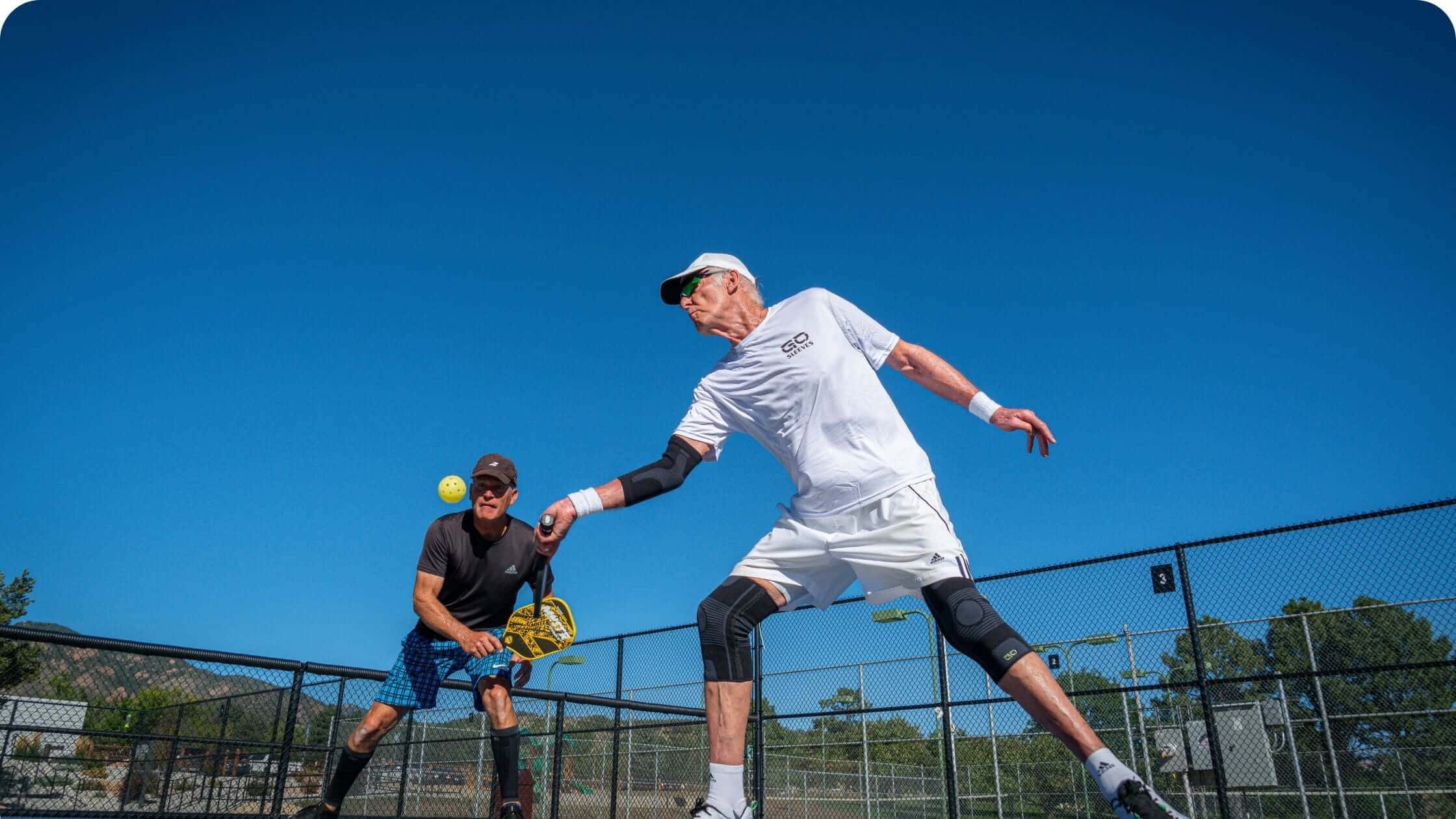
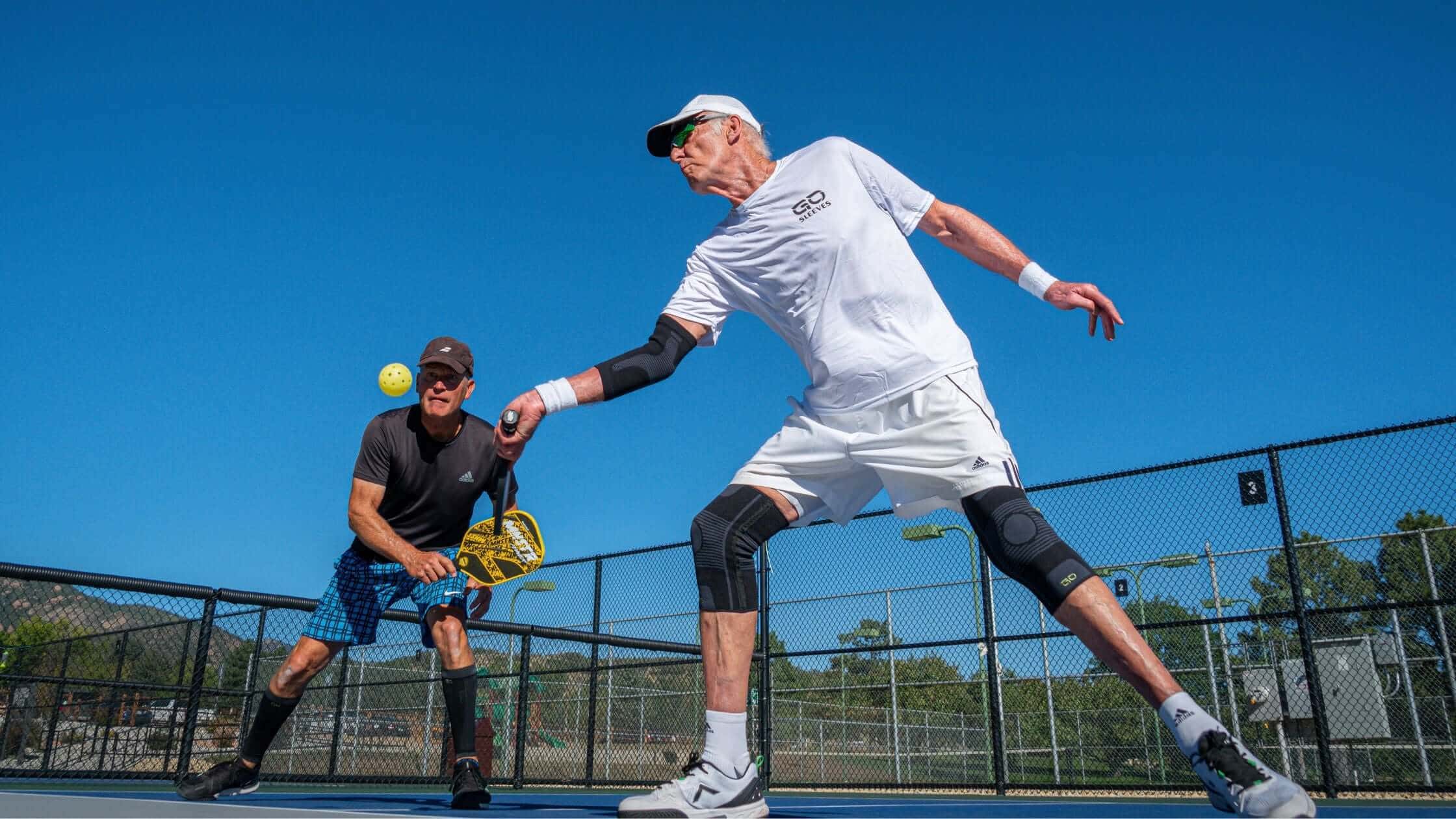
GO Sleeves Elbow Sleeves provide targeted support for the extensor tendons during play.
The embedded silicone patterns are positioned directly over the common extensor tendon attachment—the exact spot where tennis elbow develops. These patterns distribute load more evenly across the muscle-tendon unit, reducing peak stress at the vulnerable insertion point.
The compression enhances proprioception, helping you maintain better wrist mechanics during rapid volleys. Many pickleball players report reduced elbow pain and better control when wearing GO Sleeves during play.
Treatment Protocol If You Already Have Tennis Elbow
If you're dealing with pain, here's the recovery plan:
Phase 1: Reduce Inflammation (Week 1-2)
Relative Rest: Stop playing pickleball. You can do daily activities that don't cause pain, but no gripping or wrist extension under load.
Ice: Apply ice for 15-20 minutes, 3-4 times daily. Ice cup massage directly on the tender spot works best.
Compression: Wear GO Sleeves Elbow Sleeves throughout the day to support circulation and reduce inflammation.
NSAIDs (if appropriate): Ibuprofen or naproxen for first 3-5 days can help manage inflammation. Consult your doctor.
Avoid Aggravating Activities: No lifting, no gripping heavy objects, no pushing doors open with that arm. Let it rest.
Phase 2: Rebuild Tendon Capacity (Week 3-6)
Continue Compression: Wear sleeve during activities and for hours afterward.
Start Eccentric Exercises:
Week 3: Begin wrist extension eccentrics with minimal weight
Week 4: Increase weight slightly if tolerable
Week 5: Add Tyler Twist if you have a Flexbar
Week 6: Continue progressive loading
Pain Rule: Some discomfort during eccentrics is okay (up to 4/10). Pain shouldn't persist more than 24 hours after the session.
Gentle Stretching: Once acute pain subsides, gentle wrist flexor stretching can help. Don't push into painful ranges.
Massage: Use tennis ball or massage tool on forearm extensor muscles. This can help reduce tension that contributes to tendon stress.
Phase 3: Return to Pickleball (Week 7+)
Week 7 (if pain-free with daily activities):
Light ball bouncing with paddle (no partner)
10-15 minutes
Focus on relaxed grip
Week 8 (if progressing):
Gentle volleys with partner
20-30 minutes
No hard shots, no competitive play
Wear GO Sleeves for support
Week 9:
Gradual return to normal play
1-2 games max
Monitor pain levels
Week 10+:
Return to regular playing schedule if pain-free
Continue eccentric exercises 2x per week as maintenance
Use compression during play
Red Flags:
Sharp pain during play
Pain that worsens with activity
Significant weakness in grip
Pain radiating into forearm or hand
If pain returns, take another 1-2 weeks off and restart progression.
When to See a Doctor
See a sports medicine doctor or orthopedic specialist if:
Pain persists beyond 8-12 weeks despite rest and treatment
Severe pain (7+/10) even at rest
Significant weakness in hand/wrist
Numbness or tingling in fingers
Swelling at the elbow
You may need imaging (ultrasound or MRI) to assess tendon damage. Severe cases sometimes require PRP injections, physical therapy, or other interventions.
Long-Term Prevention: Stay Pain-Free
Once you've recovered, avoid making the same mistakes.
Continue Eccentric Work: Wrist extension exercises 2x per week. Forever. This is maintenance.
Monitor Playing Volume: Don't go from 0 to 10 hours per week in a month. Build gradually.
Check Your Grip: Regularly assess whether you're death-gripping the paddle. Relax between shots.
Equipment Audit: Re-evaluate paddle weight and grip size annually. What worked at 55 might not work at 65.
Use Compression Proactively: Many players wear GO Sleeves during play to manage tendon stress before it becomes a problem.
Address Early Symptoms: Slight elbow discomfort after a tournament? Take 3-4 days off. It's easier to prevent than treat.
FAQs
Can I keep playing pickleball with tennis elbow?
Mild discomfort (2-3/10) that doesn't worsen might be manageable if you reduce playing time and do eccentric strengthening. Moderate to severe pain requires complete rest. Playing through significant pain risks permanent tendon damage.
How long does tennis elbow take to heal?
Mild cases improve in 4-6 weeks with proper rest and treatment. Moderate cases take 8-12 weeks. Chronic severe cases can require 6+ months. Early intervention dramatically shortens recovery.
Why is tennis elbow in pickleball so common in players over 50?
Tendons degenerate with age. Reduced collagen production, slower healing, and decreased blood supply make tendons less resilient. The repetitive wrist extension movements in pickleball create stress that aging tendons struggle to handle.
Will a lighter paddle prevent tennis elbow?
A lighter paddle reduces the work your wrist muscles have to do, which can help. But it's not enough alone. You also need proper technique, adequate rest, and tendon strengthening exercises.
Should I use a tennis elbow strap?
Tennis elbow straps (worn just below the elbow) can provide some relief by changing force distribution. GO Sleeves use similar principles but with embedded patterns that enhance proprioception and provide more comprehensive support. Many players find full-sleeve compression more effective than simple straps.
Do compression sleeves actually help with tennis elbow?
Regular compression provides some support. GO Sleeves are different—they have patterns positioned directly over the common extensor tendon to distribute load more evenly and enhance proprioception. Many pickleball players report reduced pain and better control. They're not a replacement for rest and strengthening, but they support better mechanics during play.
Can I switch to a two-handed backhand to avoid tennis elbow?
Yes, temporarily. A two-handed backhand reduces stress on the dominant arm's extensor tendons. Use this while building strength, then transition back to one-handed when tendons are stronger.
Will tennis elbow heal on its own if I rest?
Rest reduces inflammation, but rest alone rarely fixes chronic tennis elbow. You need eccentric strengthening to rebuild tendon capacity. Without it, pain returns when you resume playing.
Is there a "best" paddle to prevent tennis elbow?
No single best paddle, but look for: lighter weight (7.0-7.5 oz), proper grip size for your hand, softer face material (polymer core better than hard composite), and good vibration dampening. Test before buying if possible.
Why use Go Sleeves for Tennis Elbow in Pickleball
GO Sleeves use the same biomechanical principles as kinesiology taping—skin stretch to activate mechanoreceptors and enhance proprioception—but built into a reusable sleeve.
No learning curve. Pull it on and go. No figuring out which tape pattern to use or how to apply it correctly.
No daily cost. Tape costs $15-20 per roll and lasts 3-5 days. GO Sleeves last 6-12 months.
No skin irritation. No adhesive residue. No painful removal after sweaty workouts.
Consistent support. Same positioning every time. Tape effectiveness varies based on who applies it and degrades during activity.
GO Kinesiology + Compression Elbow Sleeve
$89.95
Accelerate recovery and reduce pain, swelling, and soreness related to Golf and Tennis Elbow with the world’s only compression sleeves with built-in kinesiology strips to secure, correct, and support key ligaments, tendons, and muscles in and around your elbow. Unlike compression… Read More

The Bottom Line
Tennis elbow in pickleball develops from repetitive wrist extension and gripping movements that overload the extensor tendons. Pickleball's rapid volleys, extended rallies, and often-excessive playing volume create perfect conditions for lateral epicondylitis.
Players over 50 face higher risk because tendons degenerate with age. Your body can't handle the same volume at 60 that it could at 40.
Prevent tennis elbow by building tendon capacity through eccentric exercises, managing playing volume, using proper technique, and choosing appropriate equipment.
If you already have it, rest is required. But rest alone won't rebuild tendon capacity—you need eccentric strengthening.
Do the work, manage your playing time, and you'll play pain-free for years.
Medical Disclaimer: The information provided in this article is for educational purposes only and does not constitute medical advice, diagnosis, or treatment. Always seek the advice of your physician or other qualified health provider with any questions you may have regarding a medical condition or injury.