Table of Contents
First run back after a week off. Feels great. Second run, slight tightness in your shins. Third run, sharp pain along the inside of your leg. By week two, you're hobbling through warm-up wondering if you'll ever run pain-free again — and wishing you knew how to prevent shin splints before they started.
Shin splints start quietly. Then they scream.
The good news: they're preventable and treatable. This guide explains exactly why they happen, how to stop them before they start, and what to do if you're already dealing with them.
What Are Shin Splints?
Medial tibial stress syndrome (MTSS)—commonly called shin splints—is pain along the inner edge of your shinbone (tibia). It affects 13-20% of runners, making it one of the most common running injuries.
The pain typically develops gradually. First run feels fine. Second week, you notice discomfort during the run. By week three, you're limping through warm-up and wondering if your running days are over.
What Causes the Pain?
Your shinbone is surrounded by muscles and connective tissue. When you run, these muscles—particularly the tibialis posterior and soleus—work to control foot motion and absorb impact.
Repetitive stress on these muscles and their fascial attachments creates micro-tears where the tissue connects to the bone. Your body tries to repair the damage, but if you keep running without addressing the cause, inflammation builds faster than healing can occur.
The result: pain along the inner shin that gets worse with continued activity.
Anterior vs. Posterior Shin Splints
Posterior (Medial) Shin Splints: Pain along the inner edge of the shin. Most common type. Involves the tibialis posterior muscle and its fascial connections.
Anterior Shin Splints: Pain along the front-outside of the shin. Less common. Involves the tibialis anterior muscle that lifts your foot during swing phase.
This guide focuses primarily on posterior shin splints since they're far more prevalent in runners.
Common Symptoms
Pain along inner edge of shin (lower two-thirds of tibia)
Worse at the start of runs, may improve as you warm up
Returns immediately after running
Tender to touch along the shin
Pain when you rise up on toes
Swelling in lower leg (sometimes)
Sound familiar? Keep reading.
Why Runners Get Shin Splints: The Root Causes
Shin splints aren't random. They develop from predictable patterns—usually a combination of training errors and biomechanical factors.
Training Errors (The Trigger)
Too Much, Too Soon: The most common cause. Increasing weekly mileage by more than 10% per week overloads tissues before they can adapt.
Surface Changes: Switching from treadmill to road, or road to track, changes impact patterns. Your body needs time to adapt.
Inadequate Recovery: Running every day without rest days prevents tissue repair. Micro-damage accumulates faster than healing.
Worn-Out Shoes: Shoes lose cushioning after 300-500 miles. Degraded midsoles increase impact stress on your shins.
Hard Surfaces: Concrete is unforgiving. Running exclusively on hard surfaces increases shin stress compared to softer trails or tracks.
Biomechanical Factors (The Underlying Weakness)
Overpronation: When your foot rolls inward excessively during footstrike, it creates torsional stress on the tibia. The tibialis posterior muscle has to work overtime to control this motion.
Weak Calves: Your gastrocnemius and soleus absorb impact with every footstrike. If they're weak, more stress transfers to the shin muscles and bone.
Tight Calves: Paradoxically, tight calves also contribute. Limited ankle dorsiflexion (ability to bring toes toward shin) changes landing mechanics and increases shin stress.
Poor Running Form: Overstriding (landing with foot too far in front of your body) increases braking forces and impact stress. Your shins bear the brunt.
Weak Hip Stabilizers: Weak glutes allow your femur to rotate inward during footstrike, which affects the entire lower leg alignment and increases shin stress.
Who's Most at Risk?
New runners (body not adapted to impact)
Runners returning after time off
Athletes transitioning from low-impact sports
Runners with flat feet or high arches
Those who've had shin splints before
How to Prevent Shin Splints
Prevention is about managing training load and fixing biomechanical weaknesses before pain develops.
1. Follow Smart Training Progression
The 10% Rule: Increase weekly mileage by no more than 10% per week. Your bones and connective tissue adapt slower than your cardiovascular system. Just because you're not breathing hard doesn't mean your shins can handle the load.
Build Aerobic Base First: Run at conversational pace for 6-8 weeks before adding speed work or hills. Base building allows tissue adaptation without excessive stress.
Rest Days Are Training Days: Schedule at least 1-2 rest days per week. This is when your body repairs micro-damage and gets stronger.
Cross-Train: Swimming, cycling, and elliptical provide cardiovascular work without impact stress. Use them to supplement running volume.
2. Strengthen Your Calves and Shins
Strong muscles absorb impact better and reduce stress on the bone.
Calf Raises:
Stand on edge of step, heels hanging off
Rise up on toes, pause at top
Lower slowly below step level (eccentric phase is key)
3 sets of 15-20 reps
Progress to single-leg when ready
Toe Raises (for Tibialis Anterior):
Stand with back against wall
Lift toes toward shins, keep heels on ground
Hold 2 seconds at top
3 sets of 20 reps
Toe Walks:
Walk on tiptoes for 30-60 seconds
3 sets
Strengthens calves and improves ankle stability
Heel Walks:
Walk on heels with toes lifted
30-60 seconds
3 sets
Strengthens tibialis anterior
Seated Calf Raises:
Sit with weight on thighs (dumbbell or barbell)
Rise up on toes
3 sets of 15-20 reps
Targets soleus specifically
3. Improve Ankle Mobility
Tight calves and restricted ankle dorsiflexion contribute to shin splints.
Calf Stretch (Gastrocnemius):
Lunge position, back leg straight
Keep back heel on ground
Lean forward until you feel stretch in calf
Hold 60 seconds per side
Do this 2-3 times daily
Soleus Stretch:
Same lunge position, but bend back knee
Keep back heel on ground
Feel stretch lower in calf near Achilles
Hold 60 seconds per side
Wall Ankle Mobilization:
Face wall, toes 4-6 inches from wall
Bend knee toward wall, keep heel down
Goal: touch knee to wall without heel lifting
10-15 reps per side
4. Fix Your Running Form
Increase Cadence: Aim for 170-180 steps per minute. Shorter, quicker steps reduce impact forces and prevent overstriding. Use a metronome app during runs.
Land With Foot Under Your Hips: Your footstrike should be close to your center of mass, not out in front. This reduces braking forces.
Run Quietly: Loud footfalls indicate high impact forces. Focus on landing softly.
Lean From Ankles, Not Waist: Slight forward lean from ankles helps you land mid-foot instead of heel-striking.
5. Choose the Right Running Surface
Vary Your Surfaces: Don't run exclusively on concrete. Mix in softer surfaces like:
Trails (softest, most forgiving)
Grass fields
Dirt paths
Rubber tracks
Asphalt (softer than concrete)
Treadmills: Good option for reducing impact, especially with cushioned decks. But don't transition from treadmill to road too quickly—the impact patterns differ.
6. Replace Shoes on Schedule
Track Your Mileage: Most running shoes last 300-500 miles depending on your weight, form, and surfaces.
Signs It's Time:
Worn tread on outsole
Compressed midsole (press with thumb—should bounce back)
Heel counter feels soft or broken down
You notice new aches and pains
Get Properly Fitted: Visit a running store for gait analysis. Overpronators may benefit from stability shoes; neutral runners need neutral cushioning.
7. Use Compression to Support Your Shins
GO Sleeves Calf Sleeves provide targeted support for the muscles that absorb impact during running.
The embedded silicone patterns follow the gastrocnemius and soleus muscle fibers—the muscles doing most of the work during footstrike. These patterns manipulate fascia to enhance proprioception and reduce muscle oscillation.
Better proprioception means better landing mechanics. Less oscillation means less wasted energy and stress on surrounding tissues—including your shins.
The graduated compression improves circulation and accelerates lymphatic drainage, helping clear inflammatory markers that build up during training. Many runners report reduced shin discomfort and faster recovery when wearing GO Sleeves consistently.
Kinesiology Tape Science, Built Into a Compression Sleeve
GO Sleeves use the same biomechanical principles as kinesiology taping—skin stretch to activate mechanoreceptors and enhance proprioception—but built into a reusable sleeve.
No learning curve. Pull it on and go. No complicated tutorials on proper application.
No daily cost. Tape costs $15-20 per roll and lasts 3-5 days. GO Sleeves last 6-12 months.
No skin irritation. No adhesive residue. No painful removal after sweaty workouts.
Consistent support. Same positioning every time. Tape effectiveness varies based on who applies it and degrades during activity.
Same science. Zero hassle. Learn more about the science behind GO Sleeves.
Treatment Protocol If You Already Have Shin Splints
If you're wondering how to prevent shin splints from becoming a stress fracture, here's the recovery roadmap:
Phase 1: Acute Management (Days 1-7)
STOP RUNNING IMMEDIATELY: This is non-negotiable. Running through shin splint pain risks stress fractures. You'll be sidelined much longer if that happens.
Ice: Apply ice for 15-20 minutes, 3-4 times daily for the first 72 hours. Use an ice cup massage directly on the painful area—freeze water in a paper cup, peel back the top, and massage in circles.
Compression: Wear GO Sleeves Calf Sleeves throughout the day to support circulation and reduce inflammation. The fascial manipulation and compression help manage swelling even when you're not exercising.
Elevation: When sitting or lying down, elevate your legs above heart level to reduce swelling.
NSAIDs (if appropriate): Ibuprofen or naproxen can help manage inflammation in the first few days. Follow dosing instructions and consult your doctor if you have any health conditions.
No Impact Activities: No running, no jumping, no cutting sports. Rest means rest.
Phase 2: Active Recovery (Weeks 1-2)
Continue Ice & Compression: Keep using ice after any activity and wear compression throughout the day.
Cross-Train (if pain-free):
Swimming (excellent option—no impact)
Pool running (use flotation belt)
Cycling (if pain-free)
Upper body strength training
Yoga or stretching
Start Strengthening: Begin the calf and shin strengthening exercises listed above. Do them daily. Build the foundation you need to return to running.
Improve Flexibility: Stretch calves and work on ankle mobility 2-3 times daily.
Massage: Use foam roller or massage stick on calves. Apply gentle pressure to the tibialis posterior muscle along the inner shin (careful—it will be tender).
Phase 3: Return to Running (Weeks 3-4+)
The Walk Test: Before returning to running, you should be able to walk briskly for 30 minutes with zero pain.
Week 3 (if pain-free):
Start with run-walk intervals
1 minute running, 2 minutes walking
20 minutes total
Every other day only
Wear GO Sleeves for support
Week 4 (if still pain-free):
Increase to 2 minutes running, 1 minute walking
25-30 minutes total
Every other day
Week 5 (if progressing well):
4 minutes running, 1 minute walking
30 minutes total
Every other day
Week 6+:
Continuous running if completely pain-free
Start with 20 minutes easy
Increase by 5 minutes per week maximum
All runs at conversational pace
Red Flags to Stop:
Any shin pain during or after running
Swelling in the shin area
Pain that worsens with activity
Pain that doesn't improve with rest
If pain returns at any point, take another week off and restart the progression.
When to See a Doctor
See a sports medicine doctor or physical therapist if:
Pain persists beyond 4-6 weeks despite rest and treatment
Pain is severe or sharp (possible stress fracture)
Swelling is significant
Pain occurs even when not running
You hear or feel a snap/pop
Numbness or tingling in foot
You may need imaging (X-ray or MRI) to rule out stress fractures or compartment syndrome.
The Difference Between Shin Splints and Stress Fractures
Shin splints: Pain along the inner edge of the shin, often over a larger area (several inches). Pain typically improves during a run after warm-up.
Stress fracture: Pinpoint pain in one specific spot (you can point to it with one finger). Pain gets worse during running and doesn't improve with warm-up. This is a medical emergency—stop running immediately and see a doctor.
The Hop Test: If you can't hop on the affected leg 10 times without significant pain, see a doctor to rule out stress fracture.
Long-Term Prevention: Stay Shin-Splint Free
Once you've recovered, don't make the same mistakes:
Continue Strengthening: Calf raises and shin strengthening aren't just for recovery—they're maintenance. Do them 2-3x per week forever.
Respect the 10% Rule: Always. Even when you feel great.
Replace Shoes Regularly: Track mileage and replace before they're completely dead.
Listen to Early Warnings: Slight shin discomfort after a run? Take an extra rest day. It's easier to prevent than treat.
Use Compression Proactively: Many runners wear GO Sleeves during training runs and for hours after to maintain healthy circulation and reduce cumulative stress.
Cross-Train Regularly: Swimming or cycling 1-2x per week gives your shins a break from impact while maintaining fitness.
FAQs
Can I keep running with shin splints?
No. Running through shin splint pain increases the risk of developing a stress fracture, which requires 6-12 weeks of complete rest. Take time off now (2-4 weeks) or risk being sidelined much longer later.
How long do shin splints take to heal?
With proper rest and treatment, mild shin splints improve in 2-3 weeks. Moderate cases take 4-6 weeks. Severe cases can require 8-12 weeks. The timeline depends on how early you stop running and how consistently you do rehab work.
Will shin splints go away on their own?
Shin splints need rest to heal. If you continue running, they won't resolve and may progress to stress fractures. Rest alone helps, but combining rest with strengthening, stretching, and form corrections prevents recurrence.
Are shin splints the same as stress fractures?
No. Shin splints involve inflammation of muscles and connective tissue. Stress fractures are actual cracks in the bone. Stress fractures are more serious and take much longer to heal. Untreated shin splints can progress to stress fractures if you keep running through the pain.
Do compression sleeves actually help with shin splints?
Regular compression provides some support but doesn't address biomechanics. GO Sleeves are different—they use embedded patterns that reduce muscle oscillation during footstrike and enhance proprioception for better landing mechanics. Many runners report reduced shin discomfort and faster recovery. They're not a replacement for rest and strengthening, but they support your shins during and after training.
Can I run on a treadmill with shin splints?
No. Treadmills reduce impact slightly compared to concrete, but you're still subjecting your shins to repetitive stress. You need complete rest from running—no roads, no trails, no treadmills.
Should I stretch before or after running?
Dynamic stretching before (leg swings, walking lunges). Static stretching after (hold calf stretches for 60 seconds). Never do static stretching on cold muscles.
Can flat feet or high arches cause shin splints?
Yes. Both extremes affect how your foot and lower leg absorb impact. Flat feet often overpronate, stressing the tibialis posterior. High arches can create more impact shock. Proper footwear and orthotics (if needed) help manage these issues.
Will strengthening my calves prevent shin splints?
Strong calves are one piece of the puzzle. You also need proper training progression, good running form, adequate recovery, and appropriate footwear. But yes—calf strength significantly reduces shin splint risk by absorbing impact forces that would otherwise stress the shin.
How do I prevent shin splints from coming back?
Keep doing the strengthening work after you recover — calf raises and shin exercises aren't just rehab, they're maintenance. Most recurrences happen because runners return to their old habits once the pain is gone.
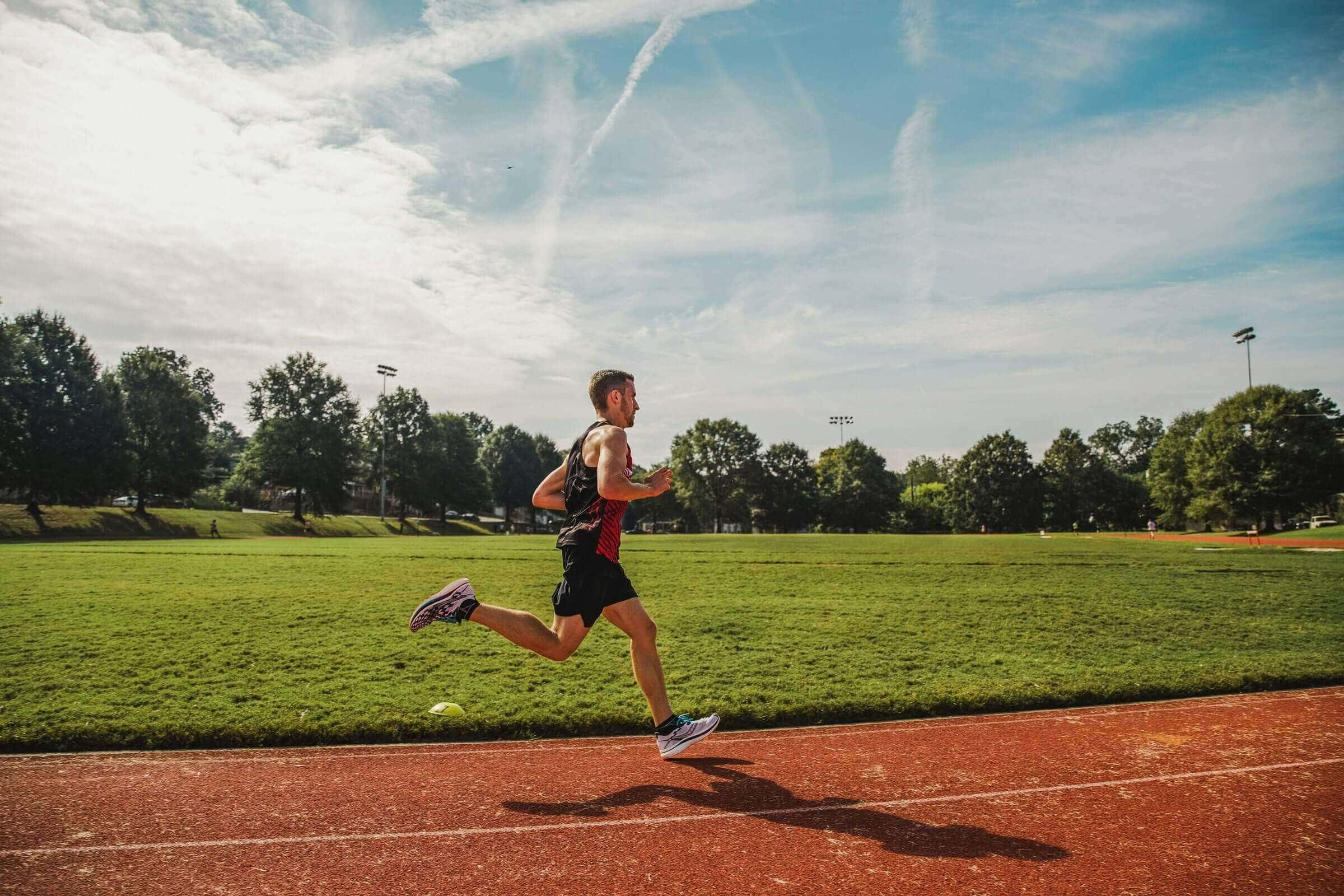
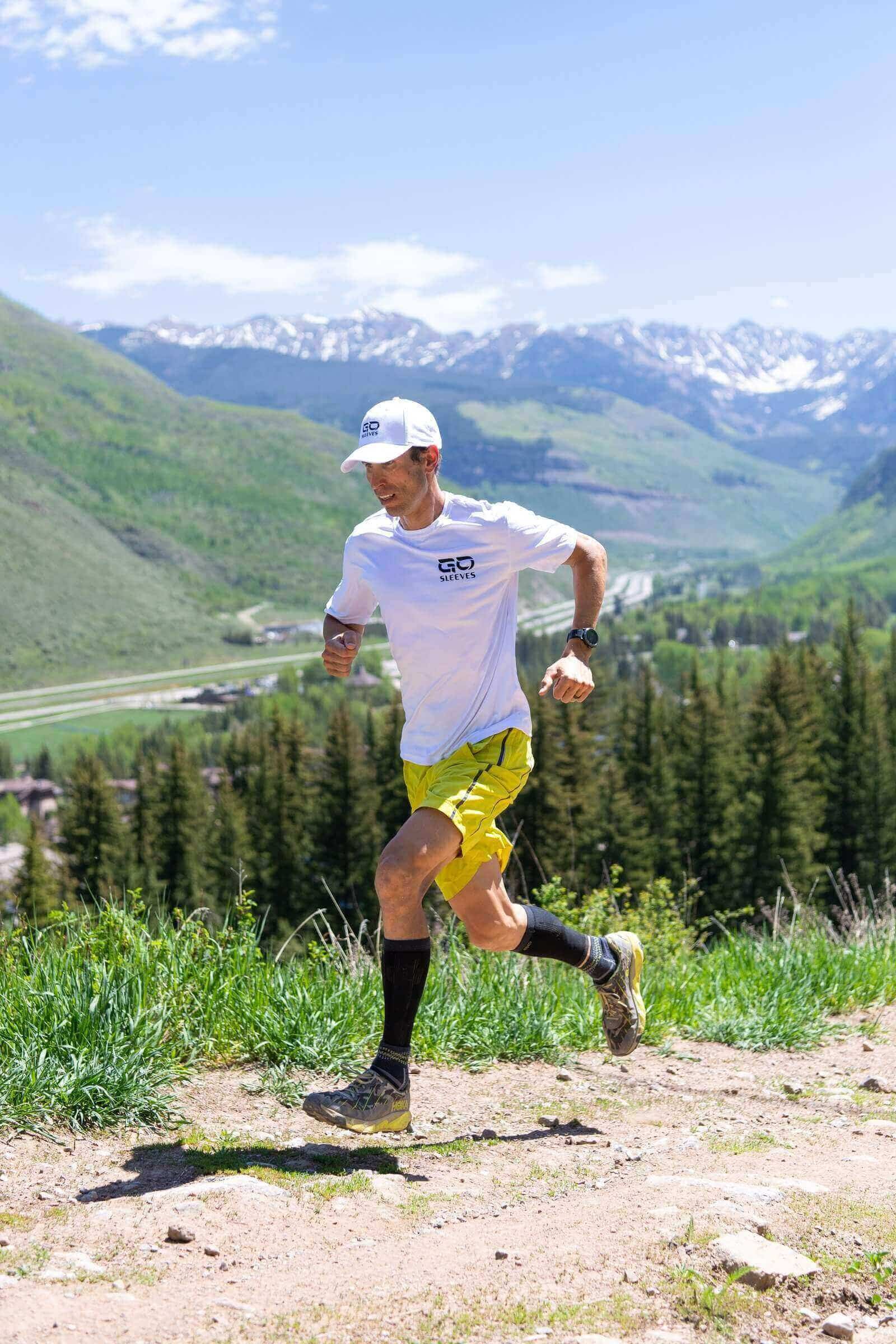 GO Sleeves brand ambassador, Josiah Middaugh, wearing a pair of calf sleeves, showing how to prevent shin splints.
How GO Sleeves Support Shin Health
Most compression products treat shin splints as a circulation problem. GO Sleeves treat it as a biomechanics problem—which is closer to the truth.
The Biomechanics Behind GO Sleeves
GO Sleeves Calf Sleeves use embedded silicone patterns engineered to follow the gastrocnemius and soleus muscle fibers—the same muscles that absorb impact with every footstrike. These patterns work on two levels:
Reduced muscle oscillation. Every footstrike sends a shockwave through your lower leg. Muscles vibrate—and that vibration creates micro-damage over miles of running. The silicone patterns dampen muscle oscillation at the source, reducing cumulative stress on the tibialis posterior and surrounding shin tissue.
Enhanced proprioception. The patterns create gentle skin stretch that activates mechanoreceptors—the sensory receptors that tell your nervous system where your foot is in space. Better proprioceptive feedback means better landing mechanics: a more natural footstrike, reduced overstriding, and less torsional stress on the tibia. This is the same principle behind kinesiology taping, built into a sleeve you pull on in seconds.
GO Sleeves for Shin Splints Prevention
If you’re healthy and training hard, GO Sleeves are a proactive tool. Wear them during runs to reduce impact-related stress on your shins with every mile. Wear them after runs to support circulation and help clear the inflammatory markers that accumulate during training. Many runners who have struggled with recurring shin splints in the past report staying pain-free once they make GO Sleeves a consistent part of their routine.
GO Sleeves for Shin Splints Recovery
If you’re already dealing with shin pain, GO Sleeves become part of your treatment toolkit—not a replacement for rest, but a complement to it. The graduated compression accelerates lymphatic drainage to help manage swelling in the acute phase. The fascial manipulation patterns reduce tension in the surrounding musculature, easing discomfort even when you’re not exercising. And when you return to running during the later phases of recovery, the proprioceptive support helps you move with better mechanics from the very first step back.
GO Sleeves vs. Standard Compression: What’s the Difference?
Standard compression socks squeeze uniformly. That improves blood flow—useful, but limited. GO Sleeves add targeted fascial manipulation through the silicone pattern layer, which is what standard compression cannot do. The result is support that goes beyond circulation: it actively influences how your muscles function and how your nervous system communicates with your legs while you run.
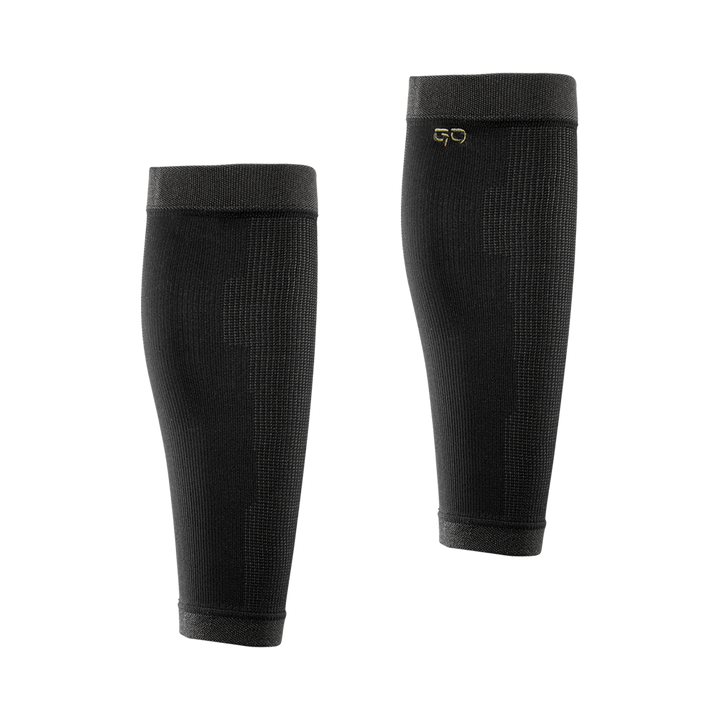
GO Kinesiology + Compression Calf Sleeves
$99.95
Just pull them on, and off you go! GO Sleeves® Calf Sleeves are the world’s only compression sleeves with built-in kinesiology strips to secure, correct, and support key ligaments, tendons, and muscles in and around your calf and shin. Unlike… Read More
The Bottom Line
Shin splints develop when training load exceeds your body's capacity to adapt. Too much running, too soon, combined with weak calves, tight muscles, or poor form creates the perfect storm.
Fix those things, and you fix shin splints.
Rest when pain develops. Strengthen your calves and shins. Improve ankle mobility. Progress training intelligently. Fix your form. Support your tissues with targeted compression.
Now you know how to prevent shin splints — put it into practice.
Medical Disclaimer: The information provided in this article is for educational purposes only and does not constitute medical advice, diagnosis, or treatment. Always seek the advice of your physician or other qualified health provider with any questions you may have regarding a medical condition or injury.