Table of Contents
- Why Soccer Players Injure Their Knees
- Which Muscles Support Knee Stability?
- Essential Knee Strengthening Exercises for Soccer
- 1. Nordic Hamstring Curls (ACL Protection)
- 2. Single-Leg Romanian Deadlifts (Hip Stability + Hamstrings)
- 3. Lateral Band Walks (Glute Med Activation)
- 4. Single-Leg Box Squats (Quad + Glute Strength)
- 5. Copenhagen Planks (Hip Adduction)
- 6. Bulgarian Split Squats (Quad + Glute + Balance)
- 7. Banded Monster Walks (Glute Max + Med)
- How Landing and Cutting Mechanics Prevent ACL Injuries in Soccer
- How Should Knee Training Differ by Soccer Position?
- Can Compression Sleeves Improve Knee Stability?
- When to Do Strength Training
- Signs Your Knees Need More Support
- FAQs
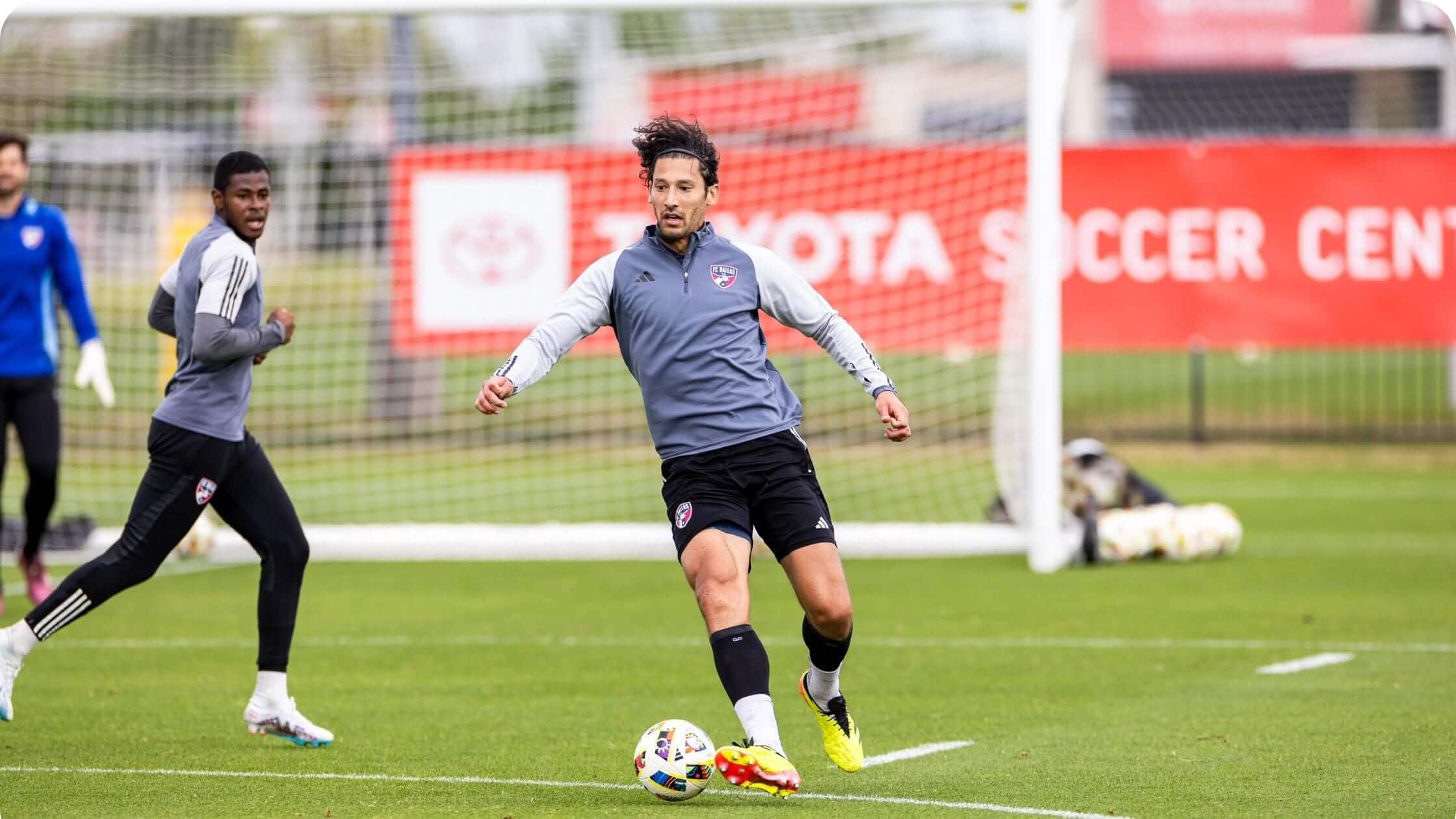
- Trinity Armstrong, GO Sleeves partner and national league soccer player, wearing GO Knee Sleeves during training.
- Why Do Soccer Players Wear GO Sleeves?
- The Bottom Line
Your teammate goes down. No contact. Just a plant-and-cut that went wrong. The trainer's already calling for a stretcher before you reach her. ACL injury prevention in soccer isn't just about avoiding contact—it's about training your body to handle the demands of the game.
You've seen it before. ACL tear. Season over. Nine months of rehab. Maybe she comes back at 100%. Maybe she doesn't.
Soccer players tear their ACLs at 4-6 times the rate of athletes in non-contact sports. Female players face even higher risk—up to 8 times more than males in the same sport. The cuts, the pivots, the sudden decelerations create forces your knee wasn't built to handle.
Your knees don't fail because they're weak. They fail because the muscles that control them aren't strong enough to handle the forces soccer generates.
This guide breaks down exactly which muscles protect your knees, how to strengthen them, and the movement patterns that reduce injury risk.
Why Soccer Players Injure Their Knees
Soccer demands explosive movements your knees have to control: sprint-to-stop in two steps, plant and cut at full speed, land from headers, slide tackle with full body weight.
Your ACL (anterior cruciate ligament) prevents your tibia from sliding forward on your femur. When forces exceed what your ACL can handle, it tears.
The ACL Injury Mechanism
Non-contact ACL tears happen when:
You decelerate rapidly (stopping from a sprint)
You plant and cut (change direction)
You land from a jump with poor mechanics
Your knee collapses inward (valgus collapse)
The common pattern: Foot plants. Knee caves inward. Tibia rotates outward. ACL tears.
This happens in milliseconds. You can't think your way out of it. Your muscles have to react automatically with the right pattern.
Risk Factors You Can Control
Weak Hip Stabilizers (Glutes): When your glutes are weak, your femur rotates inward during cutting and landing. This creates valgus stress (knee caving in) that overloads the ACL.
Quad Dominance: Many players are quad-dominant—their quads are much stronger than their hamstrings. During deceleration, quads pull the tibia forward. If hamstrings can't counteract this, ACL stress increases.
Poor Landing Mechanics: Landing stiff-legged or with knees together puts massive stress on the ACL. Proper landing mechanics distribute forces across multiple joints.
Weak Core: Core instability affects everything downstream. If your pelvis isn't stable, your femur position changes, and knee stress increases.
Inadequate Hamstring Strength: Hamstrings are ACL protectors. They pull the tibia backward, opposing the forward slide that tears the ACL. Weak hamstrings = less ACL protection.
Which Muscles Support Knee Stability?
Understanding which muscles matter helps you prioritize training.
Glutes (Hip Stabilizers)
Gluteus Maximus: Controls femoral rotation. Strong glutes keep your femur from rotating inward during cutting.
Gluteus Medius: Prevents hip drop and knee valgus during single-leg movements. Critical for landing mechanics.
Why it matters: Weak glutes are the #1 biomechanical risk factor for ACL tears.
Hamstrings (ACL Protectors)
Function: Pull tibia backward, opposing forward slide. Act as dynamic ACL support during deceleration.
Why it matters: Strong hamstrings reduce ACL loading by 30-50% during high-risk movements.
Quadriceps (Controlled Power)
Function: Extend knee, absorb landing forces.
Why it matters: You need strong quads for power, but balanced with hamstrings. Quad-to-hamstring strength ratio should be 1:0.6-0.8 (quads slightly stronger, but not dominant).
Core (Foundation)
Function: Stabilizes pelvis, controls trunk position.
Why it matters: Core stability affects lower body mechanics. Unstable core = poor knee alignment.
Calves (Ankle Stability)
Function: Control ankle motion, absorb impact.
Why it matters: Ankle stability affects forces transmitted to the knee. Weak calves increase knee stress.
Essential Knee Strengthening Exercises for Soccer
These exercises target the muscles most responsible for ACL injury prevention in soccer, helping players maintain knee stability during cutting, landing, and deceleration.
1. Nordic Hamstring Curls (ACL Protection)
The Gold Standard for ACL Prevention
Studies show Nordic curls reduce hamstring injuries by 50% and ACL injuries by 30-40%.
How to do it:
Kneel on pad, ankles secured (partner holds or anchor under rack)
Lean forward slowly, controlling descent with hamstrings
Use hands to catch yourself at bottom
Push back to start position
3 sets of 5-8 reps
Progress to 3 sets of 10-12 over weeks
Why it works: Eccentric hamstring loading builds the exact strength pattern needed to protect your ACL during deceleration.
Progression: As you get stronger, lower yourself slower. Goal: 5-second eccentric phase.
2. Single-Leg Romanian Deadlifts (Hip Stability + Hamstrings)
How to do it:
Stand on one leg, slight knee bend
Hinge at hip, reach toward ground with opposite hand
Keep back flat, standing leg knee stable
Feel hamstring stretch in standing leg
Return to standing
3 sets of 10 per leg
Why it works: Builds single-leg balance, hip stability, and hamstring strength simultaneously. Mimics the single-leg loading during soccer movements.
Add weight: Start bodyweight, progress to dumbbell (5-20 lbs).
3. Lateral Band Walks (Glute Med Activation)
How to do it:
Mini resistance band around ankles or just above knees
Quarter squat position
Step sideways, maintaining tension
Don't let knees cave inward
3 sets of 15-20 steps each direction
Why it works: Gluteus medius is critical for preventing knee valgus. This exercise isolates and strengthens it.
Progression: Use thicker band or move band higher (above knees creates more resistance).
4. Single-Leg Box Squats (Quad + Glute Strength)
How to do it:
Stand on one leg in front of box (12-18 inches high)
Lower slowly to tap box with glutes
Keep knee tracking over toes (don't let it cave in)
Drive through heel to stand
3 sets of 8-10 per leg
Why it works: Builds single-leg strength with controlled knee alignment. Teaches proper knee tracking under load.
Progression: Lower box height or add weight (hold dumbbell).
5. Copenhagen Planks (Hip Adduction)
How to do it:
Side plank position, top leg on bench
Bottom leg hanging
Hold body straight, engaging core
3-4 sets of 20-30 seconds per side
Why it works: Hip adductors prevent knee valgus during cutting. This exercise strengthens them effectively.
Regression: Start with bottom leg on ground, top leg on bench.
6. Bulgarian Split Squats (Quad + Glute + Balance)
How to do it:
Rear foot elevated on bench
Lower into lunge position
Front knee stays over ankle
Drive through front heel to stand
3 sets of 10-12 per leg
Why it works: Single-leg loaded movement builds strength in positions similar to cutting and decelerating.
Add weight: Hold dumbbells at sides (start light, 10-20 lbs).
7. Banded Monster Walks (Glute Max + Med)
How to do it:
Resistance band around thighs just above knees
Slight forward lean
Step forward and out at 45-degree angle
Maintain tension throughout
3 sets of 10 steps forward, 10 backward
Why it works: Activates both gluteus maximus and medius. Mimics the multi-directional loading in soccer.
How Landing and Cutting Mechanics Prevent ACL Injuries in Soccer
Strength alone isn't enough. You need to train proper movement patterns.
Proper Landing Mechanics
Box Drop Landing Drills:
Step off box (12-18 inches)
Land softly with both feet
Knees bent, weight on balls of feet
Knees tracking over toes (not caving in)
Hips back, trunk slightly forward
Stick landing for 2 seconds
3 sets of 10 reps
Cues:
"Land like a ninja" (quiet landing)
"Knees out" (prevent valgus)
"Soft knees" (don't land stiff-legged)
Progress to:
Single-leg landings
Lateral box drops (side-to-side)
Reactive drops (coach calls which leg to land on)
Cutting Mechanics Training
Cone Cutting Drills:
Set up cones in zigzag pattern
Sprint to cone, plant and cut
Focus on:
Outside foot plants
Knee tracks over toes during cut
Hip stays back (don't lean too far forward)
Quick foot contact (don't hesitate)
3-4 sets of 5 cuts per direction
Progress to:
Faster speeds
Sharper angles
Reactive cuts (coach points direction mid-sprint)
Deceleration Training
Sprint-to-Stop Drills:
Sprint 10-15 yards
Stop in 2-3 steps
Focus on:
Small, quick steps during deceleration
Knees bent (absorb force)
Chest stays up
Weight balanced (not too far forward)
5-6 sets
Why it matters: Most ACL tears happen during deceleration, not acceleration.
How Should Knee Training Differ by Soccer Position?
Different positions create different knee stress patterns.
Forwards/Wingers
Primary Risk: High-speed cutting and explosive sprints.
Focus On:
Nordic curls (deceleration protection)
Cutting mechanics at speed
Single-leg landing drills
Hip stability work
Training Volume: 3-4 strength sessions per week during pre-season, 2 sessions during season.
Midfielders
Primary Risk: High volume of direction changes and constant running.
Focus On:
Endurance-strength (higher reps, 12-15)
Single-leg stability
Core strength for sustained stability
Landing mechanics (headers)
Training Volume: 2-3 sessions per week with emphasis on recovery between matches.
Defenders
Primary Risk: Explosive defensive movements, tackles, headers.
Focus On:
Maximal strength (lower reps, 6-8)
Lateral stability (band walks, lateral lunges)
Reactive cutting drills
Deceleration mechanics
Training Volume: 3 sessions per week, adjust during heavy match schedule.
Goalkeepers
Primary Risk: Lateral diving, explosive jumps, awkward landings.
Focus On:
Lateral strength (band walks, lateral squats)
Single-leg stability
Landing mechanics from jumps
Hip stability
Training Volume: 2-3 sessions per week focused on explosive power and control.
While each position places different demands on the body, ACL injury prevention in soccer requires strength, stability, and proper movement mechanics across all positions.
Can Compression Sleeves Improve Knee Stability?
GO Sleeves Knee Sleeves enhance proprioception—your body's sense of position in space—during dynamic movements.
The embedded silicone patterns activate mechanoreceptors in your fascia. These receptors send continuous feedback to your brain about knee position and movement.
Better proprioceptive feedback means:
Earlier detection of improper knee alignment
Faster muscle activation to correct position
Maintained mechanics even under fatigue
Many soccer players wear GO Sleeves during training and matches to support proper knee tracking during cuts, plants, and landings.
GO Sleeves vs. Kinesiology Tape: What's the Difference?
GO Sleeves use the same biomechanical principles as kinesiology taping—skin stretch to activate mechanoreceptors and enhance proprioception—but built into a reusable sleeve.
No learning curve. Pull it on and go. No figuring out which tape pattern to use or how to apply it correctly.
No daily cost. Tape costs $15-20 per roll and lasts 3-5 days. GO Sleeves last 6-12 months.
No skin irritation. No adhesive residue. No painful removal after sweaty workouts.
Consistent support. Same positioning every time. Tape effectiveness varies based on who applies it and degrades during activity. Want to dive deeper? Read our guide comparing kinesiology tape and compression sleeves.
When to Do Strength Training
Pre-Season (6-8 weeks before season):
3-4 strength sessions per week
Focus on building maximum strength
Higher volume, progressive overload
Early Season:
2-3 sessions per week
Maintain strength gains
Moderate volume
Mid-Late Season:
2 sessions per week
Maintenance focus
Reduce volume, maintain intensity
Off-Season:
3-4 sessions per week
Address weaknesses
Build strength base for next season
Day-of-Match:
No heavy strength training on match day
Light activation (band walks, bodyweight movements)
Day-After-Match:
Recovery day (no strength training)
Walking, swimming, light stretching
Signs Your Knees Need More Support
During Training:
Knees cave inward during cutting
Lack of control during landing
Knee pain after training
Feeling unstable during single-leg movements
Biomechanical Red Flags:
Can't perform single-leg squat with good form
Nordic curls feel impossible (hamstrings too weak)
Knees wobble during lateral band walks
Land stiff-legged from jumps
What to do: Scale back intensity, focus on strength foundation for 4-6 weeks before returning to full-speed play.
FAQs
How long does it take to strengthen knees for soccer?
Initial strength gains appear in 4-6 weeks. Significant injury risk reduction requires 8-12 weeks of consistent training. Maintain strength work throughout your career—it's not a one-time fix.
Can knee strengthening prevent all ACL tears?
No. But research shows proper strength training reduces ACL injury risk by 50-70%. Contact injuries still happen, but non-contact tears (the majority) become much less likely.
Are Nordic curls really that important?
Yes. They're the single most evidence-based exercise for reducing ACL and hamstring injury risk in soccer. Multiple studies show 30-50% injury reduction with consistent Nordic curl training.
Should female soccer players train differently?
The same exercises apply, but female players face higher ACL risk and often benefit from extra emphasis on glute strengthening and landing mechanics. Hormonal fluctuations may also affect ligament laxity—some female athletes adjust training intensity during certain phases of their cycle.
How heavy should I lift for knee strengthening?
Focus on control and form first. For exercises like Bulgarian split squats, start with bodyweight, then add 10-20% body weight. For Nordics, bodyweight is plenty. For single-leg deadlifts, 15-30 lbs is sufficient. This isn't powerlifting—it's movement control.
Can I do these exercises on match days?
Light activation work (band walks, bodyweight movements) is fine pre-match. No heavy lifting on match days. Save strength training for non-match days.
Do compression sleeves actually help prevent knee injuries?
GO Sleeves enhance proprioception, which helps maintain proper knee alignment during dynamic movements. They're not a replacement for strength training, but they support better mechanics during play. Many athletes report improved knee control and confidence.
What if I already have knee pain?
See a sports medicine doctor or physical therapist first to rule out structural damage. If cleared to train, start with pain-free exercises and progress gradually. Strength training can help, but existing injuries need proper assessment.
Are squats safe if I have knee problems?
Properly performed squats (knees tracking over toes, controlled depth) are generally safe and beneficial. Avoid deep squats with poor form or excessive weight. Single-leg variations and box squats allow better control.
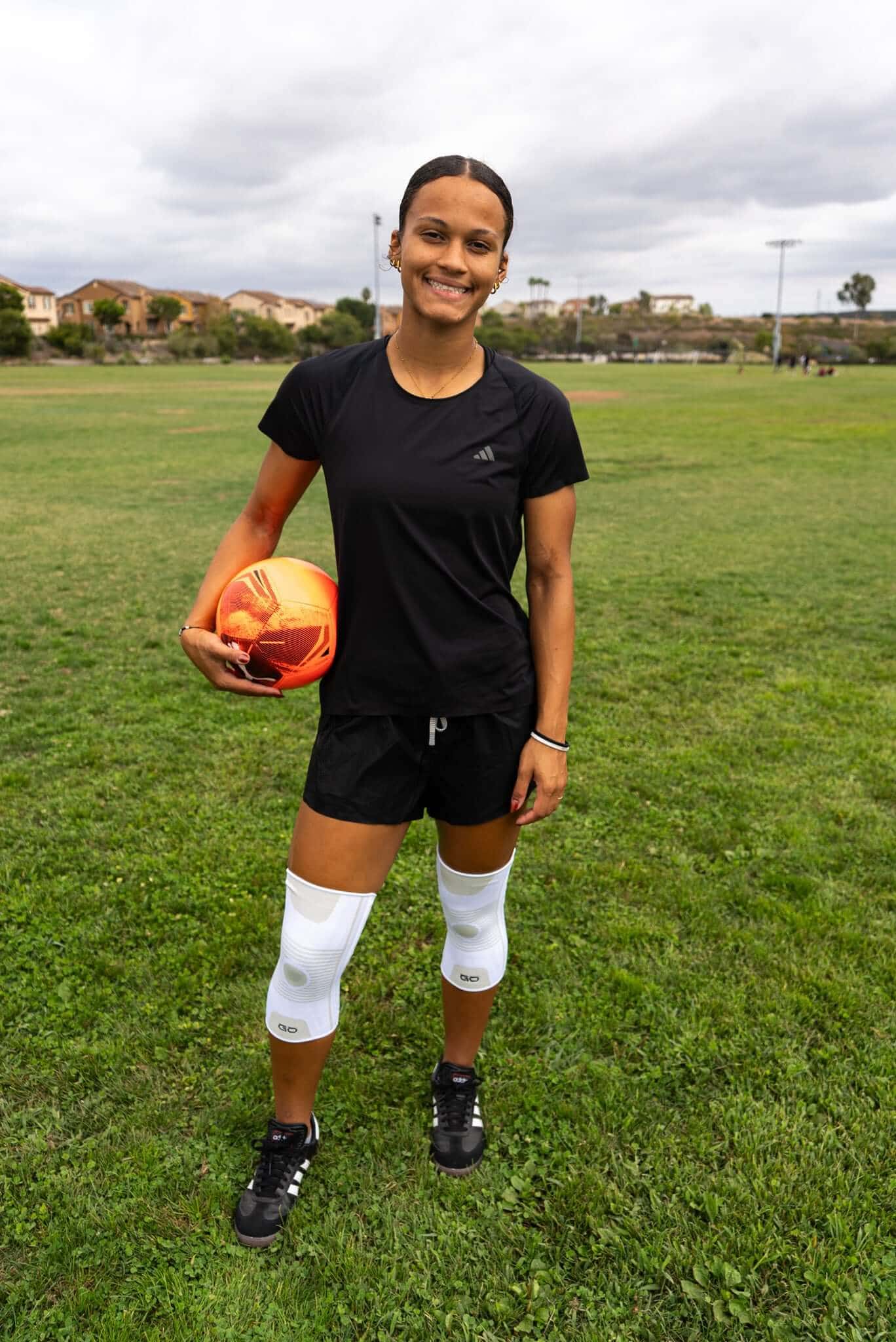 Trinity Armstrong, GO Sleeves partner and national league soccer player, wearing GO Knee Sleeves during training.
Trinity Armstrong, GO Sleeves partner and national league soccer player, wearing GO Knee Sleeves during training.Why Do Soccer Players Wear GO Sleeves?
Soccer demands constant cutting, sprinting, decelerating, and landing—movements that place significant stress on the knees. While strength training remains the foundation of ACL injury prevention in soccer, many players use GO Sleeves to support knee stability during training and competition.
GO Sleeves are designed to enhance proprioception, your body's awareness of position and movement. The embedded silicone patterns stimulate mechanoreceptors in the fascia, providing continuous feedback that may help athletes maintain proper knee alignment during dynamic movements.
Soccer players wear GO Sleeves to support:
- Knee tracking during cuts and pivots
- Stability during landings and deceleration
- Movement awareness under fatigue
- Confidence when returning to play
GO Sleeves aren't a replacement for strength training or proper mechanics. Instead, they complement a comprehensive injury prevention strategy built on strong muscles, sound movement patterns, and consistent training.
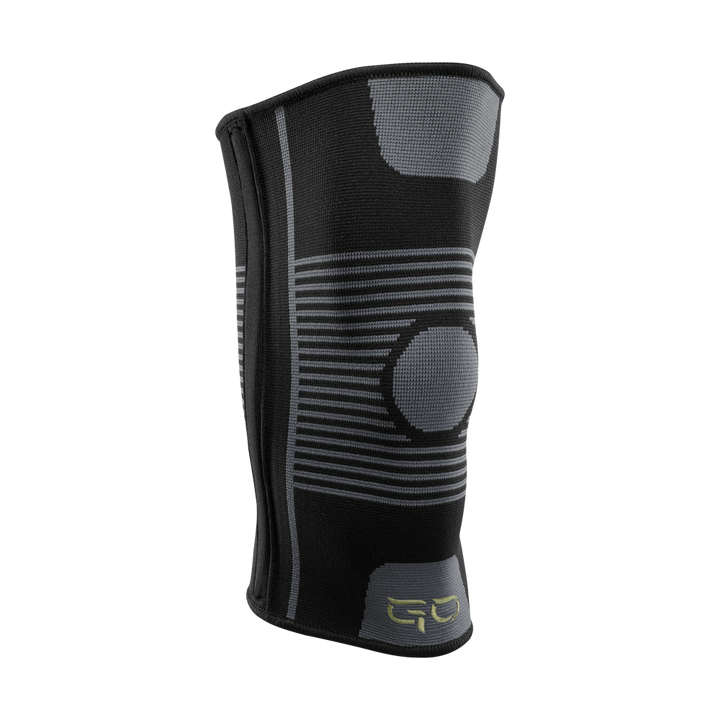
GO Kinesiology + Compression Knee Sleeve
$89.95
Don’t let knee pain sabotage your plans! Reduce pain, swelling, and soreness in and around your knee—and accelerate your body’s ability to recover and rebound so you can keep moving. Unlike compression sleeves which just compress, GO Sleeves® Knee Sleeves… Read More
The Bottom Line
Soccer demands explosive movements that create enormous forces on your knees. Your ACL can't protect itself—the muscles around your knee have to do that job. Consistent strength training and movement work remain the foundation of effective ACL injury prevention in soccer.
Strengthen your glutes to control femoral rotation. Build your hamstrings to protect your ACL during deceleration. Train proper landing and cutting mechanics so your body reacts correctly even under fatigue.
Nordic curls, single-leg work, hip strengthening, and movement pattern training reduce ACL injury risk by 50-70%. These aren't optional—they're essential.
Do the work off the field, and your knees will hold up on it.
Medical Disclaimer: The information provided in this article is for educational purposes only and does not constitute medical advice, diagnosis, or treatment. Always seek the advice of your physician or other qualified health provider with any questions you may have regarding a medical condition or injury.