Table of Contents
- What Is Elbow Bursitis?
- Why Does Elbow Bursitis Keep Coming Back?
- The Movement Pattern Connection
- How Do You Treat Elbow Bursitis?
- Where Movement Care Fits
- How Can You Prevent Elbow Bursitis?
- Can You Exercise With Elbow Bursitis?
- When to Seek Medical Care
- How Can You Prevent Elbow Bursitis From Returning?
- GO Sleeves partner Vicki Sciacqua wearing an elbow sleeve designed to support movement and recovery – key components of elbow bursitis treatment.
- How GO Sleeves Support Elbow Health
- FAQs
- The Bottom Line
You lean on your desk during a long meeting. Sharp pain shoots through your elbow. You pull back and notice swelling on the bony point. By evening, your elbow looks puffy and feels tender to touch. If you're searching for elbow bursitis treatment, understanding what's causing that swelling is the first step toward relief.
Here's what's happening inside your elbow—and how to prevent the problem from coming back.
What Is Elbow Bursitis?
Your elbow has a small fluid-filled sac called a bursa that sits between the bone and skin at the tip of your elbow. This bursa acts as a cushion, reducing friction when you bend your arm or rest your elbow on surfaces.
When that bursa gets irritated, it fills with excess fluid. The swelling creates pressure. The pressure causes pain. The area becomes tender and sometimes warm to the touch.
Bursitis develops from repetitive pressure or direct trauma. Common causes of elbow bursitis include:
- Leaning on hard surfaces for prolonged periods
- Repetitive elbow flexion during throwing or lifting
- Direct trauma to the tip of the elbow
- Frequent pressure from desk work or manual labor
- Infection (less common)
The mechanical problem is straightforward: too much stress on a small cushioning structure that wasn't designed for sustained compression.
Why Does Elbow Bursitis Keep Coming Back?
Acute bursitis responds to rest and ice. The swelling goes down. The pain fades. You feel better.
Then you go back to your normal routine. Same desk setup. Same lifting mechanics. Same movement patterns that caused the problem initially. Within weeks, the swelling returns.
The bursa healed, but the mechanical stress that inflamed it never changed. You addressed the symptom without fixing the cause.
Chronic bursitis develops when inflammation becomes the default state. The bursa thickens. Scar tissue forms. The joint loses some range of motion. Simple movements start causing discomfort.
The Movement Pattern Connection
Elbow bursitis doesn't happen in isolation. It's usually part of a larger pattern of poor mechanics during work or training.
When you repeatedly lean on your elbows during desk work, you're compressing that bursa for hours daily. When you lift with poor elbow positioning, you're creating shear forces that irritate the tissue. When you throw without proper shoulder and scapular engagement, your elbow absorbs excess load.
The bursa inflammation is the signal. The underlying movement dysfunction is the problem.
How Do You Treat Elbow Bursitis?
1. Reduce Pressure on the Elbow
Early elbow bursitis treatment focuses on reducing inflammation and limiting repetitive stress. If you're dealing with active bursitis, start with load reduction. Stop leaning on the affected elbow. Modify your desk setup to avoid direct pressure. Use a padded sleeve or elbow pad during activities that require elbow contact.
2. Apply Ice
Ice helps reduce acute inflammation. Apply for 15–20 minutes several times daily. The cold constricts blood vessels and limits fluid accumulation in the bursa.
3. Use NSAIDs Strategically
NSAIDs can manage pain and reduce inflammation, but they don't fix mechanics. Use them strategically for symptom relief while addressing the root cause.
4. Use Compression
Compression provides mechanical support and helps control swelling. Standard compression sleeves apply uniform pressure. They reduce fluid buildup, but don't address the movement patterns causing repetitive stress.
5. Modify Activities
Temporarily avoid repetitive movements or exercises that aggravate symptoms.
6. Address Underlying Mechanics
Improve ergonomics, movement quality, and load management to prevent recurrence.
Where Movement Care Fits
Movement care focuses on maintaining optimal movement patterns before breakdown occurs. For elbow bursitis, that means supporting proper mechanics during the activities that stress your elbow.
GO Elbow Sleeves use embedded silicone patterns that manipulate fascia and enhance proprioception. The patterns align with the flexor and extensor tendons at your elbow, providing directional feedback during movement.
When you bend, straighten, or rotate your arm, those patterns engage. Your nervous system receives clearer input about elbow position and load distribution. You naturally adjust mechanics to reduce peak stress on vulnerable structures.
This isn't restriction. You maintain full range of motion. The sleeve guides better alignment through that range, reducing repetitive strain on the bursa and surrounding tissues.
For people with chronic bursitis, enhanced proprioception helps break compensatory patterns. You move with better control. Load distributes more evenly across the joint. The bursa experiences less concentrated stress.
How Can You Prevent Elbow Bursitis?
The most effective elbow bursitis treatment is not getting it in the first place. That requires addressing the mechanical factors that create repetitive stress.
1. Optimize Your Ergonomics
Desk workers should adjust chair height so their forearms rest parallel to the floor without leaning on the elbows. Armrests should support the forearms—not the elbow points.
2. Prioritize Movement Quality
Athletes need movement quality before volume. If your throwing mechanics are off, more reps only accelerate breakdown. Work on shoulder mobility, scapular control, and proper sequencing before increasing intensity.
3. Build Strength Strategically
Lifters should distribute load properly. Poor grip strength forces the forearms and elbows to compensate, while weak triceps can create excess stress during pressing movements.
4. Manage Training Load
Repetitive stress accumulates over time. Gradually increase training volume and address limitations before they develop into chronic joint problems.
5. Support Healthy Mechanics
GO Sleeves provide real-time feedback during training and work to encourage better movement patterns. You're not just protecting the joint after it's inflamed—you're maintaining mechanics that help prevent inflammation from developing.
Can You Exercise With Elbow Bursitis?
Complete rest isn't always necessary or beneficial. Strategic movement helps maintain tissue health and prevents stiffness.
Focus on activities that don't compress the bursa. Swimming with proper stroke mechanics keeps the elbow moving without direct pressure. Band work for shoulder stability reduces compensatory stress on the elbow. Grip strengthening improves force distribution during lifting.
Avoid activities that create direct trauma or sustained compression. No heavy pressing with poor mechanics. No extended periods leaning on hard surfaces. No high-volume throwing until movement quality improves.
Wearing GO Sleeves during modified training maintains proprioceptive feedback while the bursa heals. You're reinforcing good patterns instead of ingraining compensations.
When to Seek Medical Care
Most elbow bursitis resolves with conservative management. But some cases need professional evaluation.
See a doctor if you experience:
- Rapidly increasing swelling
- Redness or warmth around the elbow
- Fever or other signs of infection
- Significant pain when bending or straightening the elbow
- Persistent symptoms that don't improve after several weeks of proper management
These signs may indicate an infection requiring antibiotics or aspiration.
In some cases, persistent elbow bursitis may require imaging to rule out underlying issues such as calcium deposits or bone spurs that contribute to chronic inflammation.
How Can You Prevent Elbow Bursitis From Returning?
Elbow bursitis develops from cumulative stress over time. Quick fixes address acute symptoms but don't prevent recurrence.
Long-term elbow bursitis treatment requires better movement patterns, load management, and joint support.
GO Sleeves support this approach by maintaining proprioceptive feedback during daily activities and training. The embedded patterns guide better mechanics, reducing strain on the bursa and surrounding structures.
You're not just treating inflammation. You're building movement patterns that prevent it from developing in the first place.
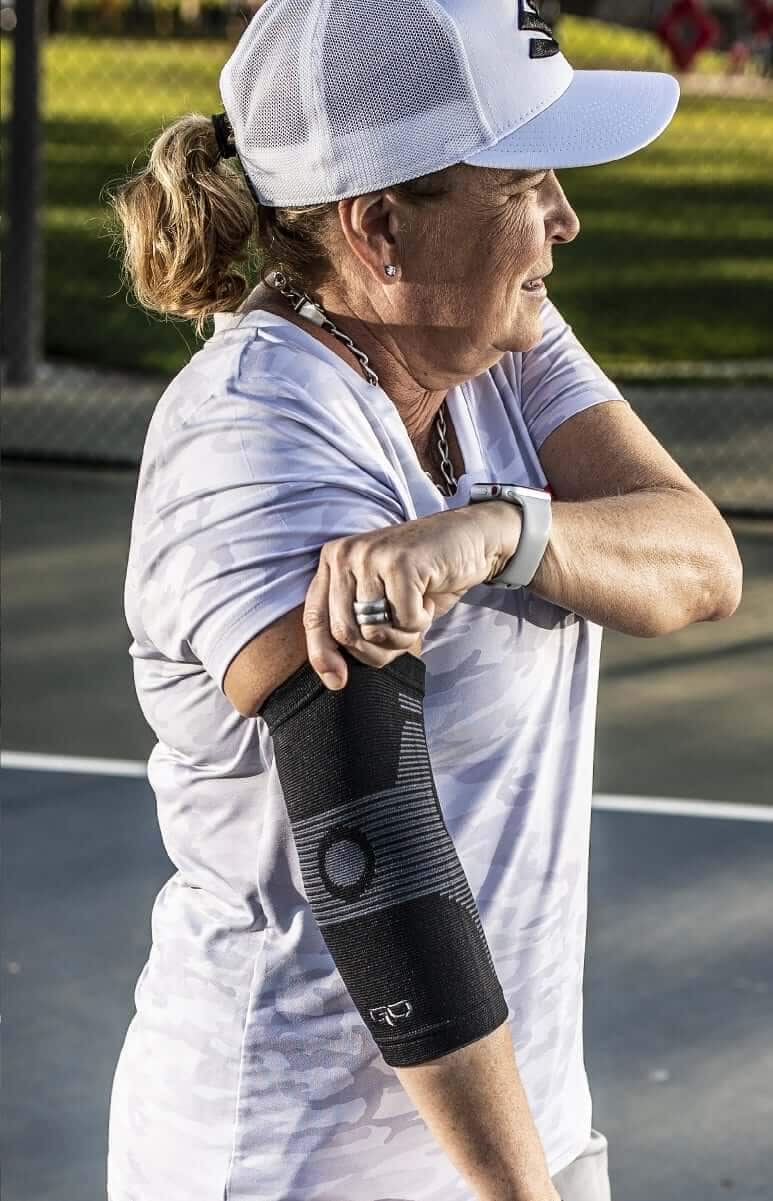 GO Sleeves partner Vicki Sciacqua wearing an elbow sleeve designed to support movement and recovery – key components of elbow bursitis treatment.
GO Sleeves partner Vicki Sciacqua wearing an elbow sleeve designed to support movement and recovery – key components of elbow bursitis treatment.How GO Sleeves Support Elbow Health
Elbow bursitis often develops when repetitive stress exceeds your body's ability to recover. While rest and activity modification can help calm inflammation, long-term relief requires addressing the movement patterns that created the problem in the first place.
GO Elbow Sleeves are designed to support healthy movement—not restrict it.
The embedded silicone patterns follow the muscles and tendons surrounding the elbow joint, providing targeted sensory input during daily activities, work, and training. This enhanced proprioceptive feedback helps your body better sense joint position and movement, encouraging more efficient mechanics and load distribution.
Better mechanics can mean less repetitive stress on vulnerable structures like the bursa.
Unlike traditional compression sleeves that primarily provide uniform pressure, GO Sleeves combine graduated compression with anatomically mapped silicone patterns inspired by the same biomechanical principles as kinesiology taping. The result is support that moves with you while maintaining full range of motion.
Whether you're working at a desk, lifting weights, or returning to activity after an injury, GO Sleeves help support healthy movement patterns so you can stay active with confidence.
GO Kinesiology + Compression Elbow Sleeve
$89.95
Accelerate recovery and reduce pain, swelling, and soreness related to Golf and Tennis Elbow with the world’s only compression sleeves with built-in kinesiology strips to secure, correct, and support key ligaments, tendons, and muscles in and around your elbow. Unlike compression… Read More

FAQs
How do you treat elbow bursitis?
Elbow bursitis treatment typically includes rest, ice, compression, activity modification, and avoiding direct pressure on the elbow. Addressing movement patterns and ergonomics can also help prevent recurrence.
How long does elbow bursitis take to heal?
Mild cases of elbow bursitis may improve within a few weeks with conservative care. Chronic or recurrent cases can take longer, especially if the underlying cause isn't addressed.
Will elbow bursitis go away on its own?
Some cases resolve with rest and reduced pressure on the elbow. However, symptoms may return if the repetitive stress or poor movement mechanics that caused the problem remain unchanged.
Can compression sleeves help elbow bursitis?
Compression sleeves may help manage swelling and provide support during daily activities and exercise. Some sleeves are designed to enhance proprioception and encourage better movement patterns.
Can you exercise with elbow bursitis?
In many cases, yes. Low-impact activities that avoid direct pressure on the elbow are often safe, but painful movements should be modified until symptoms improve.
What causes elbow bursitis?
Elbow bursitis is commonly caused by repetitive pressure, overuse, direct trauma, or prolonged leaning on hard surfaces. Less commonly, it can be caused by infection.
When should you see a doctor for elbow bursitis?
Seek medical care if your elbow becomes hot, red, or increasingly swollen, if you develop a fever, or if symptoms persist despite several weeks of conservative management.
Can elbow bursitis come back after treatment?
Yes. Elbow bursitis often recurs if the mechanical stress that caused the inflammation—such as poor ergonomics or repetitive pressure—isn't addressed.
The Bottom Line
Elbow bursitis develops when repetitive stress exceeds your body's ability to recover. Rest and ice can help calm inflammation, but lasting relief comes from addressing the movement patterns and mechanical stress that caused the problem in the first place.
Improve your ergonomics. Move with better mechanics. Manage load strategically. Support your elbow with tools that encourage healthy movement.
GO Sleeves help maintain proprioceptive feedback and joint awareness during work, training, and daily life—so you can spend less time managing pain and more time doing what you love.
Medical Disclaimer: The information provided in this article is for educational purposes only and does not constitute medical advice, diagnosis, or treatment. Always seek the advice of your physician or other qualified health provider with any questions you may have regarding a medical condition or injury.