Table of Contents
If you've ever tried to figure out Bursitis vs. Tendonitis on your own, this is usually the moment that sends people searching for an answer. You wake up, and your knee or elbow feels... squishy. It’s not just stiff. It feels full. It’s warm to the touch. And when you bend it, it feels like there is a tight balloon stuck inside the joint.
You probably do what most athletes do: You grab an ice pack, and you pull on a tight compression sleeve to "squeeze" the swelling down.
But then the throbbing gets worse.
If this sounds familiar, you aren't dealing with a muscle strain or Tendonitis. You are likely dealing with Bursitis. And the reason your usual recovery tricks aren't working is that you are treating a "fluid" problem with a "friction" solution.
Here is why Bursitis is different, why squeezing it is a mistake, and how to actually drain the pain.
Bursitis vs. Tendonitis: Know Your Enemy
People often use these terms interchangeably, but they are physically opposite problems.
Tendonitis is a "rope" problem. The fibrous cord connecting muscle to bone is frayed or degenerating. It needs load and warmth to heal.
Bursitis is a "balloon" problem. Your body has tiny fluid-filled sacs (bursae) that act as cushions between bone and skin. When irritated, they overproduce fluid and swell up.
The "Water Balloon" Analogy: Imagine a water balloon taped to your knee. If you have Tendonitis, you want to support the muscle. If you have Bursitis, you have an angry, over-filled balloon.
Now, imagine putting a tight, generic compression sleeve over that water balloon. You are just increasing the pressure inside the sack. This is why many people with Housemaid’s Knee (Prepatellar Bursitis) or Student’s Elbow (Olecranon Bursitis) find that tight sleeves are agonizing. Once you understand Bursitis vs. Tendonitis, the right treatment approach becomes obvious — and it's not more squeezing.
The Science of Relief: "Lift," Don't Squeeze
To fix Bursitis, you don't need to crush the inflammation; you need to drain it. This requires opening the pathways for the lymphatic system to flush the excess fluid.
This is where GO Knee Sleeves and Elbow Sleeves do something that standard neoprene sleeves cannot.
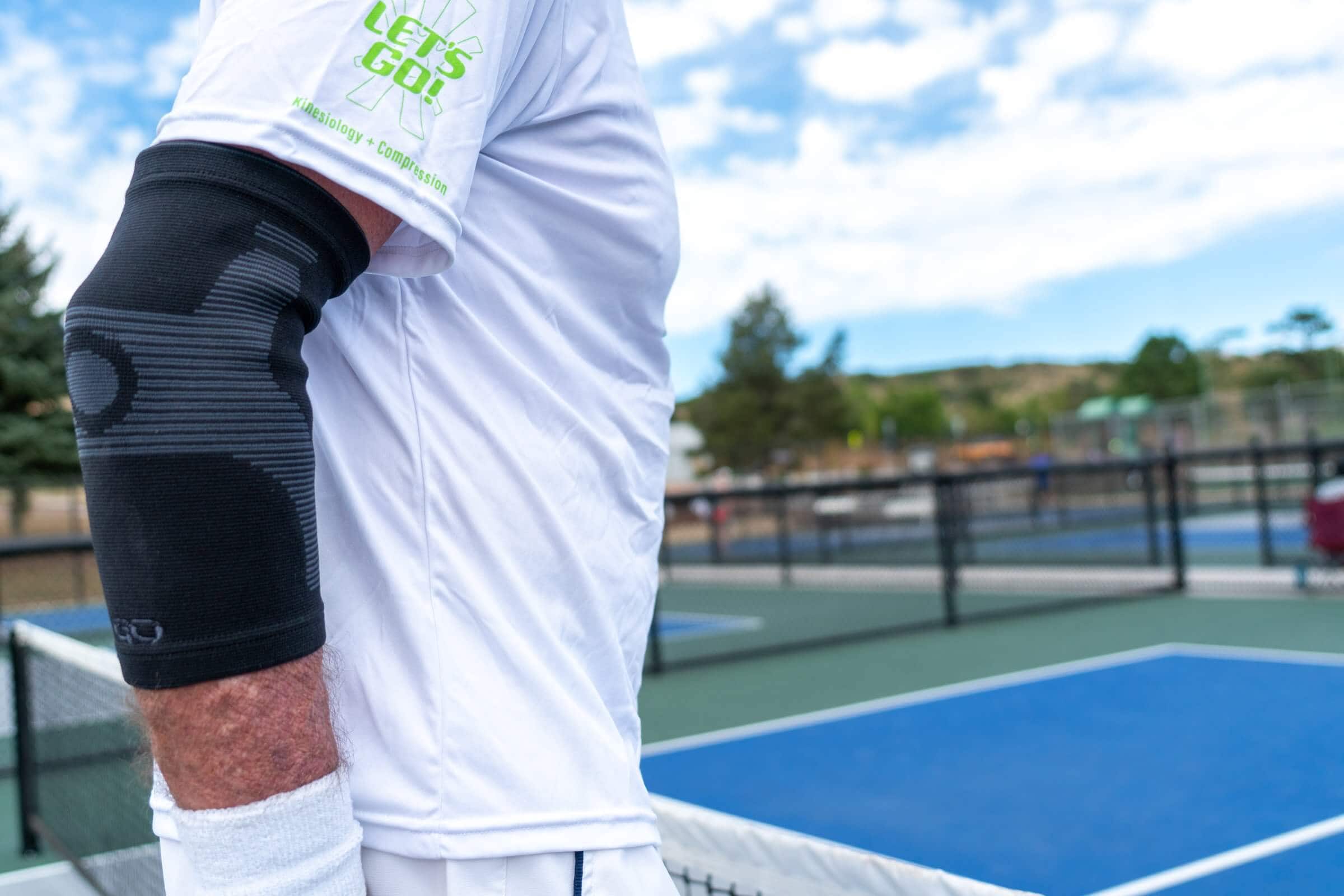 NBA Hall of Famer Rick Barry on the pickleball court, wearing a GO Sleeves Elbow Sleeve.
NBA Hall of Famer Rick Barry on the pickleball court, wearing a GO Sleeves Elbow Sleeve.1. The "Decompression" Effect
Standard sleeves apply uniform pressure—they just squeeze everything inward. GO Sleeves use built-in silicone kinesiology patterns that grip the skin. As you move, these strips create a microscopic lifting effect on the epidermis (top layer of skin).
In the world of physical therapy, we call this "convolutions." By lifting the skin away from the angry bursa, you create subcutaneous space.
Less Pressure: You stop crushing the water balloon.
More Flow: You open up the lymphatic channels right under the skin, giving the trapped fluid a highway to exit.
2. Stopping the "Rub" (The Root Cause)
Bursitis doesn't just happen by magic. It happens because of friction. Usually, a tight muscle or a misaligned joint is rubbing against the bursa repeatedly until it gets inflamed.
Pes Anserine Bursitis (Inner Knee): Often caused by the hamstring dragging across the bone due to poor tracking.
Elbow Bursitis: Often caused by the triceps snapping over the joint.
GO Sleeves treat the cause, not just the symptom. The proprioceptive feedback from the strips cues your muscles to track correctly. By stabilizing the joint mechanics, you stop the repetitive rubbing that is keeping the bursa angry.
GO Kinesiology + Compression Knee Sleeve
$89.95
Don’t let knee pain sabotage your plans! Reduce pain, swelling, and soreness in and around your knee—and accelerate your body’s ability to recover and rebound so you can keep moving. Unlike compression sleeves which just compress, GO Sleeves® Knee Sleeves… Read More
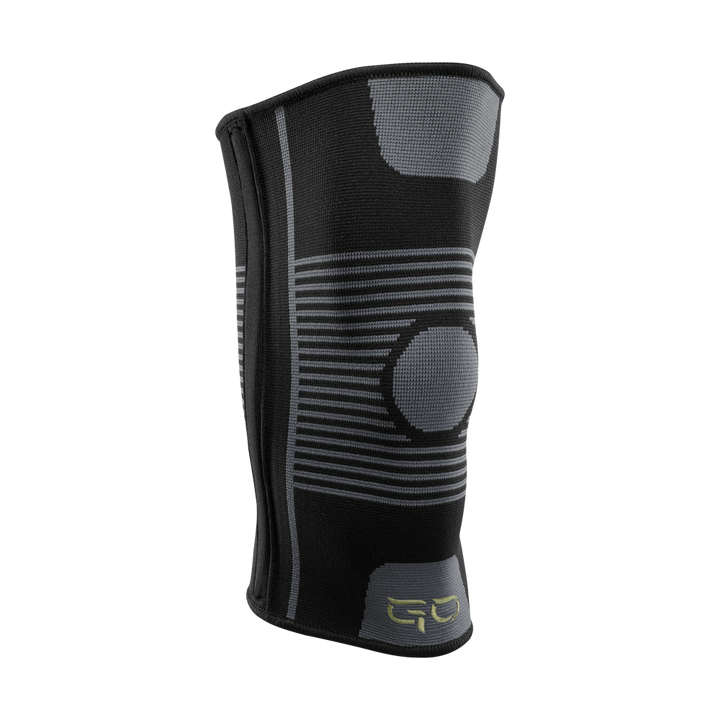
GO Kinesiology + Compression Elbow Sleeve
$89.95
Accelerate recovery and reduce pain, swelling, and soreness related to Golf and Tennis Elbow with the world’s only compression sleeves with built-in kinesiology strips to secure, correct, and support key ligaments, tendons, and muscles in and around your elbow. Unlike compression… Read More

Why Its Important to Listen to Your Body
Before you treat this yourself, you must rule out infection. Bursitis can sometimes be Septic Bursitis (caused by bacteria), which is a serious medical condition.
See a doctor immediately if:
The joint is bright red and hot to the touch.
You have a fever or feel chills.
The swelling appeared suddenly without any specific injury or activity.
If your pain is just the dull, stiff ache from overuse (Aseptic Bursitis), then you can proceed with the drainage protocol below. But always listen to the signals—if a movement hurts sharply, stop. Make an appointment with your PT or doctor.
Your Bursitis Recovery Protocol
Knowing the difference between Bursitis vs. Tendonitis means you can finally follow the right recovery protocol — here's what it looks like. If you are dealing with that "boggy," swollen feeling in your knee or elbow, flip your script.
Step 1: The "Active Drain" (Movement) Fluid stagnation is the enemy. Total bed rest keeps the fluid trapped. You need gentle movement to pump the lymphatic system.
Do: Gentle walking or unloaded cycling (low resistance).
Don't: Deep squats or kneeling (direct pressure on the bursa).
Step 2: Wear the "Decompression" Sleeve Put on your GO Sleeve, but pay attention to how you wear it. The goal isn't to strangle the limb. Ensure you have the right size—you want the silicone grip, not a tourniquet. Wear it for 1–2 hours while you are up and moving. The combination of the silicone "lift" and your muscle movement will act like a manual pump, flushing the fluid out of the bursa and back into circulation.
Step 3: Elevate, Don't Ice-Burn Ice is okay for numbing, but don't freeze the tissue for hours. Your lymphatic system works better when warm. After your movement session, elevate the limb above your heart to let gravity help drain the fluid you just loosened up.
FAQs
Can I wear GO Sleeves if my knee is warm and red?
If the area is hot, red, and you have a fever, stop. This could be Septic Bursitis (an infection). See a doctor immediately. If it is just warm from inflammation and overuse, GO Sleeves are an excellent tool to help flush that heat and fluid.
Is this the same as a "Baker's Cyst"?
A Baker's Cyst is fluid accumulation at the back of the knee, often related to meniscus issues. However, the mechanism of relief is identical: Lymphatic Drainage. The "lifting" effect of the GO Sleeve patterns helps clear the fluid from the back of the knee just as well as the front.
How long until the swelling goes down?
With proper "active drainage" (wearing the sleeve while doing gentle movement), many athletes see a reduction in that "tight balloon" feeling within 24–48 hours. The key is consistency—don't just sit; move gently to power the pump.
Can I keep playing sports or working out with bursitis?
Gentle movement is actually encouraged — it's what powers the lymphatic "pump" described above. Just avoid anything that puts direct pressure on the bursa itself (deep squats or kneeling for knee bursitis, leaning on the elbow for elbow bursitis) until the swelling calms down. If pain sharpens during activity, stop and check in with a PT or doctor.
Is bursitis the same thing as arthritis?
No. Arthritis is a structural, often chronic issue involving the joint and cartilage itself. Bursitis is a fluid-filled sac becoming irritated and overfilled — usually mechanical, and often temporary once the friction causing it is addressed. Both can cause swelling and stiffness, which is part of why getting the actual diagnosis right (bursitis vs tendonitis vs arthritis) matters before you choose a treatment.
The Bottom Line
Bursitis is your body's way of saying, "I'm under too much pressure." Adding more pressure with a "dumb" elastic sleeve only makes it worse. The fix isn't to squeeze harder — it's to lift, open the channels, and let the fluid actually move. That's the whole idea behind decompression, and it's why treating Bursitis like Tendonitis so often backfires. Use the science of decompression. Lift the skin, open the channels, and let the fluid flow. Understanding Bursitis vs. Tendonitis is the first step to finally getting relief that actually works.
Medical Disclaimer: The information provided in this article is for educational purposes only and does not constitute medical advice, diagnosis, or treatment. Always seek the advice of your physician or other qualified health provider with any questions you may have regarding a medical condition or injury. Never disregard professional medical advice or delay in seeking it because of something you have read on this website.