Table of Contents
A pickleball calf injury often starts with a sound no athlete over 40 wants to hear.
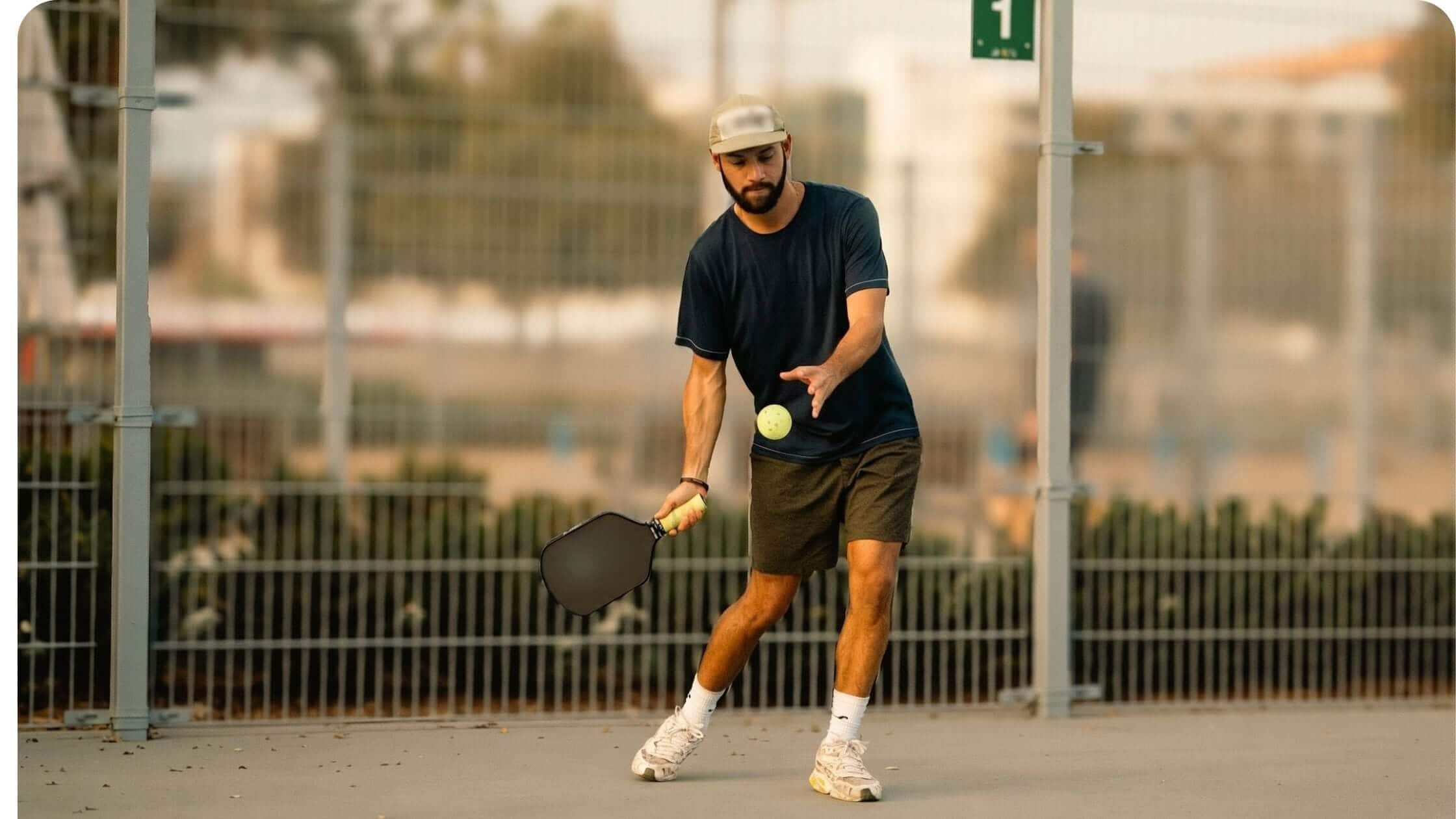
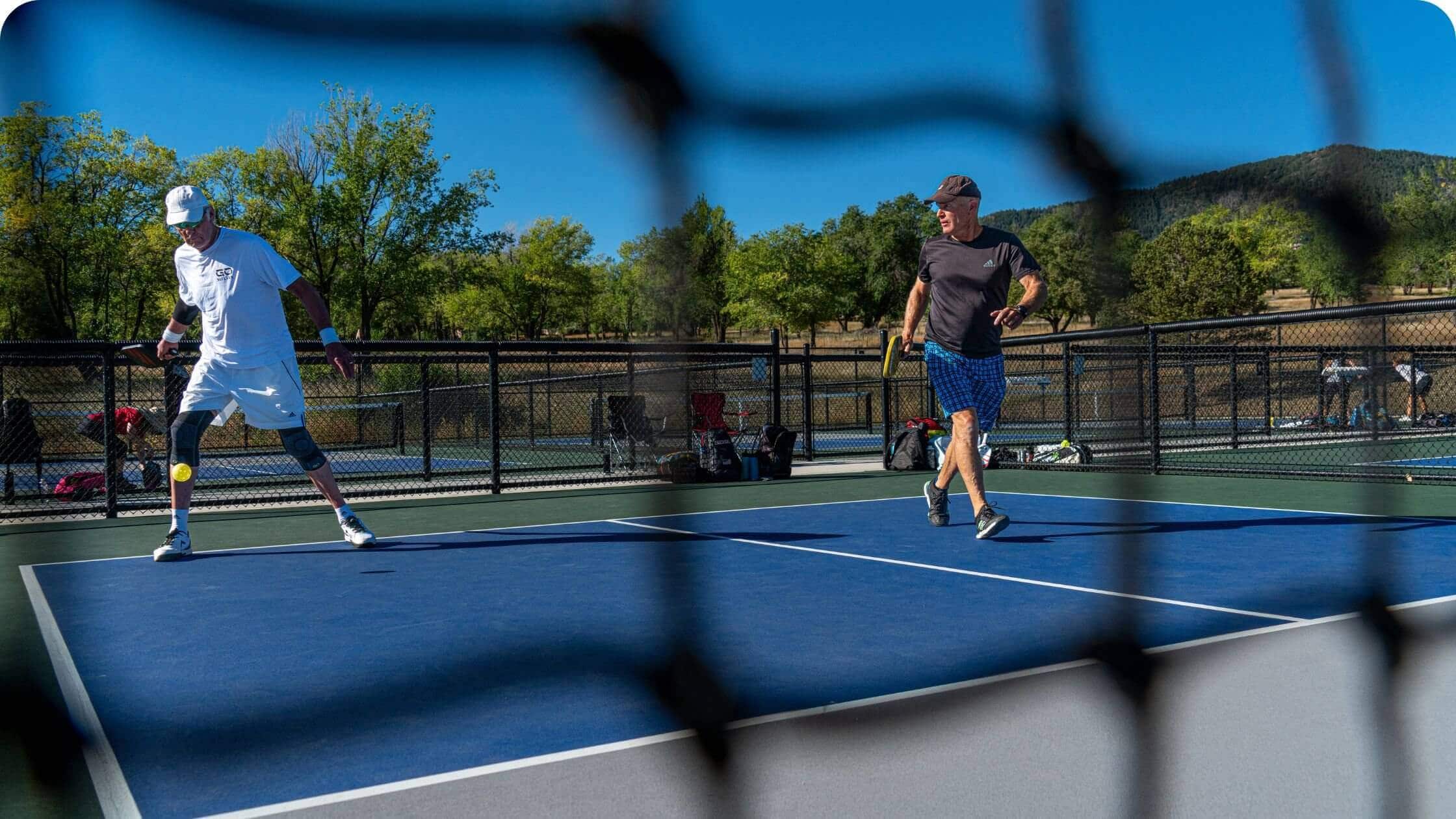
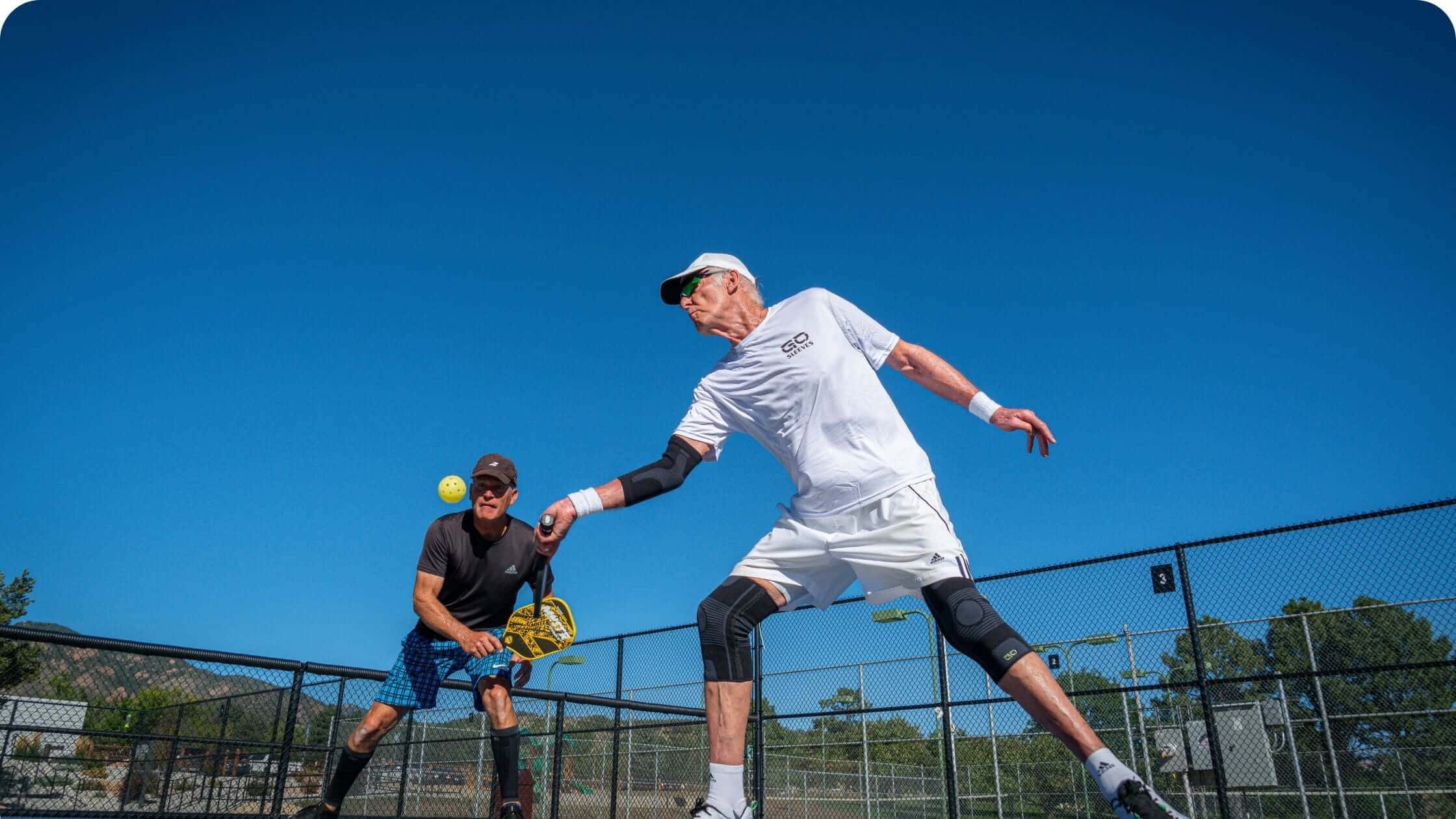
You are on the pickleball court or the tennis baseline. You lunge for a ball, push off to change direction, and then—POP.
It sounds (and feels) like someone threw a rock at the back of your leg. You turn around to see who hit you. But no one is there. You look down, and you can’t put your heel on the ground.
You have just joined the club of "Tennis Leg" (a tear of the medial gastrocnemius muscle). It is currently the #1 soft-tissue injury sending pickleball players to the sidelines.
The frustrating part? It usually happens on a "light" movement. You weren't lifting heavy. You weren't sprinting full speed. You were just moving.
Here is the science of why it happens, and how to stop it before it pops.
What Causes a Pickleball Calf Injury?
Why does this specific muscle tear so easily as we age? It comes down to two factors: Eccentric Load and Muscle Oscillation.
1. The "Eccentric" Danger Zone
Your calf is unique because it crosses two joints (the knee and the ankle). This means it is constantly under tension from two directions. When you lunge forward for a ball:
Your knee straightens (stretching the calf from the top).
Your ankle flexes (stretching the calf from the bottom).
Simultaneously, you contract the muscle to push off.
This tug-of-war is an eccentric load—lengthening the muscle while it tries to contract. Aged tissue loses its elasticity (like an old rubber band), making it brittle under this specific type of stress.
2. The Silent Killer: Muscle Oscillation
This is the factor most people ignore. When your foot strikes the court, a shockwave travels up your leg. This causes your calf muscle to "wobble" or vibrate against the bone. We call this Muscle Oscillation.
In your 20s, your connective tissue is tight and snaps back instantly. In your 40s and 50s, that tissue is looser. The vibration is more violent. Think of it like a flag in a storm. If the wind (force) is too strong and the fabric whips back and forth too violently, it frays. Eventually, it rips. That "pop" is your muscle fibers shearing apart because they couldn't handle the oscillation force during the push-off.
How to Prevent a Pickleball Calf Injury
Don’t worry—you don't need to stop playing. You just need to upgrade your equipment, and specifically, your wearable equipment.
The Fix: Vibration Damping (Not Just Compression)
Most people wear compression socks to "help with circulation." That’s great for swelling, but it won't stop a tear. To prevent the pop, you need Vibration Damping.
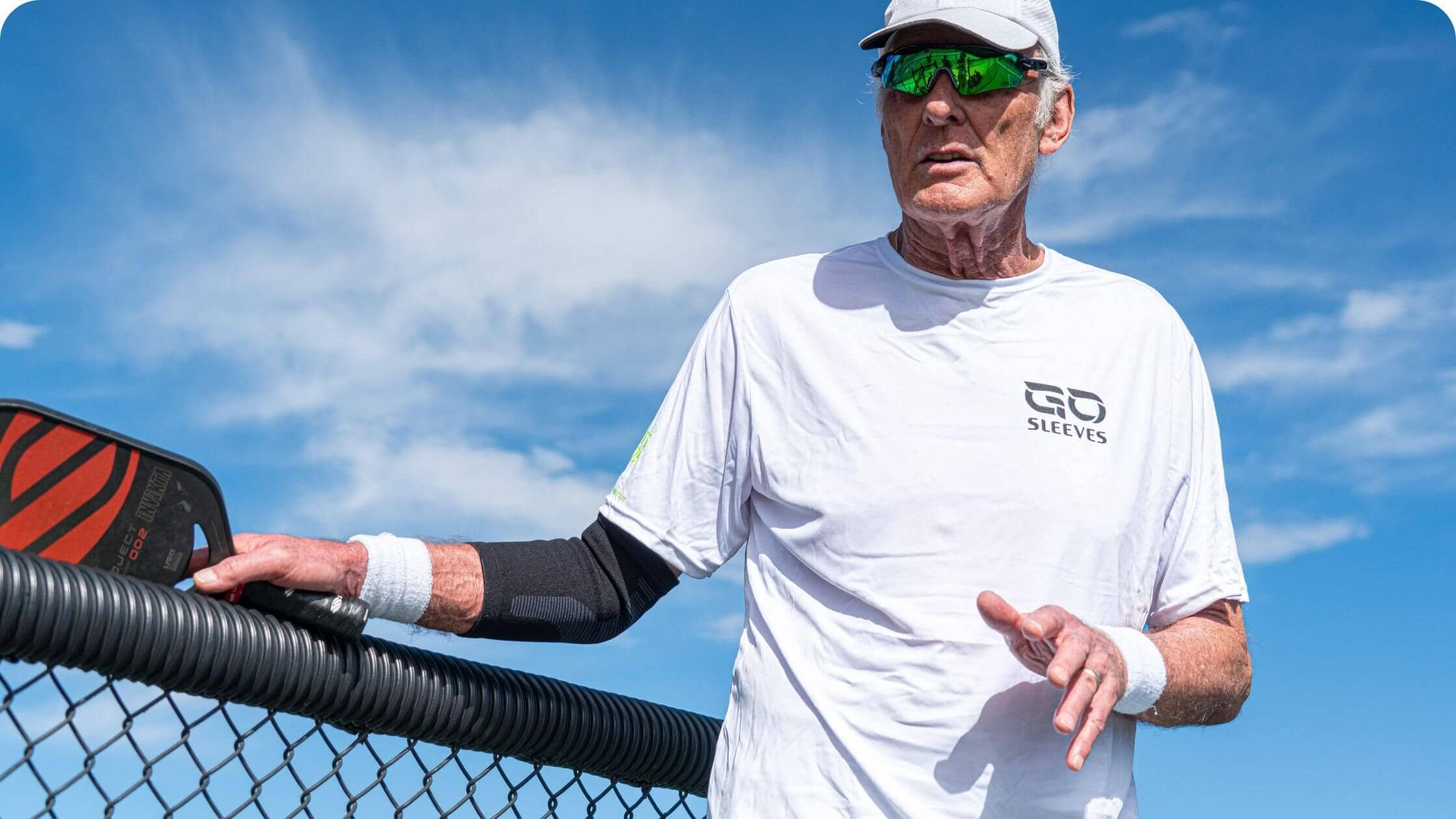
GO Sleeves Calf Sleeves are engineered specifically for this. The built-in silicone kinesiology strips hug the muscle belly of the gastrocnemius. They act as a containment system, anchoring the muscle to the skin.
The Effect: It stops the "wobble." By physically dampening the oscillation wave, you reduce the micro-trauma on the muscle fibers with every step. You aren't just squeezing the leg; you are stabilizing the soft tissue against the bone.
The "Proprioceptive" Guard Rail
Fatigue is the other enemy. Most tears happen in the second hour of play. Why? Because your form breaks down. You stop engaging your glutes, and you start relying entirely on your calves to do the work. The tactile sensation of the GO Sleeves on your skin (that "feeling" of the strips) keeps your brain aware of the muscle. This proprioceptive boost helps you maintain tension and engagement, preventing that lazy, sudden movement that leads to injury.
Your Prevention Protocol
If you play court sports (Pickleball, Tennis, Basketball) or run on pavement:
Warm Up the "Spring": Cold fascia is brittle fascia. Spend 5 minutes doing calf raises and light pogo hops to warm up the tissue elasticity before you sprint.
Dampen the Vibration: Wear GO Sleeves Calf Sleeves during the match. Think of them as your "shock absorbers." They take the hit so your muscle fibers don't have to.
Eccentric Strengthening: doing "calf drops" (standing on a step and lowering slowly) builds resilience against the exact force that causes the tear.
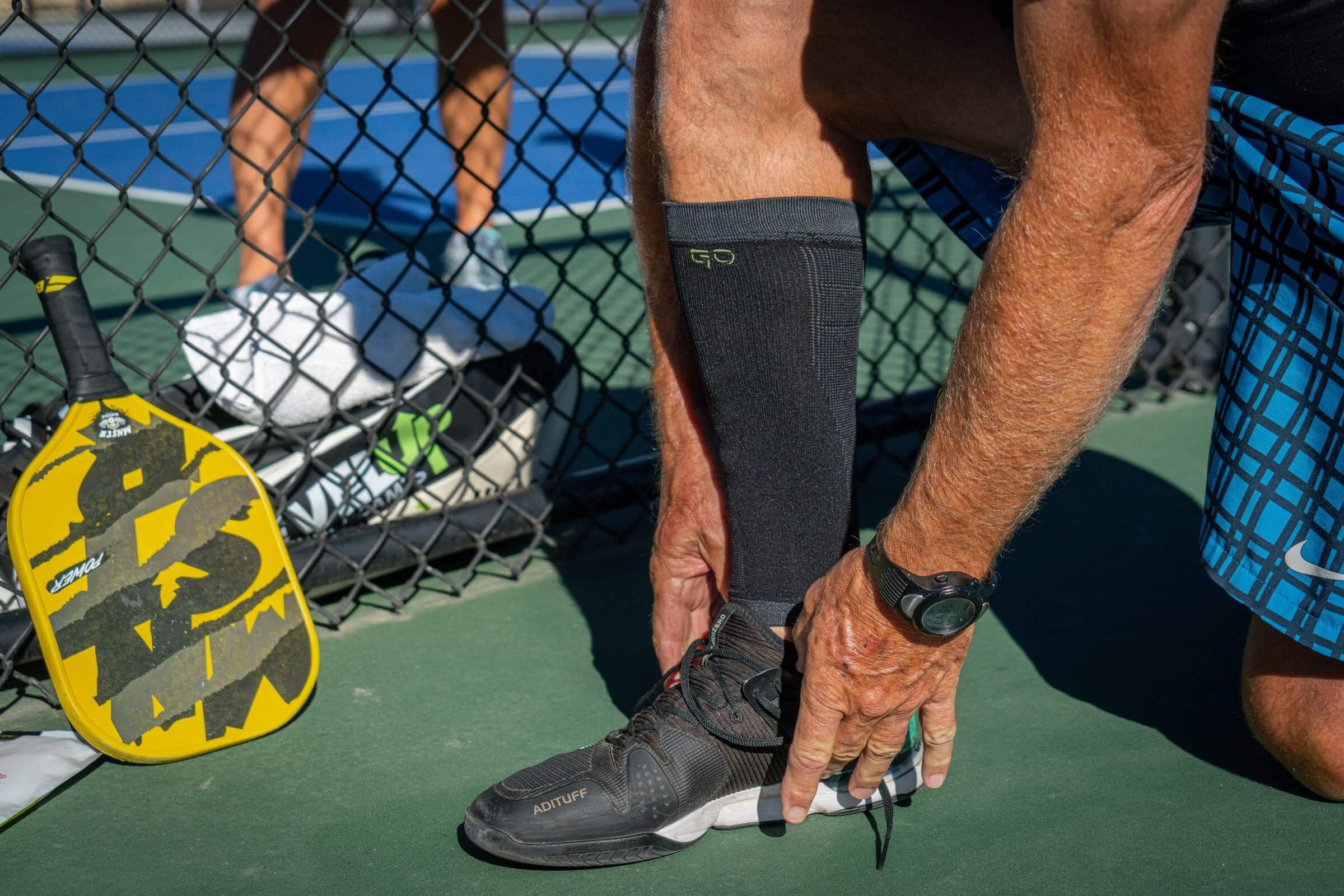 Athlete putting on a GO Sleeves calf sleeve before a pickleball match for added calf support.
Athlete putting on a GO Sleeves calf sleeve before a pickleball match for added calf support.How GO Sleeves Help Reduce the Risk of a Pickleball Calf Injury
No product can guarantee the prevention of a calf injury, but the right support can help address some of the mechanical factors that contribute to one.
Unlike traditional compression sleeves that primarily apply uniform pressure, GO Sleeves Calf Sleeves combine graduated compression with built-in kinesiology strips designed to support the calf muscles during movement. These silicone strips help stabilize the muscle against the skin, which may reduce muscle oscillation—the small vibrations that occur every time your foot strikes the court.
GO Sleeves also provide continuous sensory feedback through the skin, helping enhance proprioception, or your body's awareness of movement and position. This added feedback can encourage better movement patterns and help you maintain calf engagement as fatigue sets in—a time when many calf strains and tears occur.
The best defense against a pickleball calf injury is a combination of smart preparation, progressive strength training, proper recovery, and supportive gear. GO Sleeves Calf Sleeves are designed to complement those habits so you can play with greater confidence and spend more time on the court.
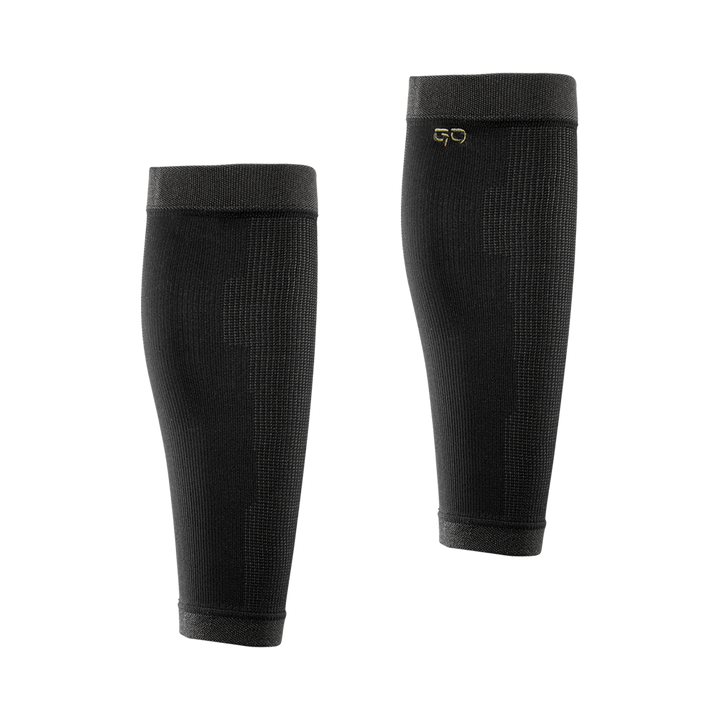
GO Kinesiology + Compression Calf Sleeves
$99.95
Just pull them on, and off you go! GO Sleeves® Calf Sleeves are the world’s only compression sleeves with built-in kinesiology strips to secure, correct, and support key ligaments, tendons, and muscles in and around your calf and shin. Unlike… Read More
FAQs
Why does my calf pop while playing pickleball?
A popping sensation often occurs when the calf muscle is placed under a high eccentric load during a sudden push-off or lunge. In many cases, this is a sign of tennis leg, a tear of the medial gastrocnemius muscle that commonly affects pickleball players over 40.
Why do pickleball players injure their calves?
Pickleball requires frequent starts, stops, lunges, and rapid changes of direction. These movements place high eccentric loads on the calf muscles. As we age, muscle elasticity decreases, making calf strains and tears more likely.
Is tennis leg common in pickleball?
Yes. Despite its name, tennis leg is increasingly common among pickleball players, especially adults over 40. The combination of explosive movement and age-related tissue changes makes pickleball one of the most common sports associated with this injury.
How can I prevent a pickleball calf injury?
The best prevention strategy includes warming up before play, strengthening your calves with eccentric exercises, gradually increasing activity, and using supportive gear that helps stabilize the calf muscles and reduce muscle oscillation during movement.
Can calf sleeves help prevent calf injuries?
Calf sleeves can provide compression and muscle support during activity. GO Sleeves Calf Sleeves are designed with built-in kinesiology strips that help stabilize the calf muscles, reduce muscle oscillation, and enhance proprioceptive feedback to support movement.
What are the first signs of a calf strain?
Early symptoms often include calf tightness, soreness, cramping, or a pulling sensation during activity. Some people notice stiffness before experiencing a more significant strain or tear.
Should I keep playing after I feel a pop in my calf?
No. A sudden pop followed by pain, swelling, or difficulty walking may indicate a calf muscle tear. Stop playing immediately and consult a qualified healthcare professional for an evaluation.
How long does a pickleball calf injury take to heal?
Recovery depends on the severity of the injury. Mild calf strains may improve within a few weeks, while more significant tears can take several months. Returning to play too soon can increase the risk of reinjury, so follow guidance from your healthcare provider.
The Bottom Line
A pickleball calf injury doesn't have to be an inevitable part of playing after 40. Understanding why these injuries happen is the first step toward preventing them. By combining smart warm-ups, progressive strength training, and wearable support that helps stabilize the calf and reduce muscle oscillation, you can stay confident on the court and keep playing the sport you love.
Medical Disclaimer: The information provided in this article is for educational purposes only and does not constitute medical advice, diagnosis, or treatment. Always seek the advice of your physician or other qualified health provider with any questions you may have regarding a medical condition or injury. Never disregard professional medical advice or delay in seeking it because of something you have read on this website.