Table of Contents
- The Science: How NSAIDs Sabotage Repair
- GO Sleeves partner Max Janatsch wears a GO Knee Sleeve during a training run to support healthy movement mechanics and recovery.
- The Data: There Is a Better Way
- Movement Care: The Toothbrush for Your Joints
- What To Do When Pain Strikes
- The 14-Day Movement Care Challenge
- GO Sleeves partner Leka Fineman competes in a GO Knee Sleeve, supporting confident movement through the demands of CrossFit competition.
- Choose the Right Movement Care Solution
- FAQs
- What Your Body Actually Needs
- References
We have a nickname for Ibuprofen in the endurance world: "Vitamin I." If you're looking for an alternative to ibuprofen, the goal isn't to replace one pill with another. It's to support your body's natural recovery process without interfering with healing.
We take it before the run to pre-game the pain. We take it after to handle the swelling. We treat it like a supplement — a harmless little helper that keeps us in the game.
And… here’s what more people should be talking about. If we treated our teeth the way we treat our joints, we'd be in serious trouble.
Imagine you had a toothache. Instead of brushing, flossing, or fixing the cavity, you just took a shot of Novocaine every morning to numb your mouth so you could keep chewing. Eventually, the tooth would rot. You would lose it.
This is exactly what chronic NSAID use is doing to your musculoskeletal system. We're numbing the signal, ignoring the root cause, and according to new science, actually blocking the body's ability to fix itself.
The Science: How NSAIDs Sabotage Repair
Non-Steroidal Anti-Inflammatory Drugs (NSAIDs) work by blocking prostaglandins — chemicals that cause inflammation. The problem is straightforward: you need inflammation to heal.
Inflammation is the first stage of the repair cycle. It signals your body to send white blood cells and repair crews to the site of micro-damage. When you chronically suppress this signal with pills, several things happen.
You stop the crew.
You chemically block the repair process before it starts. Research on runners showed that when healthy athletes were given indomethacin (a common NSAID) starting 72 hours before a 36-kilometer run, the exercise-induced increase in collagen synthesis in their patellar tendons was completely abolished compared to placebo.1 The study demonstrated that NSAID intake decreased prostaglandin E2 (PGE2) levels and eliminated the natural adaptive increase in collagen synthesis that normally occurs after strenuous exercise.
This matters because collagen is the structural protein in tendons, ligaments, and connective tissue. Every time you train hard, your body upregulates collagen production to repair and strengthen tissues. NSAIDs block this process.
A comprehensive review of NSAID effects on musculoskeletal soft tissue healing found that the majority of in vitro studies reported harmful effects on biological processes involved in tendon healing and regeneration, including reduced tenocyte proliferation and impaired collagen and glycosaminoglycan synthesis.2 Animal studies showed that a two-week postoperative course of NSAIDs (indomethacin or celecoxib) impaired tendon-to-bone healing, observed at 2, 4, and 8 weeks after surgery.3
You kill the alarm.
Pain is your body's check engine light. When you cut the wire (take a pill) and keep driving hard, you turn a minor tracking issue into a catastrophic tear. Studies in athletes and physically active adults have shown that NSAID use can blunt the normal exercise-induced increase in satellite cell activity, potentially limiting one of the body's key mechanisms for muscle repair and adaptation after exercise.4
The gut punch.
Chronic NSAID use erodes the stomach lining and stresses the kidneys. Approximately one-third of patients consuming NSAIDs experience gastrointestinal complaints, and up to 70% of those taking them long-term develop severe GI side effects.5 For athletes, this is compounded by the fact that exercise already strains the GI tract by forcing it to compete with muscles for limited blood supply.
The kidney risks are also important to consider. NSAIDs reduce the production of prostaglandins—including PGE2 and PGI2—that help maintain renal blood flow, particularly during dehydration or other states of reduced kidney perfusion.6 While young healthy individuals rarely experience adverse renal effects under normal conditions, exercise changes the equation dramatically. During endurance events, renal vasoconstriction increases from elevated sympathetic outflow and catecholamines — the same physiological state where the kidneys become dependent on prostaglandin-mediated vasodilation to maintain function. NSAIDs remove this protection exactly when it's needed most.
Medical literature includes case reports of endurance athletes who used NSAIDs during prolonged exercise and subsequently developed severe acute kidney injury, with some cases requiring dialysis and extended hospitalization.7 A study of more than 760,000 active-duty U.S. Army soldiers found that higher NSAID prescription use was associated with an increased risk of both acute kidney injury and chronic kidney disease, even in a predominantly young, healthy, and physically active population.8
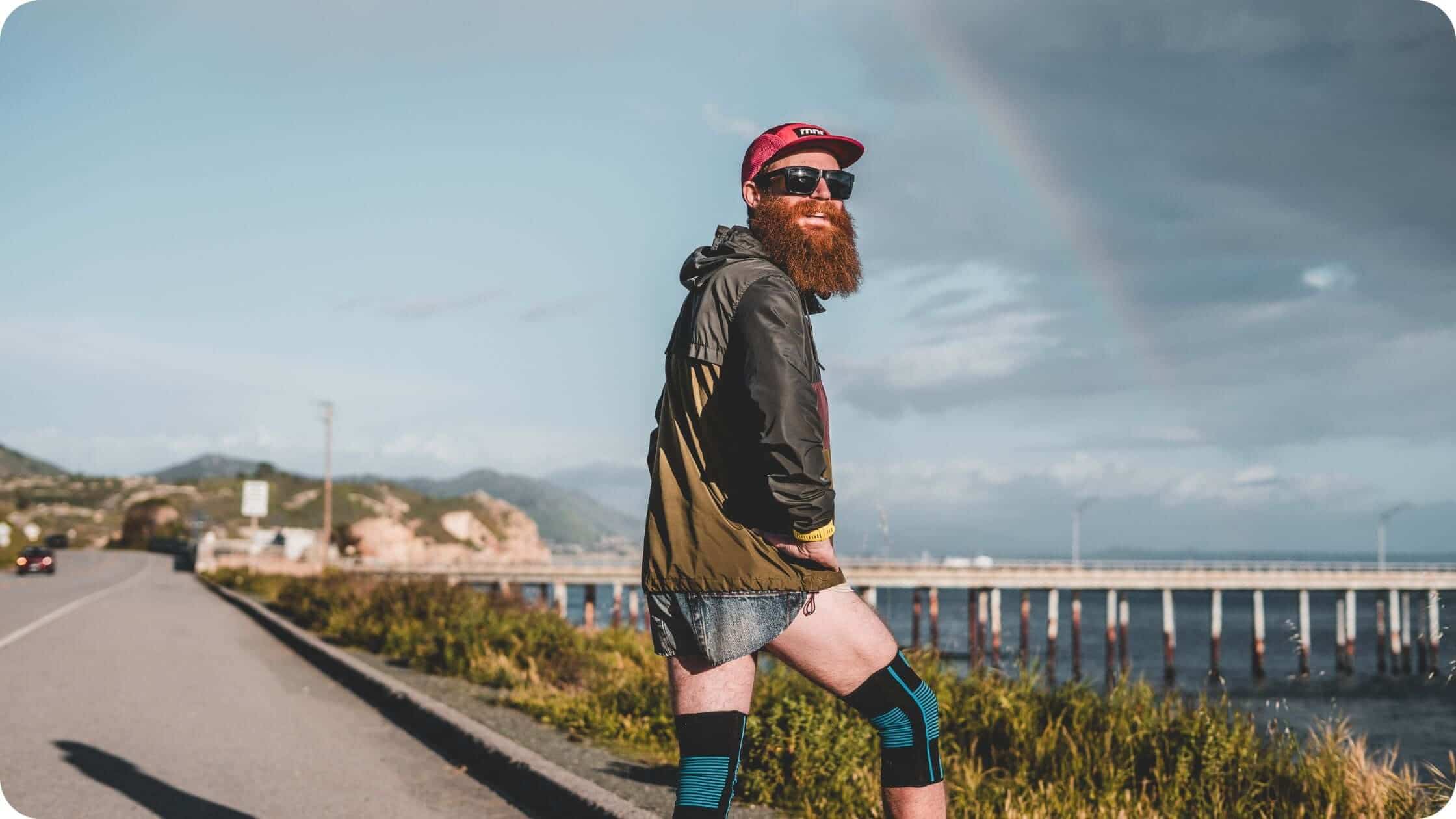 GO Sleeves partner Max Janatsch wears a GO Knee Sleeve during a training run to support healthy movement mechanics and recovery.
GO Sleeves partner Max Janatsch wears a GO Knee Sleeve during a training run to support healthy movement mechanics and recovery.The Data: There Is a Better Way
We're making these claims based on evidence. In our 2022 Pain Management Survey, we asked real GO Sleeves users about their relationship with pain medication.
The results were striking:
68% of users reported that they reduced their use of pain medication after incorporating GO Sleeves into their routine.
Of those who reduced their intake, 46.5% stopped taking pain meds completely.
That's nearly half of the group moving from daily pill-popping to zero. The reason is simple: they stopped treating the symptom (pain) and started treating the source (inflammation and mechanics). GO Sleeves provide a movement-based alternative to ibuprofen by supporting your body's natural healing process instead of suppressing it.
Movement Care: The Toothbrush for Your Joints
If pills are the Novocaine, movement care is the toothbrush.
Movement care is the daily practice of maintaining your body's mechanics so pain doesn't happen in the first place. It replaces chemical masking with biological support.
Don't Hide the Inflammation — Flush It
NSAIDs stop inflammation by chemically blocking it. GO Sleeves address inflammation by physically moving it.
The compression plus embedded kinesiology patterns create a pumping effect that accelerates lymphatic drainage. You're helping the body finish its natural inflammatory response faster. You get pain relief without stopping the healing process.
Research suggests that mechanical stimulation of fascia can enhance proprioceptive input, which may contribute to improved movement awareness and control.9 The directional forces created by kinesiology taping patterns stimulate mechanoreceptors in fascia and skin, providing the nervous system with enhanced information about body position and movement quality.
Don't Numb the Tracking — Fix It
Most chronic pain (runner's knee, IT band syndrome, shin splints) stems from poor mechanics. Pills numb the pain so you can keep running with bad form.
GO Sleeves uses enhanced proprioception to help your brain recognize and correct faulty movement patterns. By addressing the tracking issue — stopping your knee from caving in, improving patellar alignment, supporting proper gait mechanics — you remove the reason for the pain.
The Georgetown study on GO Sleeves showed measurable improvements in performance metrics alongside significant pain reduction. Athletes wearing GO Sleeves demonstrated a 28% reduction in pain scores compared to control groups while maintaining full range of motion and improving movement quality.10
What To Do When Pain Strikes
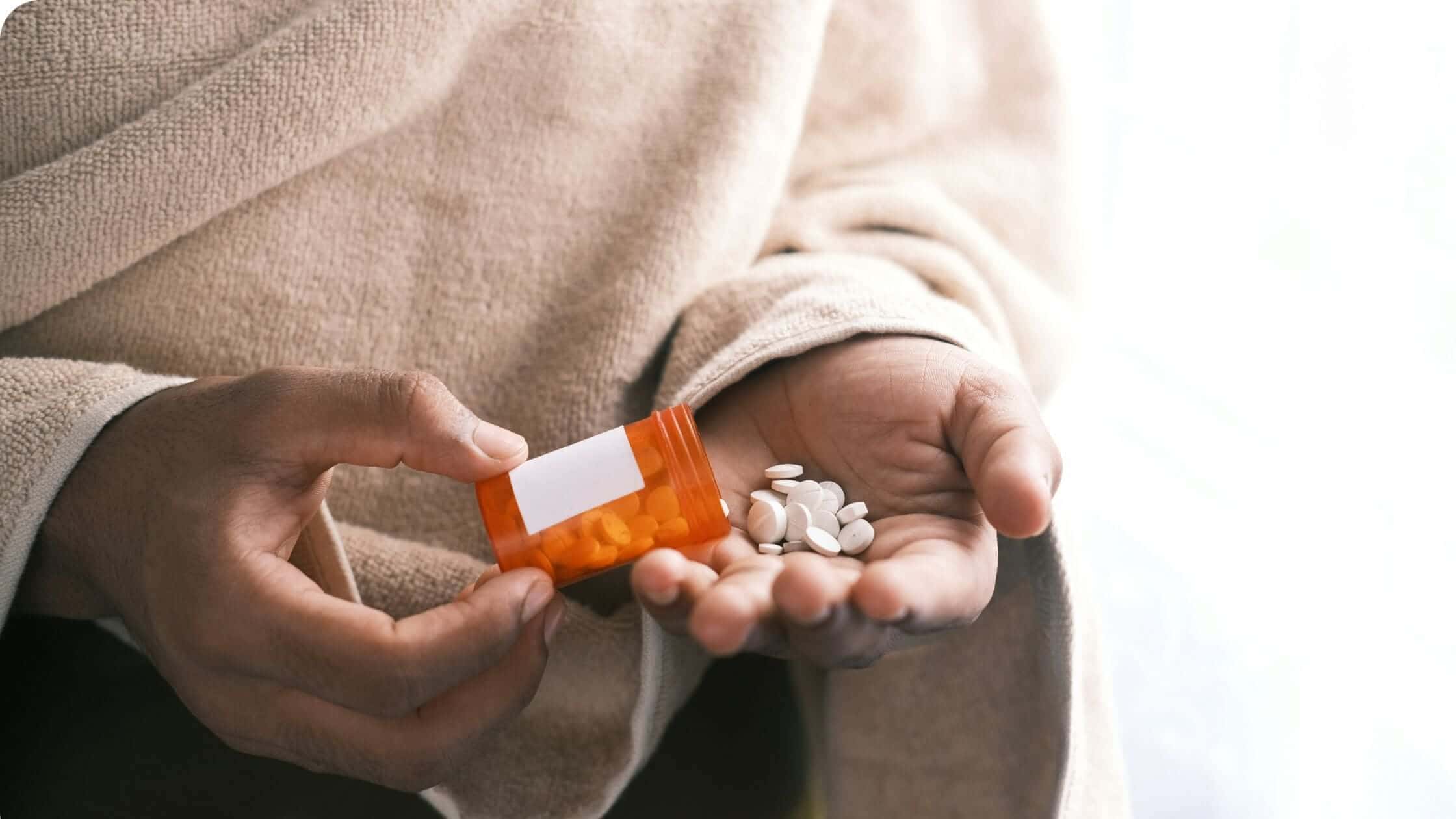
You finish a hard workout. Three hours later, your knee is throbbing. You reach for the Advil bottle.
Stop.
Instead of reaching for the ibuprofen bottle, reach for your GO Sleeve instead.
When pain and inflammation hit, GO Sleeves provides an alternative to ibuprofen. Pull on the sleeve and let the fascia manipulation start working. The embedded patterns create directional forces that enhance lymphatic drainage and improve blood flow to the affected area. You're actively supporting your body's natural inflammatory response instead of chemically blocking it.
Many athletes wear GO Sleeves overnight when dealing with acute inflammation. While you sleep, the sleeve continues facilitating tissue drainage and maintaining optimal circulation. You wake up with reduced swelling and less pain — without having interrupted your body's repair processes.
This works because you're addressing the mechanical factors that cause inflammation to persist. Stagnant fluid around joints and tendons creates pressure on pain receptors. The sleeve helps move that fluid out. Poor tissue perfusion slows healing. The fascia manipulation improves circulation. Restricted movement creates compensation patterns. The proprioceptive feedback helps maintain better mechanics even under fatigue.
The pill numbs the signal. The sleeve supports the solution.
The 14-Day Movement Care Challenge
We're addressing chronic, nagging, daily aches — the "wear and tear" that builds up from training and activity. For acute injuries like fractures, follow your doctor's guidance.
Here's the challenge:
Shelf the Bottle. Put the Ibuprofen in the back of the cabinet for two weeks.
Sleeve Up. Wear your GO Sleeves during activity and for one hour after. When pain strikes between sessions, put the sleeve on instead of taking a pill. For acute inflammation, wear overnight and assess in the morning.
Listen. If it hurts, pay attention to why. Is your form off? Are you tight? Are you loading tissues that aren't ready? Use the feedback to adjust your training.
Track Results. Monitor your pain levels, recovery time, and movement quality over the two weeks.
Our data shows that nearly half of users won't need to reach for that bottle again. The other half significantly reduces their reliance on medication.
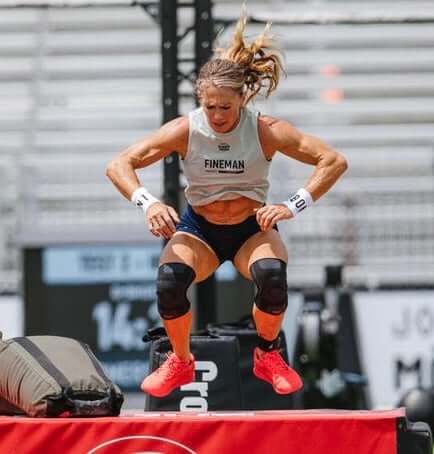 GO Sleeves partner Leka Fineman competes in a GO Knee Sleeve, supporting confident movement through the demands of CrossFit competition.
GO Sleeves partner Leka Fineman competes in a GO Knee Sleeve, supporting confident movement through the demands of CrossFit competition.Choose the Right Movement Care Solution
Different injuries require different types of mechanical support. Instead of masking pain with medication, match your movement care to the tissues under stress.
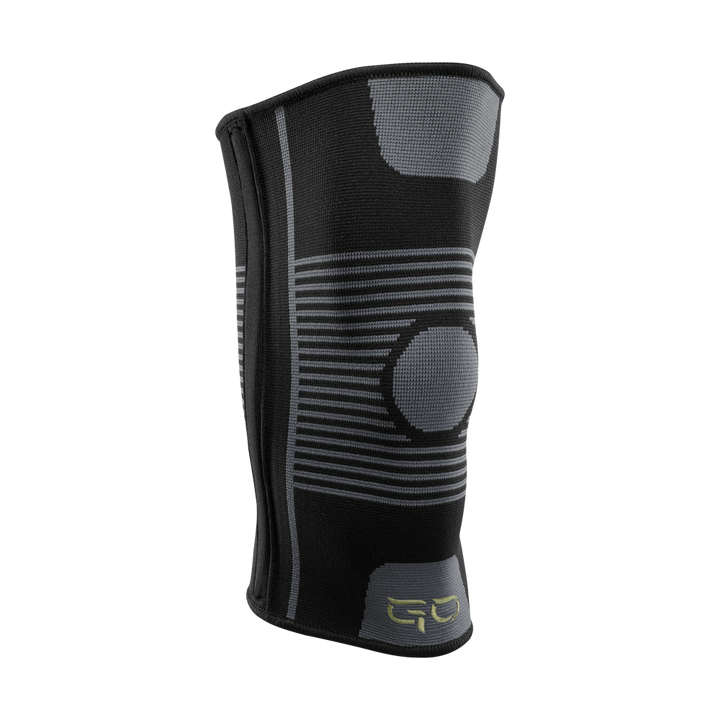
GO Knee Sleeves
Ideal for runner's knee, patellar tendon pain, and general knee discomfort during training. The embedded kinesiology patterns help improve proprioception, support patellar tracking, and encourage healthy movement mechanics while compression assists with circulation and recovery.
GO Kinesiology + Compression Knee Sleeve
$89.95
Don’t let knee pain sabotage your plans! Reduce pain, swelling, and soreness in and around your knee—and accelerate your body’s ability to recover and rebound so you can keep moving. Unlike compression sleeves which just compress, GO Sleeves® Knee Sleeves… Read More
GO Calf Sleeves
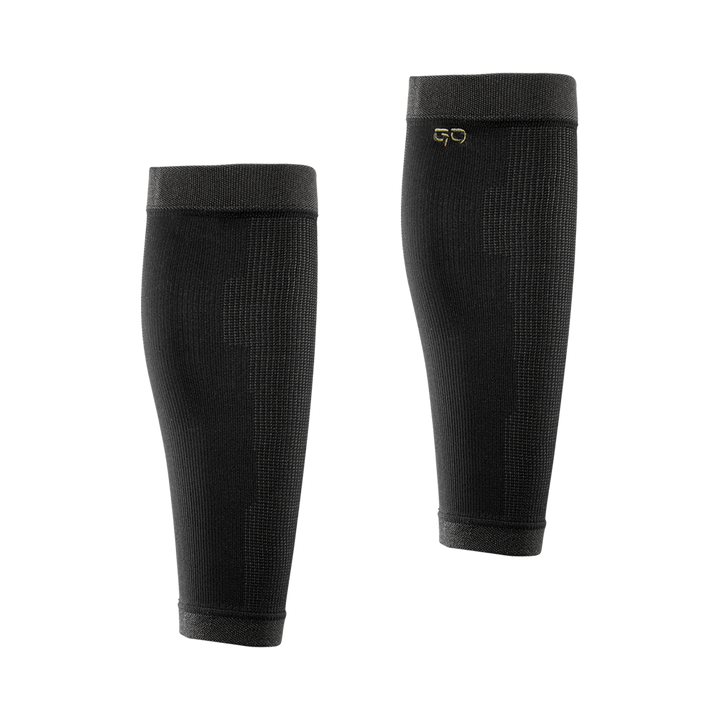
Designed for runners dealing with shin splints, calf soreness, Achilles discomfort, or heavy training loads. They help support calf muscle function, improve tissue recovery, and reduce post-workout fatigue without limiting movement.
GO Kinesiology + Compression Calf Sleeves
$99.95
Just pull them on, and off you go! GO Sleeves® Calf Sleeves are the world’s only compression sleeves with built-in kinesiology strips to secure, correct, and support key ligaments, tendons, and muscles in and around your calf and shin. Unlike… Read More
GO Elbow Sleeves
Perfect for tennis elbow, golfer's elbow, and repetitive gripping or overhead activities. The kinesiology pattern helps reduce tendon stress while improving proprioceptive feedback, making them an effective alternative to relying on pain medication during activity.
GO Kinesiology + Compression Elbow Sleeve
$89.95
Accelerate recovery and reduce pain, swelling, and soreness related to Golf and Tennis Elbow with the world’s only compression sleeves with built-in kinesiology strips to secure, correct, and support key ligaments, tendons, and muscles in and around your elbow. Unlike compression… Read More

The goal isn't simply to reduce pain—it's to improve movement quality so your body can recover the way it was designed to.
FAQs
What is a good alternative to ibuprofen for athletes?
If you're looking for an alternative to ibuprofen, the goal shouldn't be to replace one medication with another. Instead, look for solutions that support your body's natural healing process. Movement care—including proper recovery, addressing movement mechanics, and tools like GO Sleeves—can help reduce pain while allowing inflammation to do its job in tissue repair.
Does ibuprofen slow down healing?
Research suggests that frequent NSAID use may interfere with the body's natural healing response by reducing prostaglandin production, which plays an important role in collagen synthesis and tissue repair. While NSAIDs can provide short-term pain relief, they may not always support optimal recovery.
Why do athletes take ibuprofen before workouts?
Many athletes use ibuprofen before training or competition to reduce pain and inflammation. However, doing so may mask important warning signs from the body and encourage continued loading of injured tissues instead of addressing the underlying cause of pain.
What can I do instead of taking ibuprofen after exercise?
Instead of immediately reaching for pain medication, focus on supporting recovery through movement, adequate rest, hydration, proper nutrition, and addressing the mechanical causes of pain. Compression and kinesiology-based support, such as GO Sleeves, may also help reduce discomfort while supporting your body's natural recovery process.
Are GO Sleeves an alternative to ibuprofen?
GO Sleeves are designed to provide a movement-based alternative to ibuprofen by helping improve proprioception, supporting healthy movement mechanics, and promoting circulation. Rather than chemically blocking inflammation, they work alongside your body's natural healing process.
What are NSAIDs, and how are they different from ibuprofen?
NSAIDs (nonsteroidal anti-inflammatory drugs) are a class of medications that reduce pain and inflammation. Ibuprofen is one of the most common NSAIDs, along with naproxen (Aleve) and aspirin. While these medications can provide temporary pain relief, this article discusses why frequent NSAID use may interfere with your body's natural healing process.
What Your Body Actually Needs
Your body doesn't have an Ibuprofen deficiency. It has a movement deficiency.
Growing evidence suggests that repeated or prolonged NSAID use can interfere with some of the biological processes that allow tendons and other musculoskeletal tissues to adapt and become stronger over time.1,2,9 Every time you block inflammation with a pill, you're potentially blocking the signal that tells your body to adapt, strengthen, and heal properly.
Movement care takes a different approach. By supporting optimal mechanics through enhanced proprioception and fascial manipulation, GO Sleeves help address the root cause of repetitive strain instead of simply masking pain.
For the times when inflammation does occur — because you pushed too hard or moved poorly under fatigue — movement care helps your body complete the inflammatory process efficiently instead of shutting it down prematurely. The best alternative to ibuprofen isn't another pill—it's an approach that addresses the root cause of pain rather than simply masking symptoms.
Feed the movement. Support the repair. Stop masking the pain.
You’ve got this.
Medical Disclaimer: The information provided in this article is for educational purposes only and does not constitute medical advice, diagnosis, or treatment. Always seek the advice of your physician or other qualified health provider with any questions you may have regarding a medical condition or injury. Never disregard professional medical advice or delay in seeking it because of something you have read on this website.
References
1. Christensen B, Dandanell S, Kjaer M, Langberg H.
Effect of anti-inflammatory medication on the running-induced rise in patella tendon collagen synthesis in humans.
Journal of Applied Physiology. 2011;110(1):137–141. doi:10.1152/japplphysiol.00942.2010.
2. Ghosh N, Kolade OO, Shontz E, Rosenthal Y, Zuckerman JD, Bosco JA III, Virk MS.
Nonsteroidal Anti-Inflammatory Drugs (NSAIDs) and Their Effect on Musculoskeletal Soft-Tissue Healing: A Scoping Review.
JBJS Reviews. 2019;7(12):e4. doi:10.2106/JBJS.RVW.19.00055.
3. Cohen DB, Kawamura S, Ehteshami JR, Rodeo SA.
Indomethacin and Celecoxib Impair Rotator Cuff Tendon-to-Bone Healing.
The American Journal of Sports Medicine. 2006;34(3):362–369. doi:10.1177/0363546505280428.
4. Pham H, Spaniol F.
The Efficacy of Non-Steroidal Anti-Inflammatory Drugs in Athletes for Injury Management, Training Response, and Athletic Performance: A Systematic Review.
Sports. 2024;12(11):302. doi:10.3390/sports12110302.
5. Bjarnason I, Hayllar J, MacPherson AJ, Russell AS.
Side effects of nonsteroidal anti-inflammatory drugs on the small and large intestine in humans.
Gastroenterology. 1993;104(6):1832–1847. doi:10.1016/0016-5085(93)90667-2
6. Drożdżal S, Lechowicz K, Szostak B, Rosik J, Kotfis K, Machoy-Mokrzyńska A, et al.
Kidney Damage from Nonsteroidal Anti-Inflammatory Drugs—Myth or Truth? Review of Selected Literature.
Pharmacology Research & Perspectives. 2021;9(4):e00817. doi:10.1002/prp2.817.
7. Tidmas V, Brazier J, Bottoms L, Muniz D, Desai T, Hawkins J, Sridharan S, Farrington K.
Ultra-Endurance Participation and Acute Kidney Injury: A Narrative Review.
International Journal of Environmental Research and Public Health. 2022;19(24):16887. doi:10.3390/ijerph192416887.
8. Nelson DA, Marks ES, Deuster PA, O'Connor FG, Kurina LM.
Association of Nonsteroidal Anti-inflammatory Drug Prescriptions With Kidney Disease Among Active Young and Middle-aged Adults.
JAMA Network Open. 2019;2(2):e187896. doi:10.1001/jamanetworkopen.2018.7896.
9. Su B, O'Connor JP.
NSAID Therapy Effects on Healing of Bone, Tendon, and the Enthesis.
Journal of Applied Physiology. 2013;115(6):892–899. doi:10.1152/japplphysiol.00053.2013.
10. GO Sleeves
Georgetown College Baseball Performance Study
Internal comparison study conducted with the Georgetown College Baseball Program and Chad Miller ("The Baseball Science Guy"); 2022. Unpublished internal data.