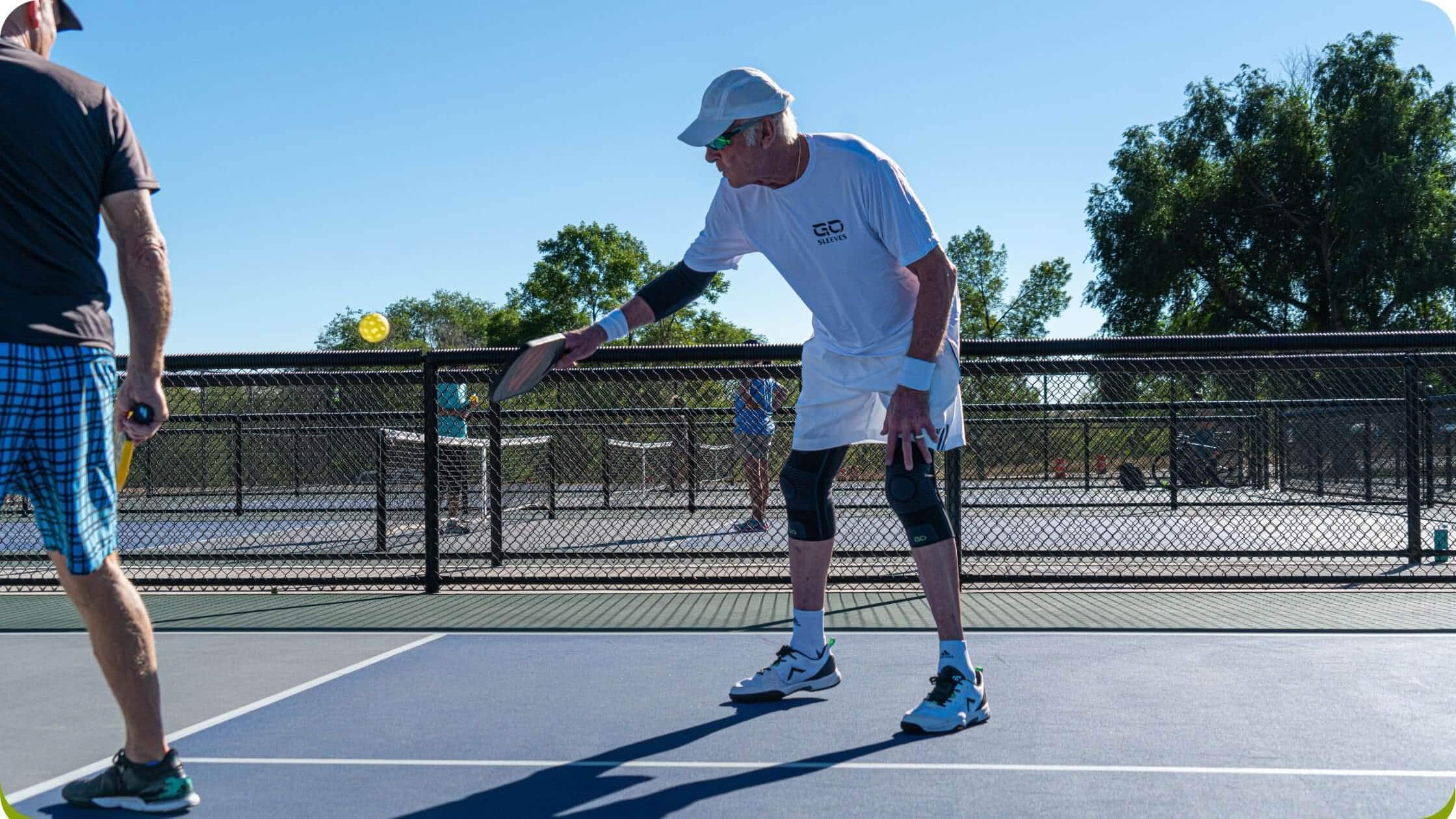

Jake Brendel does this. Trinity Armstrong does this. So does the runner training for their first 5K and the pickleball player recovering from tennis elbow. If you move intentionally—running, lifting, playing sports, staying active—you’re an athlete. Daily movement care is how athletes keep their bodies ready to move.
Five minutes of movement care. Before the training. Before the game. Before the run.
Not stretching. Not a workout. Movement care.
It’s the foundation everything else builds on. The non-negotiable baseline that prepares the body for training, competition, and play.
Elite athletes don’t skip this. Neither should you
Table of Contents
- Why 5 Minutes Matters More Than You Think
- The 5-Minute Movement Care Foundation
- When to Do These 5 Minutes
- The 10-Minute Version (When You Have Time)
- The 30-Minute Protocol (For Serious Athletes)
- Using Compression as Part of Your Routine
- What This Isn't
- Adapting for Your Needs
- The Compound Effect
- FAQs About Daily Movement Care
- FAQs
- The Bottom Line

Why 5 Minutes Matters More Than You Think
Five minutes seems trivial. You're about to train for an hour, play for two hours, run ten miles.
Why bother with five minutes?
Because those five minutes prepare your nervous system, activate dormant muscles, and prime your proprioceptive feedback loop. Without them, your body moves at 70% readiness for the first 15-20 minutes of activity.
That's when injuries happen. Cold muscles. Sluggish proprioception. Compensation patterns kicking in before proper movement patterns activate.
Five minutes eliminates that window.
Athletes who do these five minutes daily report:
Better movement quality from the first rep
Fewer "tweaks" and minor injuries
More consistent performance
Less post-activity soreness
Five minutes isn't the ceiling. It's the floor. Everything else you do—sport practice, strength training, competition—builds on this foundation.
The 5-Minute Movement Care Foundation
Do this every day. Before any training, practice, or competition.
1. Ankle Mobility (60 seconds)
Why it matters: Ankle mobility affects everything upstream. Stiff ankles force your knees to compensate. Your knees force your hips to compensate. Poor ankle mobility creates a cascade of dysfunction.
How to do it:
Ankle circles: 10 each direction per ankle (slow, full range)
Calf stretches: 15 seconds per leg (push wall, heel down)
Toe raises: 10 reps (lift toes toward shins)
What you're doing: Waking up the mechanoreceptors in your ankles. Preparing them to sense and react to ground contact.
2. Hip Activation (90 seconds)
Why it matters: Weak or inactive glutes force other muscles to take over. Your knees cave inward. Your lower back compensates. Hip activation prevents this before movement starts.
How to do it:
Lateral band walks: 10 steps each direction (mini band around ankles)
Glute bridges: 15 reps (squeeze at top, 2-second hold)
Leg swings: 10 each direction per leg (front-back, side-side)
What you're doing: Activating gluteus medius and maximus. These muscles stabilize your pelvis and prevent knee valgus (inward collapse) during movement.
3. Proprioceptive Priming (90 seconds)
Why it matters: Your body's internal GPS—proprioception—needs activation. Single-leg balance work "turns on" the mechanoreceptors that sense joint position. This improves coordination and reaction time.
How to do it:
Single-leg balance: 30 seconds per leg (eyes open)
If easy: Close eyes for 15 seconds per leg
If still easy: Balance on unstable surface
What you're doing: Training your ankle, knee, and hip to communicate with your brain about position and movement. This prevents the "my ankle rolled and I don't know why" injuries.
4. Spinal Mobility (60 seconds)
Why it matters: Your spine connects everything. Thoracic mobility (mid-back) affects shoulder function. Hip mobility affects lumbar spine. Moving your spine prepares it for the rotational forces in almost every sport.
How to do it:
Cat-cow: 10 reps (on hands and knees, arch and round spine)
Thoracic rotations: 10 per side (quadruped position, rotate spine)
Side bends: 5 per side (standing, reach overhead and bend)
What you're doing: Lubricating spinal joints. Activating stabilizers. Preparing for multi-directional movement.
5. Movement-Specific Preparation (60 seconds)
Why it matters: Your body needs to rehearse the patterns it's about to perform. Runners need running-specific movements. Lifters need lifting patterns. Sport-specific prep bridges the gap between general warmup and full-intensity activity.
How to do it (sport-specific):
For runners/soccer/basketball:
High knees (10 per leg)
Butt kicks (10 per leg)
A-skips (10 per leg)
For lifters:
Bodyweight squats (10 reps)
Push-up position holds (20 seconds)
Dead bugs (10 per side)
For overhead athletes (tennis/volleyball/baseball):
Arm circles (10 each direction)
Band pull-aparts (15 reps)
Shoulder dislocations with band (10 reps)
For pickleball/racquet sports:
Shadow swings (10 forehands, 10 backhands)
Lateral shuffles (10 yards each direction)
Split-step practice (10 reps)
What you're doing: Rehearsing movement patterns at low intensity. Your nervous system is practicing coordination before demanding performance.
When to Do These 5 Minutes
Every day before activity. No exceptions.
Morning run? Do this first.
Lunch basketball? Do this in the locker room.
Evening lift? Do this before you touch a weight.
Game day? Absolutely do this.
The five minutes compounds. Day after day, your body learns these patterns. Movement quality improves. Proprioception sharpens. Injury risk drops.
Many athletes also do a modified version on rest days. Three minutes of ankle mobility, hip activation, and balance work keeps the nervous system primed even when you're not training hard.
This daily movement care routine works best when it’s done consistently, before activity—not after problems show up.
The 10-Minute Version (When You Have Time)
Got ten minutes instead of five? Add these:
Foam rolling (3 minutes):
Calves, quads, IT band, upper back
Slow passes over tight areas
Not a deep-tissue torture session—just wake up the tissue
Additional balance work (2 minutes):
Single-leg balance with eyes closed
Balance on wobble board or foam pad
Single-leg reaches (Y-balance pattern)
Sport-specific movement quality (5 minutes):
Drills at 50% intensity
Focus on mechanics, not speed
Rehearse specific patterns you'll use in training
This extended version is ideal before competition or high-intensity training days.
The 30-Minute Protocol (For Serious Athletes)
Elite athletes and those training at high volume often extend this to 20-30 minutes.
The structure:
5 minutes: Foundation routine (described above)
10 minutes: Targeted mobility and activation (addressing individual needs)
10 minutes: Progressive intensity buildup (sport-specific work at increasing speeds)
5 minutes: Mental preparation and visualization
This isn't necessary for everyone. But if you're training daily, competing regularly, or dealing with recurrent issues, the extended protocol provides more thorough preparation.
Using Compression as Part of Your Routine
Many athletes integrate compression into their daily movement care practice.
During the 5-minute routine: Some wear GO Sleeves during balance work and movement prep. The enhanced proprioceptive feedback from the embedded patterns helps activate the mechanoreceptors you're training.
During activity: The compression supports circulation and the silicone patterns continue enhancing proprioception. Many athletes report better body awareness and mechanics when wearing them.
Post-activity: Compression facilitates recovery by improving lymphatic drainage and clearing metabolic waste. Many athletes keep sleeves on for 2-4 hours after training.
GO Sleeves use the same biomechanical principles as kinesiology taping—skin stretch to activate mechanoreceptors and enhance proprioception—but built into a reusable sleeve.
No learning curve. Pull it on and go. No figuring out which tape pattern to use or how to apply it correctly.
No daily cost. Tape costs $15-20 per roll and lasts 3-5 days. GO Sleeves last 6-12 months.
No skin irritation. No adhesive residue. No painful removal after sweaty workouts.
Consistent support. Same positioning every time. Tape effectiveness varies based on who applies it and degrades during activity.
Same science. Zero hassle.
What This Isn't
This five-minute routine is not:
Not a workout. It doesn't replace training. It prepares you for training.
Not static stretching. You're not holding stretches. You're moving dynamically through ranges of motion.
Not sport-specific enough by itself. You still need to practice your sport. This just makes that practice safer and more effective.
Not a cure for injury. If you're hurt, see a professional. Movement care prevents problems; it doesn't fix structural damage.
Adapting for Your Needs
The foundation stays the same. You adapt the specifics for you and your body.
If you're over 50: Spend extra time on proprioceptive work. Balance training becomes more critical as proprioception naturally declines with age.
If you have a history of ankle sprains: Add single-leg stability work on unstable surfaces. Spend 2-3 minutes on ankle-specific prep.
If you have knee issues: Emphasize hip activation and single-leg balance. Weak hips and poor proprioception drive most knee problems.
If you're returning from injury: Follow your PT's guidance but integrate movement care as you progress. Enhanced proprioception during rehab accelerates return to sport.
If you're in-season: The five-minute foundation is non-negotiable even when fatigued. It's more important when you're tired, not less.
The Compound Effect
Five minutes daily = 35 minutes per week = 30 hours per year.
That's 30 hours of injury prevention. Proprioceptive training. Movement quality improvement. Nervous system priming.
Most injuries develop from cumulative stress, poor mechanics, and inadequate preparation. This routine addresses all three.
Athletes who do this consistently report fewer injuries, better movement quality, and more confidence in their bodies.
Five minutes isn't magic. But five minutes every day for a year? That changes everything.
FAQs About Daily Movement Care
FAQs
Can I skip this if I’m short on time?
These five minutes are more important than the last five minutes of your workout. If you're truly short on time, cut training duration—not preparation.
Should I do this on rest days?
A modified version (2-3 minutes of mobility and balance work) keeps your nervous system engaged. Full rest days are fine occasionally, but some movement care helps maintain readiness.
Is this enough warmup before intense activity?
It's the foundation. Add sport-specific warmup on top. For example: 5-minute foundation + 10 minutes progressive running before a race. Or 5-minute foundation + progressive weight buildup before heavy squats.
What if I don't have a resistance band or foam roller?
The foundation routine requires no equipment. Bodyweight-only versions work fine. Add tools when you can, but don't let lack of equipment stop you from doing the basics.
Will this prevent all injuries?
Nothing prevents all injuries. But consistent movement care reduces injury risk significantly by improving proprioception, activating stabilizers, and preparing your nervous system for movement demands.
Can beginners do this or is it only for advanced athletes?
Everyone benefits. Beginners might find single-leg balance challenging initially—that's fine. Modify difficulty to your level. The pattern matters more than perfection.
How long until I notice a difference?
Most people notice improved movement quality within 1-2 weeks. Injury prevention benefits build over months. Consistency matters more than intensity.
Should I do this before every workout or just before sports?
Before any movement session. Lifting, running, sports, recreational activity—all benefit from prepared muscles and activated proprioception.
Do professional athletes really do basics like this?
Yes. Elite athletes are meticulous about fundamentals. The better you get, the more you respect the basics. They know five minutes of prep prevents weeks of injury downtime.
The Bottom Line
Five minutes. Every day. Before activity.
Ankle mobility. Hip activation. Proprioceptive priming. Spinal mobility. Movement-specific preparation.
This is the foundation elite athletes build on. The non-negotiable baseline that keeps bodies ready to move. Daily movement care isn’t complicated, but it’s one of the most effective ways athletes protect long-term movement quality.
It's not flashy. It's not complicated. But it works.
Start where you are. Build from here. Make it automatic.
Your body will thank you.