Table of Contents
You're searching online for knee support. Three options keep appearing. Kinesiology tape for directional pull. Compression sleeves for steady coverage. Knee braces for rigid stability.
Each one promises to keep you moving. Each one has reviews from athletes swearing by it. You're trying to figure out which one fits your daily training.
Here's what the product descriptions don't tell you. Tape directs specific motion for short-term use. Compression adds warmth for recovery. Braces stabilize injured joints during rehab. None of them were built as your everyday baseline for healthy training.
Tape, compression, and braces handle specific jobs well. Movement care is the daily system for athletes who train consistently.
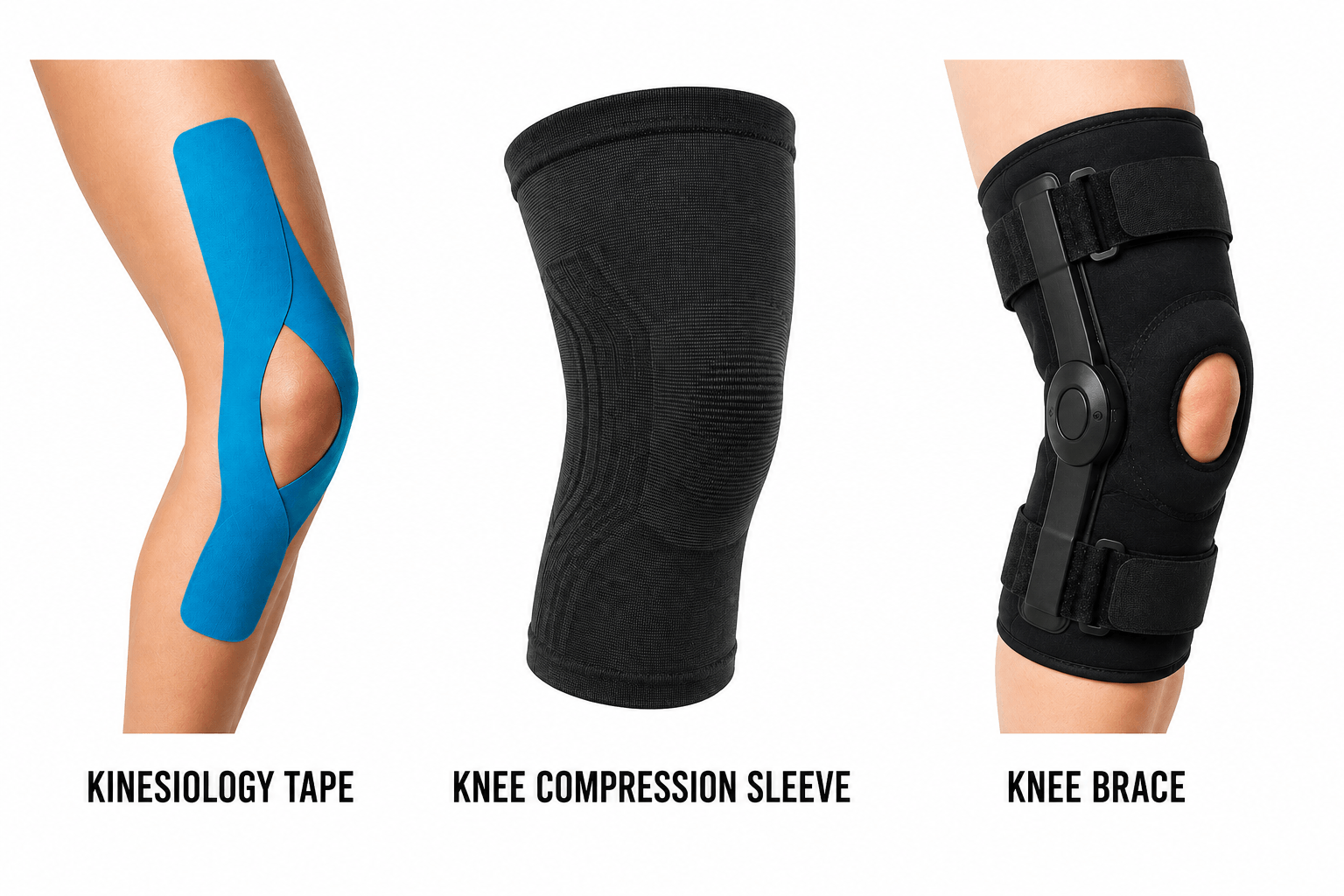 The three main types of knee support: kinesiology tape, a compression sleeve, and a knee brace. GO Sleeves combines the technology of kinesiology tape into a compression sleeve.
Tape: Short-Term Directional Support
Kinesiology tape creates directional pull on skin and fascia. When applied correctly along muscle fibers or joint lines, it enhances proprioceptive feedback. Your nervous system gets clearer information about position and movement quality.
For competition-day support or specific physical therapy protocols, tape serves this job well.
The limitations appear with daily use.
Application demands time and technique. Taping a knee properly takes 10-15 minutes. You need to cut strips to the right length, apply with appropriate tension, and position precisely along anatomical landmarks. Most athletes skip steps or guess at placement, which eliminates the benefit.
Tape peels during activity. Sweat and repeated joint flexion cause edges to curl and lift. By the end of a long training session, you're re-taping or dealing with bunched material under your kneecap.
Cost accumulates fast. Quality kinesiology tape runs $15-25 per roll. Daily use for a single knee means spending $50-100 monthly. Multiple joints compound the expense quickly.
Skin irritation develops. Daily application and removal damages skin. The adhesive causes reactions in sensitive areas. Athletes with body hair deal with painful removal.
Tape works well as a short-term event tool for directional cueing during competition or rehab protocols. It's not designed for daily, consistent use across regular training.
Compression Sleeves: Recovery Support
Compression sleeves apply uniform pressure around the knee joint. This reduces swelling by encouraging fluid movement and provides warmth during activity.
For managing mild inflammation between training sessions, compression serves this job well.
The limitations show up during intense movement.
Material bunches during deep flexion. The elastic fabric gathers behind the knee when you squat deep, get low for defensive positions, or land from jumps. What felt supportive standing becomes restrictive during the movements that matter most.
Uniform pressure doesn't guide alignment. Compression squeezes equally in all directions. It doesn't provide directional feedback about patellar tracking or knee mechanics. You get pressure but no proprioceptive enhancement to help correct movement patterns.
Sleeves migrate during explosive work. Most compression sleeves slide down the leg during sprints, jumps, or rapid changes of direction. You're constantly pulling them back up, which breaks focus during critical moments.
Compression provides useful support for recovery and warmth between sessions. It's a post-activity tool for managing inflammation that already occurred, not a during-training tool for maintaining mechanics.
Braces: Injury Protection
Knee braces use hinges, straps, or rigid components to limit potentially harmful movements. They stabilize ligaments and protect structures during acute injury recovery or medically guided post-surgical rehabilitation.
For significant instability or recovery from tears, braces serve this protective function well.
The trade-offs become clear when you try to train in one.
Range of motion gets restricted. Rigid components limit how deeply you can flex or rotate your knee. This constrains athletic movements and slows your return to full training capacity.
Bulk interferes with speed work. Hard materials add weight and change how your leg moves through space. They're difficult to wear under athletic clothing. Full-speed drills feel different because your mechanics adjust to accommodate the brace.
Natural feedback decreases over time. When external support does the stabilization work, your muscles and proprioceptive system get less practice maintaining joint control. Extended use can delay the return of natural strength and coordination.
Braces excel at protecting damaged knees during acute recovery phases under medical guidance. They're crisis tools for when something has already gone wrong, not prevention tools for healthy athletes training daily.
The Gap: No Daily Baseline
These three options all react to problems that already exist. Tape for event-day tracking issues. Compression for swelling between sessions. Braces for injured structures.
None of them were designed as your daily baseline — the thing you do every day to maintain healthy knee mechanics so problems don't develop in the first place.
Movement care fills this gap. It's proactive support for athletes who train consistently and want to stay healthy over time.
Think about dental hygiene. You brush your teeth twice daily to prevent cavities. You don't wait for decay before establishing oral care habits. Daily maintenance prevents the crisis.
Movement care works the same way for your knees. You're supporting optimal mechanics continuously — before training, during activity, throughout recovery — so dysfunction and inflammation don't develop.
What Movement Care Actually Requires
Effective daily knee support needs capabilities that tape, compression, and braces don't provide simultaneously.
Proprioceptive enhancement plus directional guidance. Your nervous system needs clear feedback about knee position and patellar tracking. The support must provide directional forces that guide joints through optimal patterns, especially as fatigue sets in.
Circulation support during activity. Blood flow and lymphatic drainage need to stay strong when tissues are under load. The support should facilitate this throughout training, not restrict it.
Full range of motion without bulk. Athletes need complete flexibility during all movements. Support that limits mobility or adds weight creates compensation patterns elsewhere in the body.
Stays in place for hours. If you're adjusting your knee support constantly, it's distracting you instead of helping you. Effective movement care works through entire training sessions without migration.
Simple integration into routine. Daily use has to be straightforward. Complicated setup or time-consuming application means athletes won't do it consistently. Consistency is what prevents injury.
No single traditional support option meets all these requirements at once. That's why movement care exists as a distinct category.
GO Sleeves: Built for Everyday Movement Care
GO Knee Sleeves address the daily training job that tape, compression sleeves, and braces aren't designed to handle.
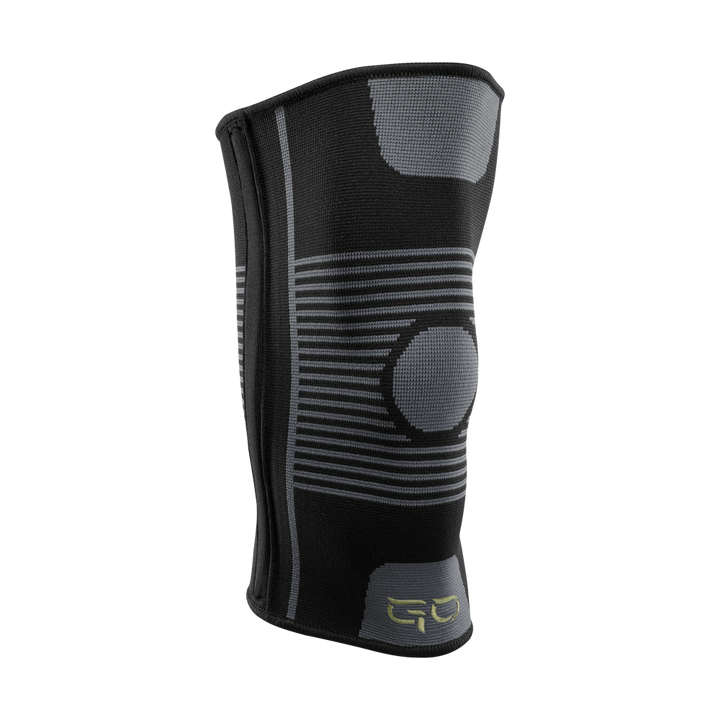
Embedded silicone patterns create directional fascial stretch along the quadriceps tendon and patellar ligament. These are the structures that control kneecap tracking during movement. The patterns grip skin and create focal tension points that enhance proprioceptive feedback. You get the directional benefits of tape without daily reapplication.
Graduated compression supports both circulation and mobility. Instead of uniform pressure, the design uses directional zones — higher compression at specific support points, lighter compression where the joint needs to flex freely. This maintains full range of motion while supporting healthy tissue function.
Lightweight and flexible design eliminates the bulk of braces while providing mechanical guidance. You get support without restriction. Full athletic movements remain available.
Adhesive backing keeps the sleeve locked in position. The silicone patterns grip skin securely through hours of sweating and explosive movements. No migration. No constant adjustment.
The Georgetown College study validated these design principles. Athletes wearing GO Sleeves showed 28% lower pain scores compared to standard knee support options. User surveys reinforce this — 60% reported less pain and 58% experienced reduced inflammation during regular training use.
These results reflect better movement mechanics maintained consistently across training cycles.
GO Kinesiology + Compression Knee Sleeve
$89.95
Don’t let knee pain sabotage your plans! Reduce pain, swelling, and soreness in and around your knee—and accelerate your body’s ability to recover and rebound so you can keep moving. Unlike compression sleeves which just compress, GO Sleeves® Knee Sleeves… Read More
The Decision Framework
The right knee support depends on the job you're trying to do.
Use kinesiology tape for:
Event-day directional cueing when you need maximum acute support
Specific taping protocols under physical therapy guidance
Short-term intervention during competition
Use compression sleeves for:
Post-workout recovery and swelling management
Warmth during low-intensity activities
Mild support between training sessions
Use knee braces for:
Protecting unstable joints during acute injury recovery
Medically guided post-surgical rehabilitation
Situations where immobilization is medically necessary
Use movement care sleeves for:
Daily training baseline when you need consistent support
Preventing problems through better mechanics maintained over time
Full mobility combined with proprioceptive enhancement
Building sustainable routines that support long-term knee health
Movement care becomes your daily foundation. Tape, compression, and braces supplement it for their specific jobs when needed.
How Movement Care Fits Your Training Routine
Movement care works best when integrated into your existing schedule.
Before activity. Put sleeves on 20-30 minutes before training. The fascial manipulation begins working. By the time you start your warm-up, proprioceptive feedback is already enhanced.
During training. The embedded patterns help maintain better patellar tracking as fatigue accumulates. You're supporting optimal movement patterns under load instead of letting mechanics degrade and create compensatory stress.
After sessions. For recovery periods or tournament days with multiple activities, keep sleeves on between workouts. Enhanced lymphatic drainage continues working. You stay warm and supported without restricting circulation. If managing acute inflammation from training, apply ice first, then put sleeves on after skin normalizes its temperature for continued recovery support.
Tape serves its role for competition day. Compression aids recovery between hard sessions. Braces protect during injury rehab. Movement care keeps you training consistently without breaking down.
FAQs
Can I use tape, compression, and movement care sleeves together?
You generally don't need to — movement care sleeves already provide the directional cueing tape offers and the circulation support compression provides, without needing to layer them. Save tape for event-day competition if you already have a routine built around it.
Is movement care the same thing as a compression sleeve?
Not quite. Standard compression applies uniform pressure with no directional guidance. Movement care sleeves use directional compression zones plus embedded patterns for proprioceptive feedback — more like tape and compression combined into one daily-use tool.
How long can I wear movement care sleeves during training?
They're designed for extended wear — before training to prime proprioception, during activity to maintain mechanics under fatigue, and after for continued circulation support, unlike tape (short-term) or braces (typically limited-duration use during rehab).
Do I still need a brace if I use movement care daily?
Only if you have an acute, structural injury under medical guidance. Movement care isn't a substitute for a prescribed brace during ligament recovery — it's the daily baseline for healthy knees, not a replacement for medical rehab equipment.
Will movement care sleeves slip during sprints or jumps like compression sleeves do?
The adhesive silicone backing is specifically designed to stay locked in place through sweat and explosive movement, which is one of the main complaints athletes have with standard compression sleeves migrating during activity.
The Bottom Line
Tape, compression, and braces all do their specific jobs well — they're just not built to be the answer for knee support for daily training. Tape needs reapplication. Compression bunches under load. Braces trade mobility for stability you don't need if your knee isn't actually injured.
Movement care fills the gap none of them cover: proactive, daily support that keeps your mechanics clean before problems start, not after. Save tape, compression, and braces for the specific jobs they're actually good at — and let movement care be your everyday baseline.
Medical Disclaimer: The information provided in this article is for educational purposes only and does not constitute medical advice, diagnosis, or treatment. Always seek the advice of your physician or other qualified health provider with any questions you may have regarding a medical condition or injury. Never disregard professional medical advice or delay in seeking it because of something you have read on this website.