Table of Contents
Your Body Already Knows How to Move Better
This week at SXSW, futurist Amy Webb presented what she calls “Human Augmentation” — a convergence of technologies designed to enhance physical and cognitive capabilities beyond their natural limits.³ Her first category was Body and Movement, and the products she highlighted were impressive—but they also raise an important question about the future of movement care.
Mogo powered pants, built by Arc'teryx in partnership with a Google X spinout, function like an e-bike for hiking. Motors at the knee boost leg strength on the way up and absorb shock on the descent. A Hypershell leisure exoskeleton lets you walk longer without getting sore—people apparently wore them around CES so they'd never have to sit down. Project Amplify shoes connect to your legs and add power to your stride, extending your run by a mile or more.
None of these were designed for people with mobility challenges. Webb made that clear. These are products for the able-bodied — technology to help healthy people move faster, longer, and harder than their bodies naturally would.
She did the math on stage. Strap on the exoskeleton, sleep on an AI-optimized bed, wear a pair of AR smart glasses, and you're approximately 2.2x more effective than the person standing next to you.
Her broader point was about a future where your body becomes a platform — and opting out of augmentation means falling behind.
It’s a compelling and unsettling vision.
We think there’s a piece missing.
What Is Movement Care?
Movement care is the proactive practice of supporting how your body moves — improving joint stability, tissue health, and proprioception to prevent injury and enhance performance.
Instead of waiting for pain or breakdown, movement care focuses on maintaining the systems that allow your body to move efficiently in the first place.

The System That’s Already There
Your body already has a built-in movement optimization system. It doesn’t require a subscription, a charging cable, or a $340 monthly lease.
It’s called proprioception — your body’s ability to sense where your joints are in space, how fast they’re moving, and how much force they’re under, without you having to think about it.
Every time you walk down stairs without looking, catch your balance, or land a jump with proper alignment, proprioception is doing the work.
This system runs on mechanoreceptors embedded in your fascia, muscles, tendons, and joint capsules. These receptors detect stretch, pressure, and vibration, sending signals to your nervous system faster than conscious thought.
Your brain processes this information and makes micro-adjustments — hundreds of times per second — to keep you stable, efficient, and protected from injury.
This is one of the most advanced movement technologies ever developed.
And for most people, it’s dramatically undersupported.
Why Proprioception Breaks Down
Proprioception degrades under three conditions that are nearly universal.
Fatigue. When muscles tire, proprioceptive signaling becomes less accurate. Movement patterns suffer. Knees collapse inward. Landing mechanics break down. This is when many injuries occur.
Age. Muscle mass declines 1–2% per year after age 50, reducing the effectiveness of the muscle spindles that drive proprioception and contributing to decreased balance, performance decline, and increased injury risk.¹²
Inactivity. Proprioception is use-it-or-lose-it. Sedentary periods reduce stimulation of the system, dulling its responsiveness.
The tech industry’s answer is to replace or override this system — with exoskeletons, powered shoes, and external performance enhancements.
There’s another option: support the system your body already has.

How to Improve Proprioception Naturally
Kinesiology science has long understood how to enhance proprioception through fascial stimulation.
When directional stretch is applied to fascia — the connective tissue surrounding muscles and joints — mechanoreceptors are activated. The nervous system receives clearer positional feedback. Movement improves. Joint stability increases.
This is the principle behind kinesiology tape.
But tape has limitations — it degrades with activity, depends on correct application, and requires constant reapplication.
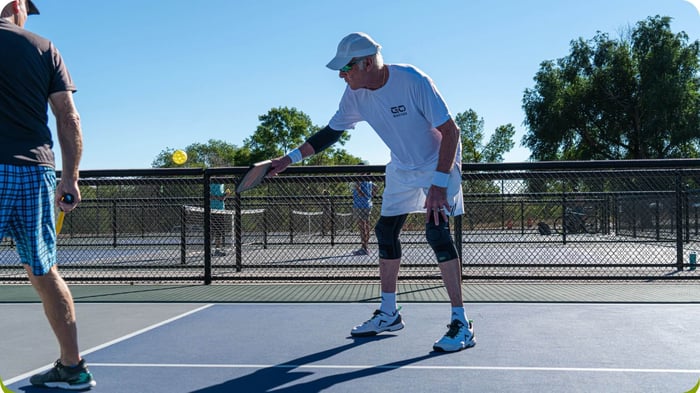
GO Sleeves embed kinesiology taping patterns directly into compression sleeves. Raised silicone patterns create consistent directional stretch with every movement, activating proprioception without the variability of tape.
This supports:
Improved joint stability
Better movement patterns
Reduced injury risk
This isn’t external augmentation.
It’s internal activation.
The Future of Movement Technology
Amy Webb’s vision raises an important question: what happens when the tools required to function become platform-dependent?
When your movement depends on software updates, subscriptions, or hardware you don’t control?
There’s another path.
Instead of replacing human capability, we can support it.
Movement care — improving proprioception, joint function, and tissue health — offers a sustainable alternative to external augmentation.
The future of movement may not be powered exoskeletons.
It may be a deeper understanding of how the body already works — and giving it the support it needs to perform at its best.
The future of movement isn’t about replacing what your body can do. It’s about supporting the system that’s already there.
Want to Support How Your Body Moves?
Your body already has the system.
Movement care is about making sure it has what it needs to do its job — especially under fatigue, load, and repetition.
GO Sleeves are designed to support proprioception through embedded kinesiology patterns that activate the body’s natural feedback system with every movement.
No application.
No guesswork.
No dependency on external systems.
Just consistent support for how your body is already designed to move.
Explore Movement Care
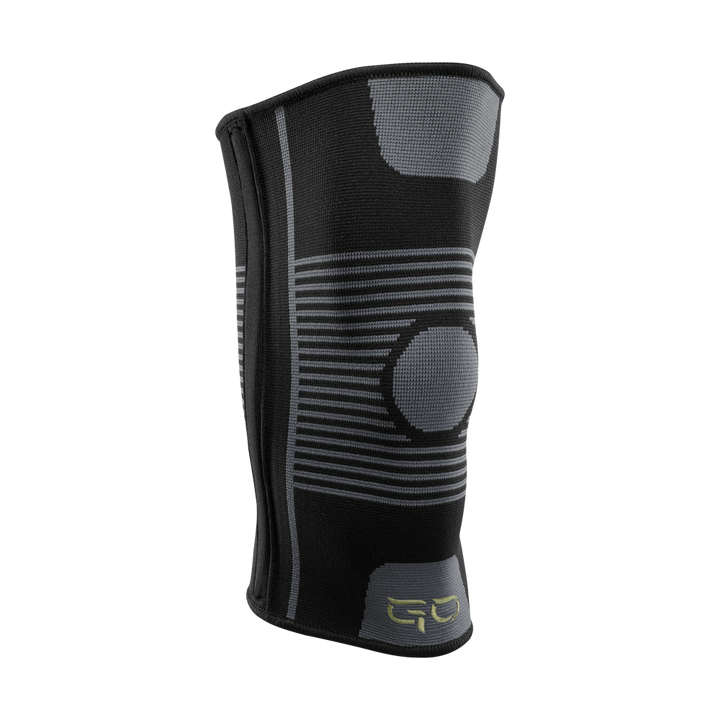
GO Kinesiology + Compression Knee Sleeve
$89.95
Don’t let knee pain sabotage your plans! Reduce pain, swelling, and soreness in and around your knee—and accelerate your body’s ability to recover and rebound so you can keep moving. Unlike compression sleeves which just compress, GO Sleeves® Knee Sleeves… Read More
GO Kinesiology + Compression Elbow Sleeve

$89.95
Accelerate recovery and reduce pain, swelling, and soreness related to Golf and Tennis Elbow with the world’s only compression sleeves with built-in kinesiology strips to secure, correct, and support key ligaments, tendons, and muscles in and around your elbow. Unlike compression… Read More
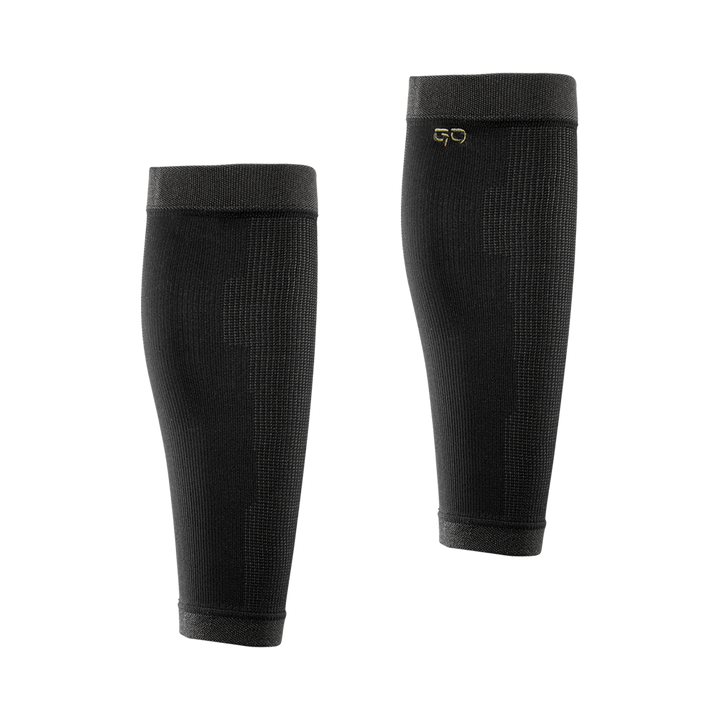
GO Kinesiology + Compression Calf Sleeves
$99.95
Just pull them on, and off you go! GO Sleeves® Calf Sleeves are the world’s only compression sleeves with built-in kinesiology strips to secure, correct, and support key ligaments, tendons, and muscles in and around your calf and shin. Unlike… Read More
Shop All Movement Care ProductsReferences
Yamazaki K, Sakai Y, Ito T, Fukuhara J, Morita Y. Percentage of decline in individual proprioceptors in older adults. J Phys Ther Sci. 2024;36(9):492–497.
Ribeiro F, Oliveira J. Aging effects on joint proprioception: the role of physical activity in proprioception preservation. Eur Rev Aging Phys Act. 2007;4:71–76.
Amy Webb. SXSW 2026 Keynote.
https://youtu.be/CFHlNmyGFFM
FAQs
What is movement care?
Movement care is the proactive practice of supporting how your body moves before pain or injury shows up. It focuses on maintaining joint stability, tissue health, and proprioception so your body can move efficiently and protect itself under load.
What is proprioception?
Proprioception is your body’s ability to sense where your joints are in space, how they’re moving, and how much force they’re under — without you having to think about it. It’s what allows you to balance, coordinate movement, and react quickly to changes in your environment.
Why is proprioception important?
Proprioception is critical for stability, coordination, and injury prevention. When it’s working well, your body makes constant micro-adjustments to keep you aligned and protected. When it declines — due to fatigue, age, or inactivity — movement becomes less efficient and injury risk increases.
How can I improve proprioception?
Proprioception improves when your body receives consistent, high-quality feedback during movement. This can come from strength training, balance work, and tools that stimulate the sensory receptors in your muscles and fascia — helping your body better understand and control how it moves.
What causes proprioception to decline?
Proprioception naturally declines with fatigue, aging, and inactivity. As muscles tire or weaken, the sensory feedback they provide becomes less accurate, making it harder for your body to maintain proper movement patterns and joint alignment.
Is movement care the same as recovery?
No — recovery focuses on repairing the body after stress or injury. Movement care is proactive. It supports how your body moves on a daily basis to reduce strain, improve performance, and prevent issues before they start.
How is movement care different from wearable technology?
Most movement technology adds external support or enhancement. Movement care focuses on improving the body’s internal systems — especially proprioception — so your body can move better on its own, without relying on external devices.
Do compression sleeves help with proprioception?
Some compression sleeves are designed to support proprioception by stimulating sensory receptors in the skin and fascia. When designed with directional patterns, they can enhance feedback to the nervous system and help improve joint awareness and movement control.
Medical Disclaimer: The information provided in this article is for educational purposes only and does not constitute medical advice, diagnosis, or treatment. Always seek the advice of your physician or other qualified health provider with any questions you may have regarding a medical condition or injury. Never disregard professional medical advice or delay in seeking it because of something you have read on this website.