
Table of Contents
- What Causes Tommy John Injuries? The Elbow Isn’t the Criminal
- Tommy John injuries often begin earlier in the kinetic chain. When force from the legs and trunk isn’t transferred efficiently, excess stress shifts to the elbow’s UCL.
- The Sand Berm
- It Starts at the Ground
- Five Ways to Build a More Durable Kinetic Chain
- What the Data Showed
- Signs You Shouldn't Ignore
- Protecting Your Arm Is Protecting Your Career
- Movement Care for Throwing Athletes
- FAQs
- About the Author
What Causes Tommy John Injuries? The Elbow Isn’t the Criminal
When I work with throwing athletes, I start the same place every time. Not the elbow. Not the shoulder. The ground.
After years of analyzing biomechanics, I can tell you that most people misread Tommy John injuries entirely. The elbow is rarely the criminal — it's the victim. If you're trying to prevent Tommy John injuries, you have to look at how force moves through the entire body during the throwing motion.
When a pitcher's lower-body stability breaks down, the kinetic chain breaks with it. That force doesn't disappear. It migrates upward and dumps itself onto the smallest, most vulnerable link: the Ulnar Collateral Ligament. To save the arm, you have to stabilize the base.
Tommy John surgery — ulnar collateral ligament (UCL) reconstruction — is now common at every level of baseball, from youth travel ball to professional organizations. Studies tracking surgical trends in Major League Baseball show that UCL reconstruction procedures have increased dramatically since the 1990s.¹ At the youth level, ulnar collateral ligament reconstructions in athletes under 18 have increased dramatically over the past decade, with pediatric and adolescent cases now representing a substantial portion of Tommy John procedures performed at major orthopedic centers.² Recovery typically takes 12 to 18 months, and studies suggest that roughly one in five athletes never return to their previous level of performance following surgery.³ Most Tommy John injuries are preventable. But you can't prevent them if you're looking in the wrong place.
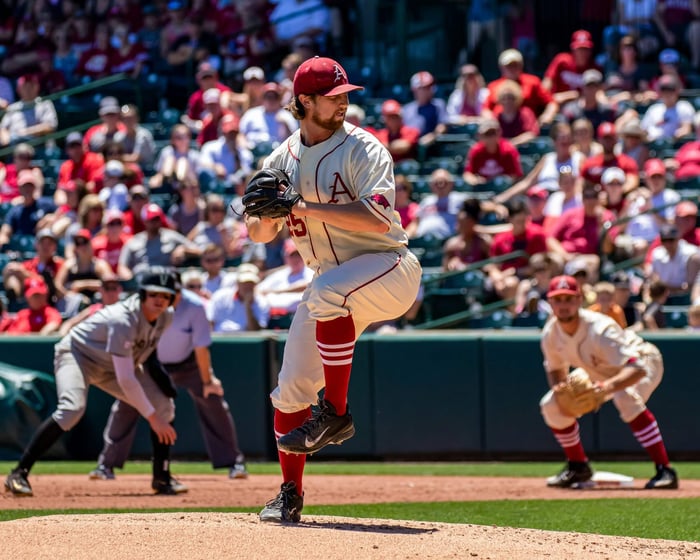 Tommy John injuries often begin earlier in the kinetic chain. When force from the legs and trunk isn’t transferred efficiently, excess stress shifts to the elbow’s UCL.
Tommy John injuries often begin earlier in the kinetic chain. When force from the legs and trunk isn’t transferred efficiently, excess stress shifts to the elbow’s UCL.The Sand Berm
I use a metaphor with my athletes that tends to stick. Think of your UCL like a sand berm on the shore, and think of inflammation as the wave. Every high-velocity throw, every bullpen session, every long toss rep sends a wave pounding into that berm. One wave doesn't destroy it. But when the waves are frequent enough and never let up, the berm erodes — bit by bit, outing by outing. There's no single catastrophic event. The UCL doesn't snap out of nowhere. It just eventually runs out of berm.
This isn't just a coaching metaphor. Biomechanical research shows that the structural strength of the ulnar collateral ligament is roughly 32 Newton-meters, while the valgus torque generated during a high-velocity pitch can approach 50 Newton-meters at the elbow.⁴ The ligament literally cannot handle every throw on its own. It depends on surrounding musculature and mechanical efficiency to survive. When that support breaks down, it's only a matter of time. This is why proactive inflammation management is daily hygiene for a throwing arm. Every time you reduce the frequency and impact of those waves — in the elbow, yes, but also in the lower body tissues feeding the chain above it — you're preserving that berm for another season.
It Starts at the Ground
The throwing motion follows a proximal-to-distal kinetic chain: force is generated from the ground, transferred through the legs and hips, accelerated through trunk rotation, and finally delivered through the arm during the pitching motion.⁵ Disruptions anywhere in that sequence force the arm to compensate, increasing stress on the elbow and shoulder.⁵
The lower extremity contribution is not secondary. Studies show that stride-leg ground reaction forces during the arm-cocking and acceleration phases account for a substantial portion of the variance in throwing velocity.⁶ When that force is efficiently transferred through the kinetic chain, it also reduces the mechanical burden placed on the shoulder and elbow. Research further demonstrates that wrist velocity correlates with increased leg drive, reinforcing the importance of lower-body strength for both performance and injury prevention.⁷
When the throwing-side leg fails to generate stable ground-reaction forces during the loading phase, energy transfer through the kinetic chain becomes less efficient.⁸ This forces the upper extremity to compensate, increasing valgus stress at the elbow during the acceleration phase. That extra torque — pitch after pitch, outing after outing — is how you erode a UCL. The elbow isn't the problem. It's paying the bill for everything that went wrong below it.
Five Ways to Build a More Durable Kinetic Chain
Stabilize the lower body first. I work with athletes on biomechanics before we ever touch skills. If the calf, ankle, and foot on the throwing-side leg aren't firing properly, everything upstream is compromised. Proprioceptive stability training — single-leg balance work, hip loading mechanics, ground reaction drills — is the foundation of arm health, not a warm-up add-on. In my Speed Camp performance data, we consistently see that stability at the base of the chain directly reduces compensatory load at the elbow.
Strengthen the muscles that share the UCL’s load. The ligament doesn’t work alone. The flexor-pronator group, rotator cuff, and scapular stabilizers all help absorb force during the throwing motion. Wrist curls, reverse curls, resistance-band rotations, and scapular rows aren’t accessory exercises — they’re part of the infrastructure that determines how well the elbow tolerates repeated throwing stress.⁹
Research from the American Sports Medicine Institute (ASMI) shows that the flexor carpi ulnaris and flexor digitorum superficialis, positioned directly over the UCL, act as dynamic stabilizers against valgus stress — meaning weak forearm musculature can increase the mechanical load placed on the ligament.¹⁰
Fix the mechanics that multiply stress. Late trunk rotation, an inconsistent arm path, a sloppy follow-through — each adds cumulative valgus torque to the elbow, outing after outing. Studies have identified late trunk rotation, reduced shoulder external rotation, and increased elbow flexion as the mechanical profile most closely associated with elevated elbow loading.⁹ Working with a biomechanics specialist to address those patterns isn't just a performance upgrade. It extends careers.
Manage throw counts and recovery with real discipline. Overuse is the predominant mechanism of injury in youth baseball — and pitchers who exceed recommended pitch counts in a game increase their elbow injury risk by 21–35% depending on volume.¹¹ Rest is a training variable, not a sign of weakness. And don't wait for pain to manage inflammation. Most athletes reach for "Vitamin I" — aka ibuprofen or NSAIDs — when soreness shows up. By then, you're behind. The goal is flush-and-manage between outings, not damage control after the fact.
Maintain mobility across the full chain. Limited range of motion in the shoulder, thoracic spine, or hips forces the elbow to overcompensate. Regular soft tissue work, dynamic warmups, and banded mobility routines keep the entire chain moving efficiently — so no single link has to absorb more than its share.
What the Data Showed
I've spent years telling athletes that stability at the base of the kinetic chain protects the arm. Then we had the chance to actually measure it.
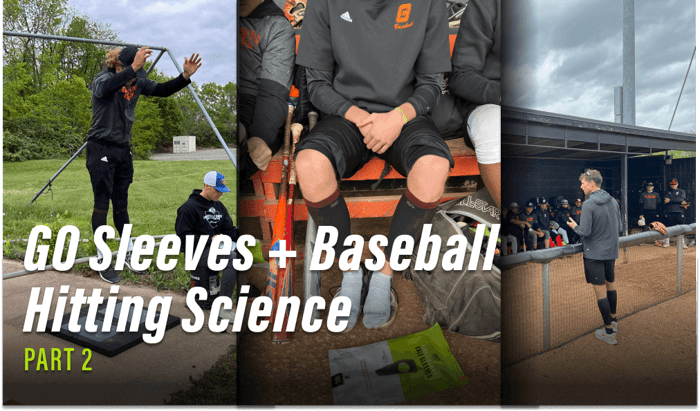
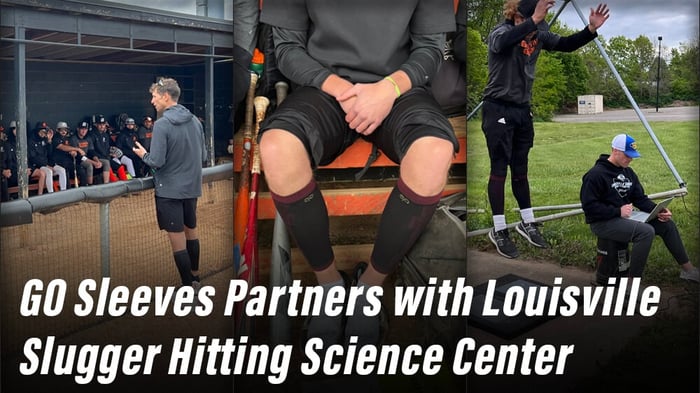
In an independent two-day performance study conducted at the Louisville Slugger Hitting Science Center — where more than 60 MLB players train annually — 30 collegiate baseball players from the Georgetown College program were evaluated using advanced biomechanical measurement systems. Athletes were split into two groups: those wearing GO Sleeves Biokinetic Sleeves and those training without them. The study tracked movement, power, speed, and recovery across both days.
The results confirmed what the biomechanics had always suggested. GO Sleeves users showed a measurable improvement in peak jump force from Day 1 to Day 2, while the control group declined. Sprint speed improved among GO Sleeves athletes while non-users again went the wrong direction. Most notably, pain scores dropped 28% from Day 1 to Day 2 among athletes wearing the sleeves — a meaningful result across a full training load.
Specifically, the calf sleeve on the throwing-side leg improved lower-limb stability during the loading phase, leading to better muscle activation sequencing and more efficient force transfer up the chain. That's the mechanism I've been describing. When the calf and ankle complex is stabilized, proprioceptive feedback improves. The throwing-side leg fires on time. The trunk sequences correctly. The arm arrives on time. The elbow stops compensating.
This aligns with the published research on compression technology. MacRae et al. demonstrated that compression garments may enhance proprioceptive feedback, improve postural stability, and reduce muscular oscillation during dynamic movement.¹² Hill et al. documented how graduated compression supports the calf and ankle complex during athletic activity.¹³ The Louisville Slugger study gave us sport-specific confirmation of the same principle — and the performance data to back it up.
Athletes using GO Sleeves also report 60% less pain, 58% less inflammation, and 58% reduced reliance on anti-inflammatories, based on independent survey data.
GO Sleeves use embedded kinesiology strips that work with the body's natural movement rather than just compressing it. The elbow sleeve works the same way post-throwing: managing inflammation at the site of highest stress as a daily maintenance practice. Dental hygiene for the throwing arm.
Signs You Shouldn't Ignore
Don't wait for the berm to breach. Persistent soreness along the inner elbow, a noticeable drop in velocity or command, tingling into the forearm, and discomfort during warmups or long toss that doesn't resolve are not normal soreness. They're the chain breaking down. If your arm feels late or heavy during delivery, check your lead-leg stability before you look at your shoulder.
If you're experiencing these symptoms regularly, get in front of your physician or a qualified sports medicine professional before they progress.
Protecting Your Arm Is Protecting Your Career
Tommy John surgery isn't just a setback — it's a reset button most pitchers never fully recover from. Whether you're chasing a college scholarship, grinding through a summer league, or coaching the next generation, every preventive step you take today is a game you stay in tomorrow.
That means training the whole chain, not just the arm. It means treating inflammation management as a daily discipline, not a response to pain. It means reinforcing the muscles that share the UCL's load and using purpose-built gear that supports the entire system — from the ground up. The elbow will take care of itself when everything below it is doing its job.
Movement Care for Throwing Athletes
Earlier I described the UCL as a sand berm slowly eroded by waves of stress. If that’s the reality of throwing, the goal isn’t just to react when soreness shows up — it’s to reduce the frequency and impact of those waves across the entire kinetic chain.
That starts from the ground up.
GO Calf Sleeves — Support the Base of the Kinetic Chain
The throwing motion begins from the ground up. When the calf and ankle complex are stable during the loading phase, athletes can transfer force more efficiently and reduce compensatory stress higher in the chain.
In the Louisville Slugger Hitting Science Center performance study referenced above, athletes wearing GO Sleeves showed measurable improvements in lower-body output and recovery across two training days. Peak jump force improved from Day 1 to Day 2 among GO Sleeves users, while the control group declined — a signal that lower-body stability and recovery were being maintained across repeated efforts.
GO Calf Sleeves are designed to:
enhance proprioceptive feedback in the calf and ankle complex
support stability during the loading phase of the throw
reinforce efficient force transfer through the kinetic chain
Best for: pitchers, high-volume throwers, and athletes playing multiple games in short timeframes.
GO Kinesiology + Compression Calf Sleeves
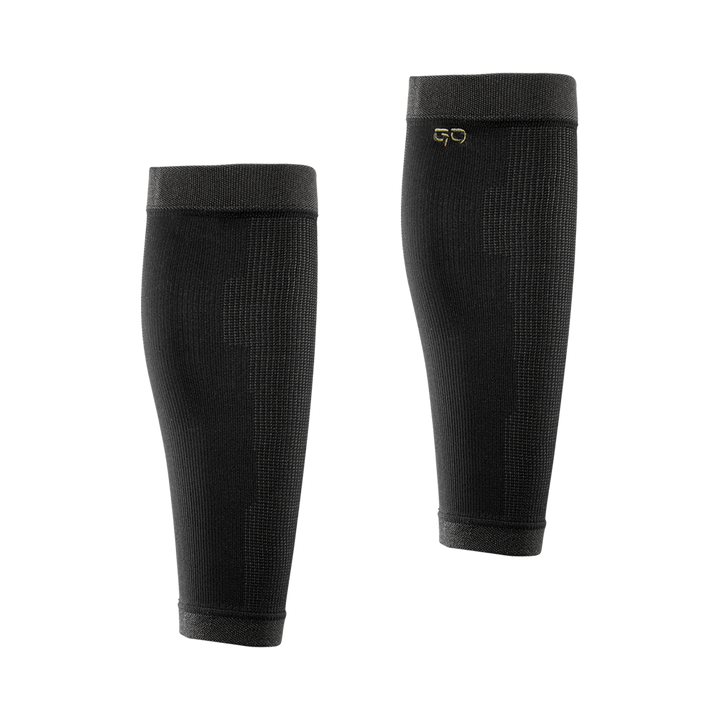
$99.95
Just pull them on, and off you go! GO Sleeves® Calf Sleeves are the world’s only compression sleeves with built-in kinesiology strips to secure, correct, and support key ligaments, tendons, and muscles in and around your calf and shin. Unlike… Read More
GO Elbow Sleeve — Manage Stress at the End of the Chain
Even with good mechanics and sequencing, the elbow still absorbs repeated stress during throwing. Managing inflammation and tissue fatigue becomes part of daily arm care.
Across the same performance study and follow-up athlete survey data, GO Sleeves users reported:
60% less pain
58% less inflammation
58% reduced reliance on anti-inflammatory medication
The GO Elbow Sleeve is designed to:
support the muscles surrounding the elbow
improve circulation around the joint
help manage soreness after bullpens, long toss, and games
provide proprioceptive support without restricting motion
Best for: pitchers, catchers, infielders, and any throwing athlete managing cumulative elbow load.
GO Kinesiology + Compression Elbow Sleeve

$89.95
Accelerate recovery and reduce pain, swelling, and soreness related to Golf and Tennis Elbow with the world’s only compression sleeves with built-in kinesiology strips to secure, correct, and support key ligaments, tendons, and muscles in and around your elbow. Unlike compression… Read More
Build the System, Not Just the Symptom
Lower-body stability and elbow support work best together. One helps create cleaner force transfer from the ground up. The other helps manage the stress that accumulates at the elbow.
Supporting both ends of the kinetic chain helps athletes maintain performance deeper into the season — and reduces the cumulative stress that leads to UCL breakdown over time.
Research & References
The concepts discussed in this article draw on published biomechanics and sports medicine research on throwing mechanics, kinetic chain function, and UCL injury risk in baseball pitchers.
Erickson BJ, Nwachukwu BU, Rosas S, et al.
Trends in Ulnar Collateral Ligament Reconstruction in Major League Baseball Pitchers.
American Journal of Sports Medicine. 2015;43(7):1764–1769.Kassam HF, Lawrence JT.
Ulnar Collateral Ligament Injuries in Pediatric and Adolescent Throwing Athletes.
JBJS Reviews. 2020;8(6):e19.00098.Erickson BJ, Gupta AK, Harris JD, et al.
Rate of Return to Pitching and Performance After Tommy John Surgery in Major League Baseball Pitchers.
American Journal of Sports Medicine. 2014;42(3):536–543.Fleisig GS, Andrews JR, Dillman CJ, Escamilla RF.
Kinetics of baseball pitching with implications about injury mechanisms.
American Journal of Sports Medicine. 1995;23(2):233–239.- Fleisig GS, Barrentine SW, Escamilla RF, Andrews JR.
Biomechanics of overhand throwing with implications for injuries.
Sports Medicine. 1996;21(6):421–437. - McNally MP, Borstad JD, Oñate JA, Chaudhari AMW.
Stride leg ground reaction forces predict throwing velocity in adult recreational baseball pitchers.
Journal of Strength and Conditioning Research. 2015;29(10):2708–2715. - Fleisig GS, Escamilla RF, Andrews JR, Matsuo T, Satterwhite Y, Barrentine SW.
Kinematic and kinetic comparison of baseball pitching among various levels of development.
Journal of Biomechanics. 1996;29(10):1371–1375. - MacWilliams BA, Choi T, Perezous MK, Chao EY, McFarland EG.
Characteristic ground-reaction forces in baseball pitching.
American Journal of Sports Medicine. 1998;26(1):66–71. - Aguinaldo AL, Chambers H.
Correlation of throwing mechanics with elbow valgus load in adult baseball pitchers.
American Journal of Sports Medicine. 2009;37(10):2043–2048. - Cain EL Jr, Dugas JR, Wolf RS, Andrews JR.
Elbow injuries in throwing athletes: a current concepts review.
American Journal of Sports Medicine. 2003;31(4):621–635. - Olsen SJ, Fleisig GS, Dun S, Loftice J, Andrews JR.
Risk factors for shoulder and elbow injuries in adolescent baseball pitchers.
American Journal of Sports Medicine. 2006;34(6):905–912. - MacRae BA, Cotter JD, Laing RM.
Compression garments and exercise: garment considerations, physiology and performance.
Sports Medicine. 2011;41(10):815–843. - Hill JA, Howatson G, van Someren KA, Walshe I, Pedlar CR.
The variation in pressures exerted by commercially available compression garments.
Sports Engineering. 2014;17(2):101–107.
FAQs
What causes Tommy John injuries in baseball players?
Tommy John injuries occur when the ulnar collateral ligament (UCL) in the elbow becomes damaged from repeated stress during throwing. High-velocity pitching creates significant valgus torque at the elbow, and over time the ligament can weaken or tear. These injuries are rarely caused by a single throw — they typically develop from repetitive stress and inefficient force transfer through the throwing motion.
Can Tommy John injuries be prevented?
Many Tommy John injuries are preventable with proper mechanics, workload management, and full-body conditioning. Because throwing force travels through the kinetic chain — from the legs and hips to the arm — improving lower-body stability, strength, and sequencing can significantly reduce stress placed on the elbow.
What are early signs of a potential UCL injury?
Early warning signs of a UCL injury can include:
Persistent soreness along the inner elbow
Decreased throwing velocity or command
Tingling or numbness in the forearm
Arm fatigue that appears earlier than usual
Pain during warmups or long toss
These symptoms should not be ignored and should be evaluated by a qualified sports medicine professional.
Why does lower-body strength matter for arm health?
The throwing motion relies on a proximal-to-distal kinetic chain, meaning force is generated from the ground and transferred upward through the body. When the lower body — especially the calf, ankle, and hips — fails to generate stable ground reaction forces, the arm must compensate. This increases stress on the elbow and raises the risk of UCL injury.
How long does recovery from Tommy John surgery take?
Recovery from Tommy John surgery typically takes 12 to 18 months. Even after rehabilitation, some athletes may not return to their previous level of performance. Because of the long recovery timeline, many athletes and coaches emphasize prevention strategies and arm care routines to reduce injury risk.
Do compression sleeves help throwing athletes?
Research suggests compression garments may improve proprioceptive feedback, postural stability, and muscle support during movement. For throwing athletes, sleeves can help support muscles surrounding the elbow and stabilize the lower leg during the loading phase of the throw, which may improve force transfer through the kinetic chain.
Why is the elbow often the “victim” in throwing injuries?
In many cases, elbow injuries occur because of breakdowns elsewhere in the kinetic chain. If the legs, hips, or trunk fail to generate or transfer force properly, the arm must compensate. Over time, that additional stress accumulates at the elbow, making the ligament vulnerable to injury.
How can pitchers protect their throwing arm during a long season?
Pitchers can reduce injury risk by focusing on:
Lower-body strength and stability
Efficient throwing mechanics
Proper pitch counts and rest periods
Forearm and shoulder strengthening
Consistent recovery and inflammation management
Protecting the arm requires training the entire kinetic chain, not just the elbow.
About the Author
Chad Miller, widely known as “The Baseball Science Guy,” is a baseball performance specialist and founder of the Louisville Slugger Hitting Science Center in Louisville, Kentucky. A former collegiate player and coach, Miller works with youth, collegiate, and professional athletes to improve performance through biomechanics, analytics, and sports science.
His work focuses on how the body’s kinetic chain influences throwing and hitting mechanics, helping athletes build more efficient movement patterns, increase power, and reduce injury risk in throwing athletes. Miller has been involved in medically integrated performance environments and sports diagnostics, applying data-driven training methods to player development and long-term durability in baseball athletes.
Medical Disclaimer: The information provided in this article is for educational purposes only and does not constitute medical advice, diagnosis, or treatment. Always seek the advice of your physician or other qualified health provider with any questions you may have regarding a medical condition or injury. Never disregard professional medical advice or delay in seeking it because of something you have read on this website.