Table of Contents
- Acute Injury: When Structure Gets Damaged
- Chronic Stress: When Mechanics Break Down
- Movement Care for Chronic Training Stress
- The Decision Framework: Acute vs Chronic
- Recognizing What You're Dealing With
- Transitioning From Acute to Chronic Support
- How This Looks In Practice
- GO Knee Sleeves for Chronic Training Support
- FAQs
- The Bottom Line
Not every knee problem needs the same fix — understanding acute vs chronic knee pain is the first step to knowing whether you need a brace or something else entirely.
You land from a jump and your knee buckles. Sharp pain. Immediate swelling. You need support right now to protect the joint and get through the next few days.
That's acute injury support. Crisis management for when something has already gone wrong.
Three months later, you're back to training. The acute injury healed. But your knee still aches after long runs. Not sharp pain — a nagging discomfort that builds up over sessions. You need support for ongoing training, not emergency stabilization.
That's chronic support. Daily maintenance for athletes who train consistently and want to stay healthy long-term.
Acute and chronic problems require different approaches. Braces handle acute injury protection. Movement care handles chronic training support. That's the core of acute vs chronic knee pain: one is a structural emergency, the other is an ongoing mechanics problem.
Acute Injury: When Structure Gets Damaged
Acute injuries happen suddenly. You twist wrong. You land awkwardly. Something tears, sprains, or ruptures. The damage is immediate and obvious.
Ligament tears. Meniscus damage. Severe sprains. These injuries compromise joint stability. The structures that normally hold your knee together can't do their job anymore.
Acute injury support focuses on protection and immobilization while tissues heal.
Knee braces serve this job. Rigid components limit the movements that could cause further damage. Hinges control flexion and extension. Straps provide compression around unstable areas. The brace does the stabilization work your damaged ligaments can't perform.
Under medical guidance, braces protect healing structures during the acute recovery phase. You're not training normally. You're rehabilitating damaged tissue. The brace keeps the joint safe while your body repairs itself.
Acute support is temporary. As structures heal and stability returns, you wean off the brace. Physical therapy rebuilds strength and proprioception. Eventually the brace comes off entirely.
The timeline depends on injury severity. Minor sprains might need a few weeks. Major ligament reconstruction might require months. But acute support always has an endpoint — when the damaged structure heals enough to function independently.
Chronic Stress: When Mechanics Break Down
Chronic knee problems develop gradually from accumulated stress, though sometimes an acute injury can trigger ongoing mechanical issues. The defining characteristic is that pain persists or recurs during training even after initial healing.
Patellar tendinitis. Patellofemoral pain syndrome. IT band friction. Runner's knee. These conditions typically stem from mechanical dysfunction - movement patterns that create excessive stress on structures over time.
Your patella tracks laterally instead of staying centered. Your knee caves inward during landing. Your hip rotation creates excessive stress on the joint. Small deviations compound over thousands of repetitions until inflammation and pain develop. Sometimes these patterns emerge after an injury changes how you move.
Chronic problems need different support than acute injuries.
Immobilization makes chronic issues worse. Bracing a knee that isn't structurally damaged creates dependency. Your muscles stop doing stabilization work. Proprioceptive feedback decreases. When you remove the brace, your knee has less capacity than before.
Chronic support needs to enhance function, not restrict it. The goal is maintaining good mechanics during training so inflammation doesn't develop. You need proprioceptive enhancement that helps your nervous system correct tracking issues. You need full range of motion so compensation patterns don't develop elsewhere.
Chronic support is ongoing. Unlike acute injuries that heal and resolve, chronic mechanical issues persist as long as you keep training. The support becomes part of your routine — something you use daily to maintain healthy movement patterns.
Movement Care for Chronic Training Stress
Movement care addresses chronic knee problems by supporting optimal mechanics during regular training.
GO Sleeves provides the type of support chronic issues actually need — proprioceptive enhancement and directional guidance without restriction or immobilization.
Embedded silicone patterns create directional fascial stretch along the quadriceps tendon and patellar ligament. These patterns enhance proprioceptive feedback during movement. Your nervous system gets clearer information about patellar tracking and knee alignment. You naturally correct mechanical issues as they start to happen, before they compound into inflammation.
Graduated compression supports circulation and tissue health without limiting range of motion. The design uses directional zones — higher compression at support points, lighter compression where mobility matters. Blood flow stays strong during activity. Lymphatic drainage removes inflammatory byproducts efficiently.
Full mobility stays available. Unlike braces that restrict motion, movement care sleeves allow complete athletic movements. You can train through full ranges without compensation. This prevents the secondary problems that develop when athletes modify their mechanics to work around restricted joints.
The Georgetown College study showed 28% lower pain scores in athletes using GO Sleeves for chronic training support. User surveys found 60% reported less pain during regular use. These results come from better mechanics maintained over time, not from immobilizing the joint.
The Decision Framework: Acute vs Chronic
Sorting out acute vs chronic knee pain comes down to one question: what's actually wrong with your knee?
Use braces for acute injuries:
Ligament tears or severe sprains requiring immobilization
Medically guided post-surgical rehabilitation
Situations where structure is compromised and needs protection
Temporary use under medical supervision with planned weaning
Use movement care for chronic training stress:
Patellar tendinitis or patellofemoral pain from tracking issues
Ongoing knee discomfort during and after training
Prevention when you're healthy but training intensely
Daily support that maintains mechanics without creating dependency
The key distinction: Acute injuries need crisis protection while damaged structures heal. Chronic issues need ongoing support that maintains healthy mechanics during regular training.
Recognizing What You're Dealing With
Still not sure whether you're dealing with acute vs chronic knee pain? A few questions help clarify.
Did something specific happen? If you can point to a moment when your knee got injured — a twist, a pop, an awkward landing — that suggests acute damage. If the pain developed gradually over weeks or months with no specific incident, that suggests chronic mechanical stress.
How does it feel? Acute injuries typically produce sharp, localized pain. Swelling appears quickly. You might hear or feel something pop or tear. Chronic issues usually create dull, diffuse aching that builds during activity and persists after. The pain location might move around depending on how you're compensating.
Does rest make it disappear? Acute injuries improve with rest as tissues heal. Chronic mechanical issues might feel better after rest but return as soon as you resume training with the same poor mechanics.
Can you bear weight normally? Acute injuries often prevent normal weight-bearing immediately. You limp or can't put pressure through the joint. Chronic issues usually allow normal walking but cause pain during specific movements like running, jumping, or stairs.
When in doubt, see a physician. Proper diagnosis determines appropriate treatment. Trying to train through an acute injury with movement care support won't work — you need medical intervention. Using a brace for chronic mechanical issues won't work either — you need to address the movement patterns causing stress.
Transitioning From Acute to Chronic Support
Some athletes experience both. An acute injury heals, but chronic pain persists during return to training.
This transition requires changing your support approach.
During acute recovery, follow medical guidance on bracing and immobilization. Protect healing structures. Complete physical therapy protocols. Rebuild strength and stability progressively.
As acute phase resolves, wean off the brace according to your physician's plan. Begin integrating movement care as you return to training. The proprioceptive feedback helps reestablish good mechanics during the rebuilding phase.
For ongoing training, shift to movement care as your daily baseline. The acute injury has healed. Now you're managing the chronic demand of regular training on that joint. Movement care maintains healthy mechanics so chronic issues don't develop as you increase load.
Some athletes keep a brace available for high-risk activities during early return to sport. This is reasonable under medical guidance. But the goal is weaning to movement care for sustainable training.
How This Looks In Practice
Acute scenario: You tear your ACL during a basketball game. Your orthopedic surgeon performs reconstruction. Post-surgery, you wear a prescribed brace during rehabilitation. Over months, you rebuild strength and stability through physical therapy. Eventually you wean off the brace completely. As you return to basketball training, you use movement care sleeves to maintain optimal mechanics during practice and games.
Chronic scenario: You're a runner dealing with persistent patellar tendinitis. No acute injury occurred. The pain developed gradually from poor patellar tracking during high mileage training. A brace won't help — you don't have structural damage requiring immobilization. You need movement care that enhances proprioception and guides better tracking during daily runs. GO Sleeves becomes part of your regular training routine.
Transition scenario: You sprain your MCL playing volleyball. Your physician prescribes a brace for the first six weeks while the ligament heals. You complete physical therapy. At eight weeks, you wean off the brace and begin return-to-sport training. You use movement care sleeves during practice to support good landing mechanics as you rebuild confidence and capacity. The sleeve stays in your routine for ongoing training support.
Different problems. Different support approaches. Both valid for their specific situations.
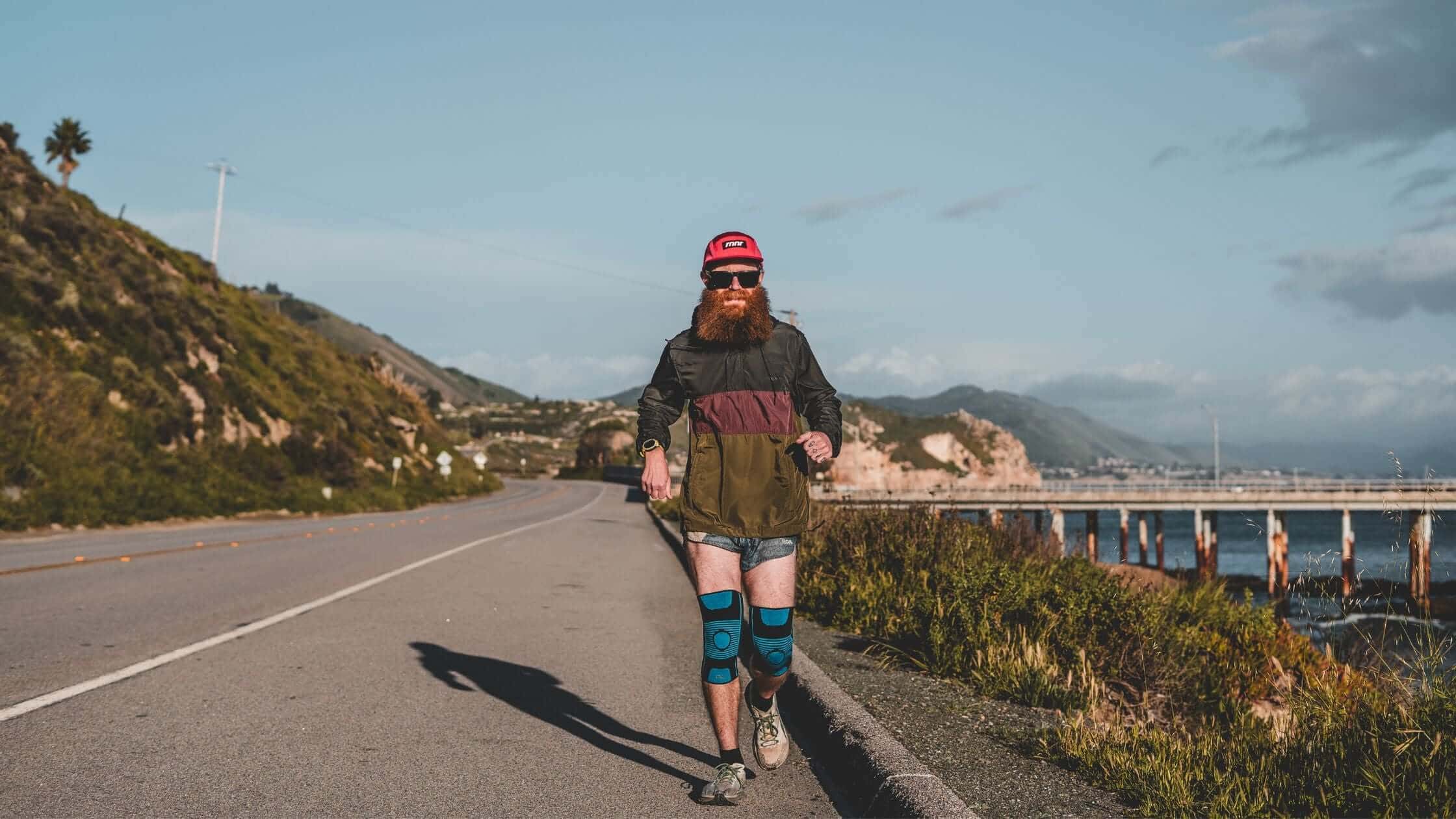 A GO Sleeves partner trains in GO Knee Sleeves — daily support for chronic training, not injury recovery.
GO Knee Sleeves for Chronic Training Support
Once the acute injury has healed and what's left is ongoing, mechanical discomfort, a brace stops being the right tool — you don't need rigid immobilization, you need better information getting to your muscles.
That's what GO Knee Sleeves are built for. Embedded silicone patterns create directional fascial stretch along the quadriceps tendon and patellar ligament, giving your nervous system clearer feedback about tracking and alignment — so you correct mechanical issues as they start, instead of after they've become inflammation.
Graduated compression supports circulation without restricting range of motion, using directional zones instead of uniform pressure. You keep full mobility for training while your muscles get the proprioceptive cueing a brace can't provide without also holding you back.
This is daily-use support, not a temporary crisis measure — worn during training to maintain the mechanics that keep chronic issues from developing in the first place.
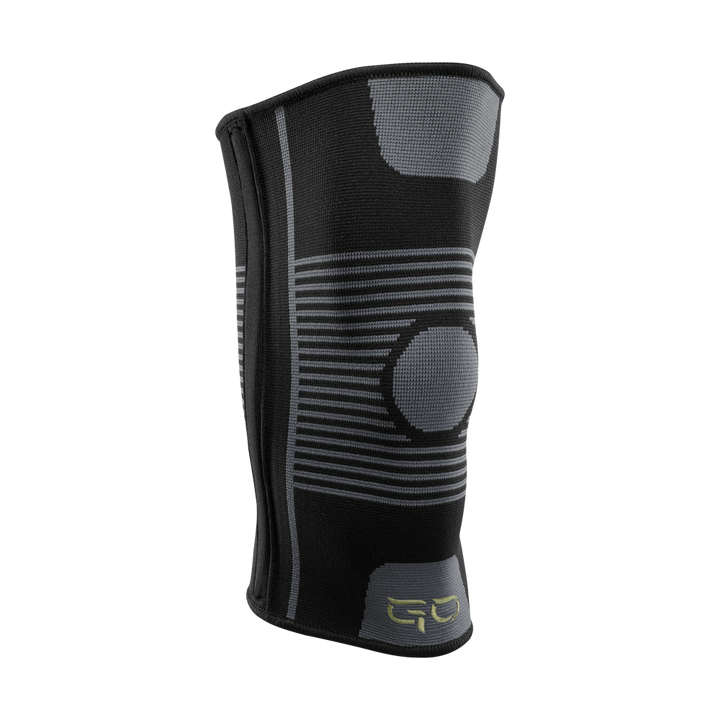
GO Kinesiology + Compression Knee Sleeve
$89.95
Don’t let knee pain sabotage your plans! Reduce pain, swelling, and soreness in and around your knee—and accelerate your body’s ability to recover and rebound so you can keep moving. Unlike compression sleeves which just compress, GO Sleeves® Knee Sleeves… Read More
FAQs
What is the difference between acute and chronic knee support?
Acute support (braces) protects damaged structures during injury recovery by immobilizing the joint temporarily. Chronic support (movement care) maintains healthy mechanics during ongoing training to prevent problems from developing. Acute is crisis management; chronic is daily maintenance.
When should you use a knee brace instead of a sleeve?
Use a brace when you have structural damage like ligament tears requiring immobilization under medical guidance. Use movement care sleeves when you have chronic training stress or want to prevent injury through better mechanics. Braces protect damaged knees; sleeves maintain healthy ones.
Can GO Sleeves help with chronic training discomfort?
GO Sleeves addresses chronic mechanical issues by enhancing proprioception and guiding optimal patellar tracking during training. The Georgetown College study showed 28% lower pain scores, and 60% of users reported reduced pain from consistent use during regular training.
Do GO Sleeves restrict range of motion?
GO Sleeves maintain full range of motion during all athletic movements. Unlike braces that use rigid components to limit flexion, movement care sleeves use graduated compression and embedded patterns that guide without restricting mobility.
Can you wear GO Sleeves before, during, and after activity?
GO Sleeves work across all phases of training. Wear them before activity to prime proprioception, during training to maintain mechanics under fatigue, and after sessions to support recovery. Many athletes wear them throughout tournament days.
Are GO Sleeves a medical device?
GO Sleeves are not medical devices and do not replace treatment for acute injuries requiring professional medical care. They're designed for movement support in healthy, active individuals managing chronic training demands.
Should you wear a brace for daily training if your knee is not injured?
No. Bracing a healthy knee creates dependency by reducing natural proprioceptive feedback and muscle stabilization. For daily training without structural damage, use movement care that enhances function rather than restricts it.
The Bottom Line
Acute vs chronic knee pain isn't just semantics — it determines whether you need a brace or ongoing movement support, and using the wrong one can genuinely slow you down. A brace on a chronic mechanics problem creates dependency. Movement care on a fresh ligament tear won't protect what's actually damaged.
Match the support to the problem. Protect what's broken. Train what's just tired. And when you're not sure which one you're dealing with, that's exactly when it's worth a physician's opinion before guessing.
Medical Disclaimer: The information provided in this article is for educational purposes only and does not constitute medical advice, diagnosis, or treatment. Always seek the advice of your physician or other qualified health provider with any questions you may have regarding a medical condition or injury. Never disregard professional medical advice or delay in seeking it because of something you have read on this website.