
Table of Contents
GO BEYOND RECOVERY
For the first time in his career, Jake Brendel feels zero tightness. Here's how passive recovery changed the game.
"I know my barometer for coming into the season is how's my calf? How's my achilles? Day one, game one, you know how the season's going to go."
Jake Brendel has been in the NFL long enough to know his body's warning signs. For years, he'd start each season with the same familiar tightness—residual issues from training camp, lingering concerns about whether his body would hold up.
This year is different.
"Going into this season, I mean I feel the best I've ever felt to be honest," Jake says. "Usually I have a little bit of residual calf tightness, a little bit of achilles tightness, just going all of those high heavy rep days of camp going into season. And really this season for the first time in my career I feel like I don't really have any tightness, which is really amazing."
What changed?
Learning to Listen
The shift didn't happen overnight. It took years—and multiple soft tissue injuries—for Jake to realize something fundamental: You can prevent injuries, not just react to them.
"Early in my career, even in college, I've definitely had a few soft tissue injuries where I really just wasn't listening to my body. I didn't know, and I was kind of naive at the fact that you could do things to prevent injuries. I just thought you had to lift hard, you had to run fast, and eventually you would be a good football player."
That mindset is common, especially among young athletes. Work harder. Push through. Toughness means ignoring pain.
But Jake learned that's not how elite performance works.
"But it really does come down to preparation and having downtime, making sure that all your downtime is also you can do something passively that's going to recover and going to help you long term."
The Discovery of Relief
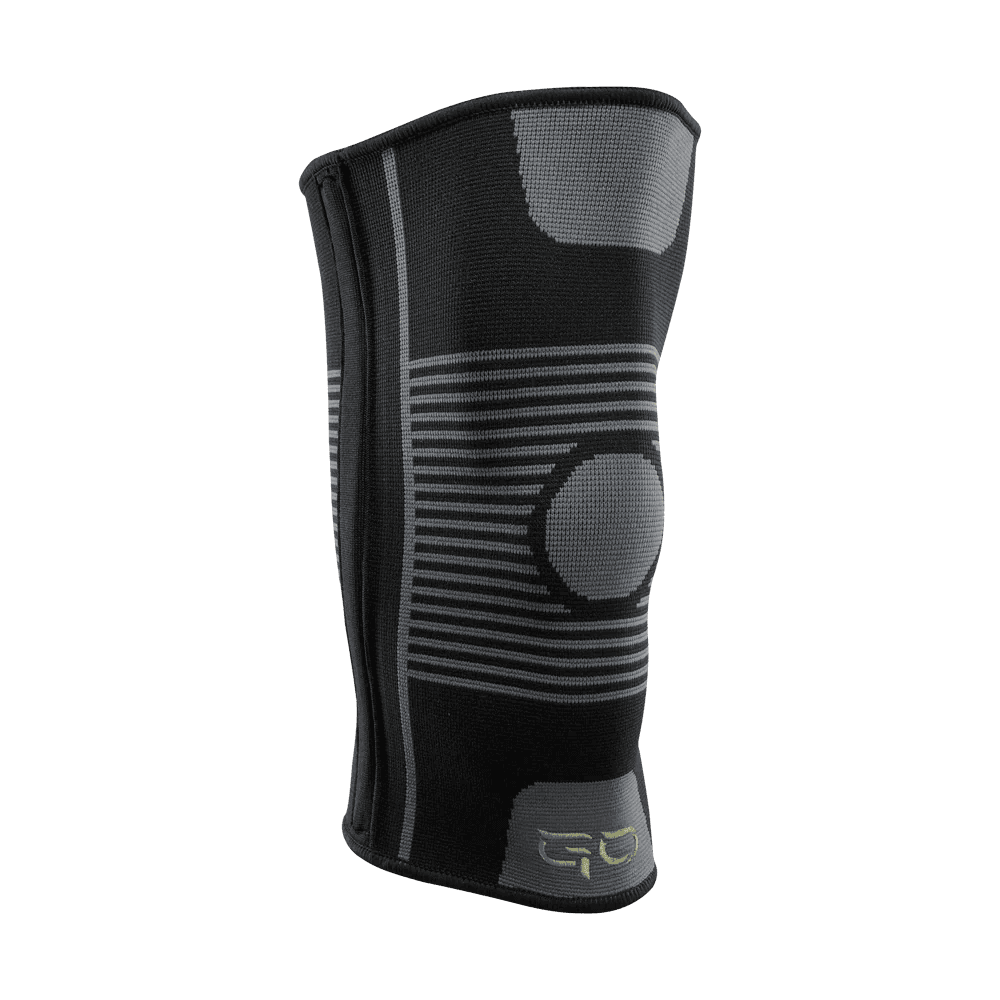
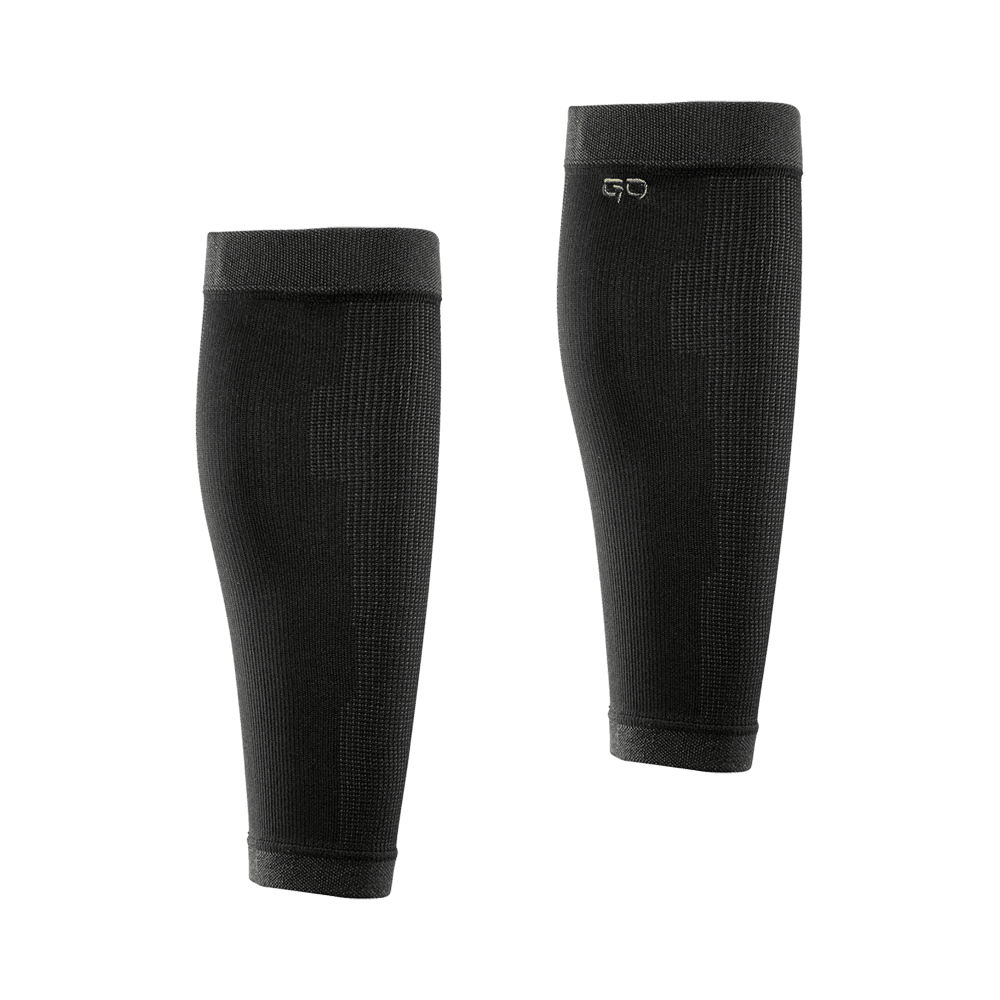
Jake discovered GO Sleeves through teammates. Skeptical but desperate for relief, he tried them.
The response was immediate.
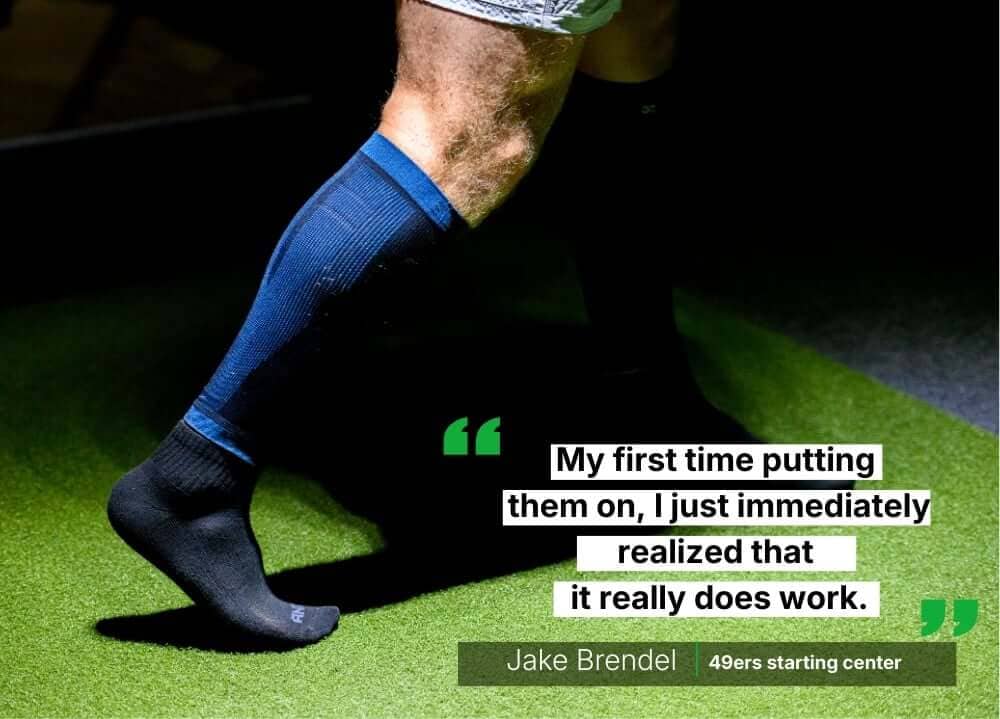
"My first time putting them on, I just immediately realized that it really does work. The fact that I had an immediate relief—it felt like there was a fascial relief within my calf muscle and as soon as I put them on I was like, 'All right, I'm going to wear these all the time.'"
That immediate feedback loop is crucial. Athletes are trained to trust what they feel. When something works, they know it instantly.
"They didn't really like it out in practice because they were blue and were the forerunners," Jake laughs, "but I really made sure to wear them at night was really important to me because that's when I'm not really doing anything else but sleeping and I might as well recover passively."
The Passive Recovery Philosophy
This is the key insight: Recovery doesn't have to be active. You don't have to be doing a workout, or foam rolling, or in a cold plunge to be recovering.
"What's so nice about these is you really can just recover in your downtime and you don't have to do a lot of active steps," Jake explains. "You can wear them during your active steps if you're foam rolling, or if you're doing any sort of hip cars, or any sort of recovery workout. I feel like it's such a great benefit."
Passive recovery means your body is healing while you're sleeping, while you're watching film, while you're just existing. No extra time commitment. No extra effort.
Just results.
"I need to get as many of these as I possibly can," Jake says.
Colton's Journey
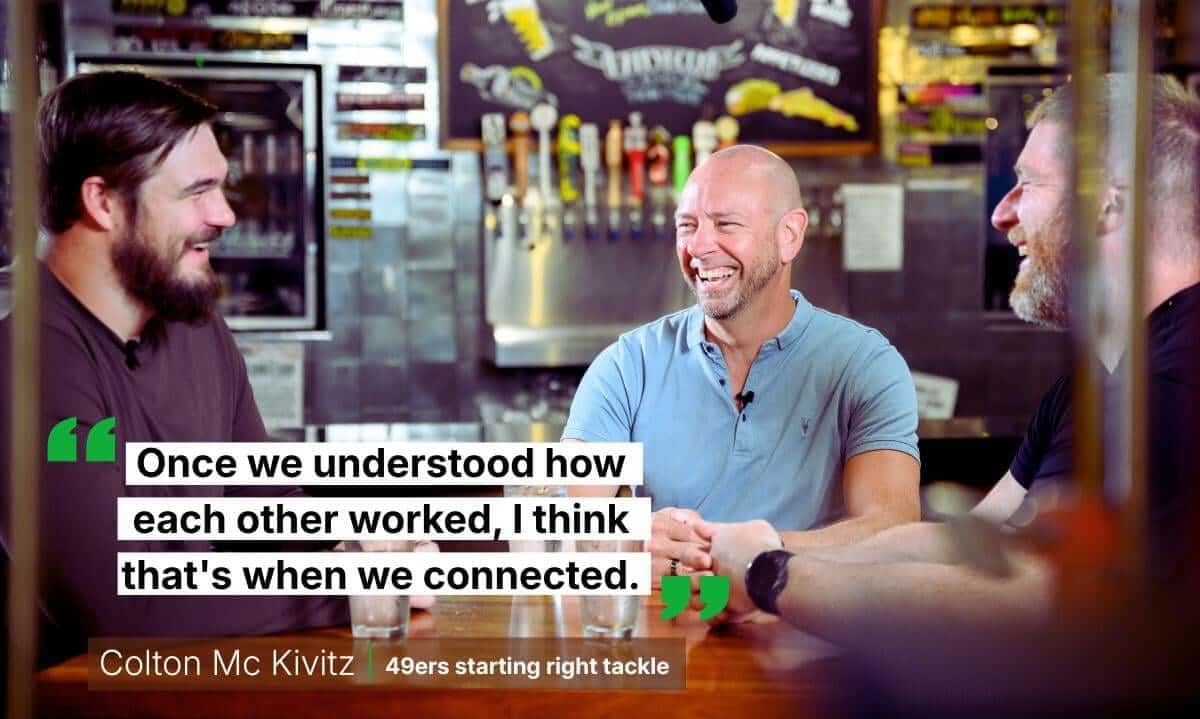
Colton McKivitz came to GO Sleeves through a different path—and different body parts.
"I had trouble with my knee and then my elbow just soreness," Colton explains. Teammates Dan and Jake recommended he try GO Sleeves.
For Colton, it wasn't just about recovery. It was about stability.
"For me that was the biggest thing was the stability when I was either working out on the field early with my MCL and then just the recovery aspect of the ease of use, slipping it on at night, walking around the house."
Living in a three-story townhouse while recovering from a knee injury? Every trip up and down the stairs was a reminder of what his body needed.
"I get a townhouse it's three floors up so trying to walk up and down, it helps wearing the sleeves just walking up and down stairs."
When Colton overextended his elbow, the same principle applied.
"They're always like, 'Hey, put a sleeve on it for compression and get the swelling down.' I was like, 'Okay, well how about something else that helps instead of just throwing on a cloth sleeve.'"
The difference was tangible. "It fit better, I think it helped better for me just the mindset overall, the stability of it instead of sliding all over like a cloth sleeve, it was able to stay on my elbow better and it just added an extra layer of not protection, but I mean pretty much that's what it was. It felt like another layer that just helped stabilize my elbow."
The Mindset Shift
Both Jake and Colton describe the same evolution: From reactive to proactive.
"I think the thing that I've learned from last season going into this year is preemptive measures to take care of something, to get everything loose, to work on things beforehand, to wear recovery sleeves at home, everything like that just to prepare for the workload ahead," Colton says.
The old mindset: Treat something when it hurts, get treatment, once it feels better you're good.
The new mindset: Stay ahead of the curve. Keep your body ready week in, week out.
The Tank Theory
Jake uses a powerful metaphor to explain recovery to younger athletes:
"You have a certain allotment of energy and output that you can give towards a training session. So let's say you have a really hard leg workout and you deplete that tank to 40%, if you can recover and fill that tank back up to 100%, maybe that 100% is more like 105% because you had that huge workout and you've really built that muscle structure."
The flip side? If you don't recover properly, that tank just keeps getting smaller.
"If you have repeated workouts like that and you don't recover and you don't properly heal the body between those workouts, then all you're going to do is go down and that tank's going to be smaller than grow."
Recovery isn't optional. It's how you build on your work instead of depleting yourself.
The Bottom Line
For the first time in his career, Jake Brendel is starting a season with zero tightness. That's not luck. That's not genetics. That's preparation meeting the right recovery tools.
"For the first time in my career I feel like I don't really have any tightness, which is really amazing."
Amazing. And available to anyone willing to take recovery seriously.
Want the Same GO Sleeves Jake & Colton Use?