
Table of Contents
GO BEYOND ADVERSITY
The average NFL career lasts two and a half years.
"NFL: Not For Long," as the saying goes.
Most players are cut once, maybe twice, before they're done. The ones who make it—like Jake Brendel and Colton McKivitz—have learned something crucial: getting knocked down doesn't define you. Getting back up does.
The Punch in the Mouth
Mike Tyson famously said, "Everybody's got a plan until you get punched in the mouth."
For Jake Brendel, that punch came five times. Five separate occasions where he was told he wasn't good enough, wasn't needed, wasn't part of the plan anymore.
Five times he had to look at himself in the mirror and decide: is this over, or do I keep fighting?
"I've been fortunate for you, been cut a whole lot more times than you have," Jake tells Colton with the kind of dark humor that comes from surviving something hard.
Colton laughs: "Took once for me."
But one time was enough. One time was devastating.
Colton's Wake-Up Call
"I was going through some adversity, being cut and was quite angry at the world," Colton recalls. "So that would be my punched in the face moment of my career."
The anger is real. So is the isolation.
"I didn't talk to anyone for a month."
For someone who thought he had it figured out, who was coming off a redshirt year thinking the NFL would just happen, getting cut was a shock to the system.
"You almost wish it didn't take getting cut to figure it out," Colton reflects. "But I think that's kind of the same as being fired from a job like, 'Oh crap, I better get myself together because if not, how am I going to provide for my family? What's my dream going to become? That's not what I worked all this... Every practice and everything leading up to that, workouts and stuff. What did I do that for if I'm just going to kind of throw it away?'"
That's the wake-up call. That's the moment of clarity when you realize no one owes you anything, and if you want it, you have to fight for it.
Jake's Five Times
Jake knows this moment intimately. He's lived it five times.
Each release is a reset button. Each one forces the question: get back on the horse or fade out?
"It's just a reset button," Jake says. "You can either get back on the horse or what a lot of players do is they just kind of fade out. Obviously it's not a very long career for a lot of players. Two and a half years I think is the average. And it's just like most players are cut once, maybe twice before two and a half years. And if they can't figure it out then that's what it is."
What keeps Jake fighting? His support system. His family.
"All the work that they put in to get me to where I am now, for me to just stop and just give up, that'd just be such a kind of middle finger to them, to be honest. All of the stuff that they've sacrificed for."
This is the burden and the privilege of having people who believe in you. You can't let them down. More importantly, you can't let yourself down.
The Question
"How do you let down people that put... Coaches, parents, brothers and sisters, and obviously our loved ones. Yeah, how do you let them down and then yourself down?" Colton asks.
It's a rhetorical question, but it's the right one. Both Jake and Colton had dreams. Colton wanted to play baseball—that was his vision of heaven, playing in PNC Park in Pittsburgh. Jake was playing every sport available in Wisconsin before moving to Texas and committing to football.
The NFL wasn't guaranteed for either of them. It was earned through work, through setbacks, through refusing to quit.
"Football paid for through a scholarship and I was like, 'Hey, happy to be here,'" Colton says. "And they're like, 'Oh, here's the NFL.' Like, 'Yeah, I'll take it.' And then you get in and rookie year you get a red shirt year and then it's like, 'Okay, you haven't figured it out yet. Here it comes.' And then you get cut and hated everyone, didn't talk to anyone for a month."
Brotherhood Through Battle
What brought Jake and Colton together wasn't just being teammates. It was understanding what the other had been through.
When Colton was cut, Jake was there. Not with empty platitudes, but with real understanding.
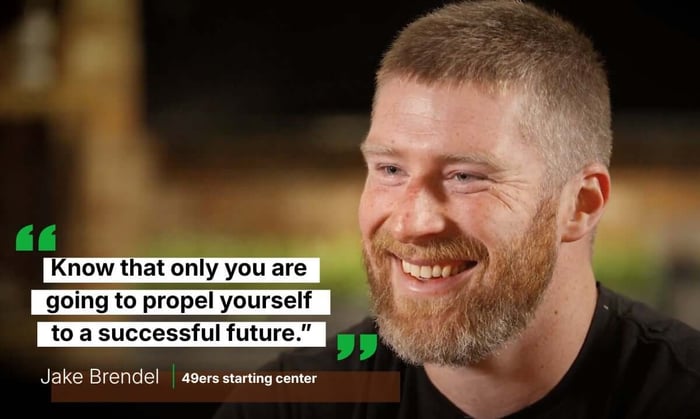
"I think a lot of our conversations kind of came back to the same exact thing where you've just got to trust the process and you got to try as hard as you can to get back into that, into the saddle and really just take ownership of where you are right now," Jake says. "And know that only you are going to propel yourself to either a successful future or not a successful future."
That's the support of someone who's been there. Who knows the anger, the doubt, the loneliness. Who also knows the way back.
The Choice
Getting cut doesn't define you. What defines you is what you do next.
Both Jake and Colton chose to fight. They chose to prove the doubters wrong. They chose to honor the people who sacrificed for them by refusing to give up.
Now they're both starters on a Super Bowl-contending team.
"Yeah, it's definitely not easy," Colton says. "But it was definitely the wake-up call."
The wake-up call that changed everything.
Coming Next in the GO BEYOND Series: What makes them happy beyond football—ducks, daughters, and finding balance in a demanding career.
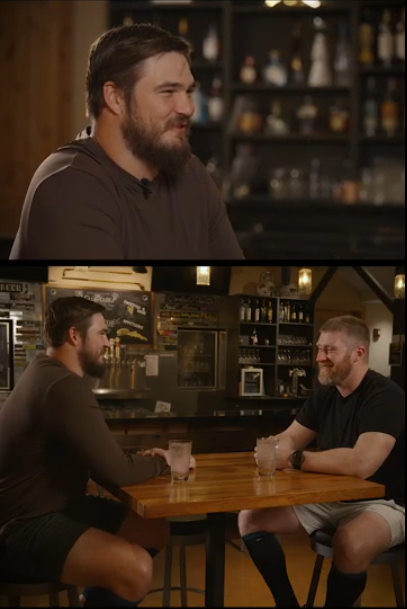
WATCH: Jake & Colton recall their road to the NFL
Get the GO Sleeves Used by Jake Brendel & Colton McKivitz