
Table of Contents
- Why Marathon Training Breaks You Down
- The 48-Hour Window: How Marathon Recovery Actually Happens
- Nutrition: Fueling Marathon Recovery
- Sleep: When Marathon Recovery and Adaptation Happen
- Active Recovery: Strategic Movement
- Compression: Supporting Marathon Recovery
- Foam Rolling and Soft Tissue Work
- Cold and Heat: Strategic Use
- Recovery Weeks: Strategic Deload
- Monitoring Recovery: When to Push, When to Rest
- Race Week and Post-Race Recovery
- FAQs About Marathon Recovery
- FAQs
- Choose the Right Sleeve for Marathon Recovery
- The Bottom Line
- Related Resources
You can run 20 miles on Sunday morning. Walking down stairs Monday? That’s the hard part — and it’s where marathon recovery really begins.
Your training plan tells you when to run. How far. How fast. But it says almost nothing about what happens between runs—the other 20-23 hours of the day when your body is either rebuilding stronger or breaking down further.
Many runners treat recovery as rest. Sit on the couch. Maybe stretch. Hope the soreness goes away before the next workout.
That's not really recovery. That's just waiting.
Real recovery is active. Strategic. Evidence-based. And it's the difference between finishing your marathon strong versus limping through the final miles on depleted legs.
This guide breaks down exactly what your body needs to recover from marathon training—and how to give it that support systematically.
Why Marathon Training Breaks You Down
Marathon training is controlled damage. You stress your body beyond its current capacity. Your body adapts by rebuilding stronger. That's how you improve.
But here's the problem: adaptation only happens during recovery. If you accumulate damage faster than your body can repair it, you break down instead of building up.
What Happens During a Long Run
Muscular Damage: Eccentric loading (muscles lengthening under tension) during downhill running and braking creates micro-tears in muscle fibers. This triggers inflammation and soreness.
Glycogen Depletion: Your muscles store about 90-120 minutes of glycogen. Runs beyond that duration deplete stores and force fat oxidation, which is less efficient.
Cellular Stress: Metabolic byproducts accumulate. Free radicals damage cellular structures. Your body's antioxidant systems get overwhelmed.
Immune Suppression: Hard training temporarily suppresses immune function. The "open window" after long runs leaves you vulnerable to illness.
Hormonal Disruption: Cortisol (stress hormone) spikes. Testosterone temporarily drops. This catabolic state breaks down tissue.
Neurological Fatigue: Your central nervous system fatigues from controlling movement for hours. This affects coordination and increases injury risk in subsequent runs.
All of this is normal. It's part of training. But recovery determines whether this damage becomes adaptation or injury.
The 48-Hour Window: How Marathon Recovery Actually Happens
Your body doesn't recover on a linear timeline. There's a specific window when interventions matter most.
0-2 Hours Post-Run (Critical Window):
Inflammation peaks
Glycogen synthesis is maximized
Protein synthesis is elevated
Immune function is suppressed
What you do in this window matters more than the next 24 hours combined.
2-24 Hours Post-Run:
Continued muscle protein synthesis
Glycogen replenishment continues (slower rate)
Inflammation remains elevated
Soreness peaks (DOMS sets in)
24-48 Hours:
Tissue repair accelerates
Inflammation begins to resolve
Muscle soreness peaks then declines
Glycogen stores fully restored (if fueled properly)
48+ Hours:
Most acute recovery complete
Chronic adaptations continue
Ready for next quality workout
Understanding this timeline helps you prioritize recovery interventions.
Nutrition: Fueling Marathon Recovery
You can't out-train bad recovery nutrition. Your body needs specific nutrients in specific windows.
Immediately Post-Run (Within 30 Minutes)
Carbohydrates (1.0-1.2g per kg body weight): Your glycogen synthesis rate is highest immediately after exercise. Waiting 2 hours cuts synthesis efficiency in half.
Examples for 70kg (154lb) runner:
70-84g carbs
2 bagels with jam
Large smoothie with banana and oats
Recovery drink + fruit
Protein (20-30g): Stimulates muscle protein synthesis to repair damage.
Examples:
Greek yogurt (20g)
Protein shake (25g)
Chocolate milk (16g) + handful of nuts
Turkey sandwich (25g)
Hydration: Replace 150% of fluid lost. If you lost 2 lbs during run, drink 3 lbs (48 oz) of fluid over next 2-4 hours.
Add electrolytes if you lost significant salt (white residue on skin/clothes).
Throughout the Day
Total Daily Protein: 1.6-2.2g per kg body weight
Marathon training is catabolic. You need more protein than sedentary guidelines suggest.
For 70kg runner: 112-154g protein daily
Spread across 4-5 meals
20-40g per meal optimizes muscle protein synthesis
Total Daily Carbs: 5-7g per kg body weight on hard training days
For 70kg runner: 350-490g carbs
More on long run days
Moderate on easy days
Focus on whole food sources
Healthy Fats: Support hormone production and reduce inflammation.
Omega-3s (fatty fish, walnuts, flax)
Monounsaturated fats (olive oil, avocado)
Limit saturated and trans fats
Anti-Inflammatory Foods:
Tart cherry juice (reduces muscle damage markers)
Turmeric (curcumin reduces inflammation)
Berries (antioxidants combat free radicals)
Dark leafy greens (minerals support tissue repair)
Sleep: When Marathon Recovery and Adaptation Happen
You don't get stronger during runs. You get stronger during sleep.
During Deep Sleep:
Growth hormone peaks (tissue repair)
Immune system recovers
Glycogen synthesis continues
Memory consolidation (motor patterns)
Inflammation resolution
Marathon Training Sleep Needs: 8-10 hours per night
This isn't negotiable. Studies show:
<7 hours sleep = 1.7x higher injury risk
Poor sleep quality = reduced glycogen synthesis
Sleep debt = impaired immune function
Sleep Optimization Strategies
Timing:
Consistent bedtime/wake time (even weekends)
Aim for 10pm-6am (aligns with natural cortisol rhythm)
Environment:
Cool room (65-68°F optimal)
Complete darkness (blackout curtains)
No screens 1 hour before bed (blue light disrupts melatonin)
Pre-Sleep Routine:
Light stretching or foam rolling
Magnesium supplement (supports muscle relaxation)
Tart cherry juice (natural melatonin source)
Avoid large meals within 2 hours of bed
Post-Long-Run Naps:
20-30 minute power naps accelerate recovery
Avoid naps longer than 90 minutes (disrupts night sleep)
Active Recovery: Strategic Movement
Complete rest isn't optimal. Strategic low-intensity movement accelerates recovery.
Easy Recovery Runs
When: Day after long run or hard workout
Intensity: Conversational pace, 1-2 min/mile slower than easy pace
Duration: 20-40 minutes
Why it works:
Increases blood flow to damaged muscles
Delivers oxygen and nutrients
Clears metabolic waste
Maintains aerobic adaptations
Reduces next-day stiffness
The key: Keep it truly easy. If you're breathing hard, you're going too hard.
Cross-Training
Swimming:
Zero impact
Full-body movement
Excellent for recovery days
20-30 minutes easy pace
Cycling:
Low impact
Maintains aerobic fitness
Active recovery for legs
30-45 minutes easy spin
Yoga/Stretching:
Improves flexibility
Reduces muscle tension
Mental recovery benefit
30-60 minutes
Walking:
Simplest recovery activity
Gets you moving without stress
30-45 minutes at comfortable pace
Compression: Supporting Marathon Recovery
Compression isn't just about feeling supported during runs. The real benefit is post-run recovery.
How Compression Accelerates Recovery
Enhanced Venous Return: Graduated compression creates a pressure gradient that pushes blood back toward your heart. Faster circulation means quicker delivery of oxygen and nutrients to damaged tissue.
Lymphatic Drainage: Your lymphatic system clears metabolic waste and inflammatory markers. Compression facilitates lymphatic flow, accelerating waste removal.
Reduced Muscle Oscillation: Even during easy movement, muscles vibrate. Compression reduces this oscillation, lowering energy cost and reducing fatigue accumulation.
Fascial Support: GO Sleeves add another layer: embedded kinesiology patterns that manipulate fascia to enhance proprioception and support tissue recovery through directional stretch.
When to Use Compression for Recovery
During Easy Recovery Runs: GO Sleeves Knee Sleeves and Calf Sleeves support better mechanics during recovery runs. Enhanced proprioception helps maintain form even when legs are fatigued.
Immediately Post-Run: Keep compression on for 2-4 hours after long runs. This is when circulation support matters most for clearing waste and delivering nutrients.
Between Workouts: Many marathoners wear compression throughout training weeks to maintain circulation and reduce cumulative fatigue.
During Travel: Long car rides or flights after races compress veins and slow circulation. Compression sleeves combat this and reduce swelling.
How Go Sleeves Provides Kinesiology Taping & Compression Support
- GO Sleeves use the same biomechanical principles as kinesiology taping—skin stretch to activate mechanoreceptors and enhance proprioception—but built into a reusable sleeve.
No learning curve. Pull it on and go. No YouTube tutorials on proper application.
No daily cost. Tape costs $15-20 per roll and lasts 3-5 days. GO Sleeves last 6-12 months.
No skin irritation. No adhesive residue. No painful removal after sweaty workouts.
Consistent support. Same positioning every time. Tape effectiveness varies based on who applies it and degrades during activity.
Same science. Zero hassle.
Foam Rolling and Soft Tissue Work
Foam rolling isn't just for feeling good. It has measurable recovery benefits.
Benefits:
Breaks up fascial adhesions
Improves tissue mobility
Reduces perceived muscle soreness
Enhances range of motion
May improve subsequent performance
When to Foam Roll:
Post-run (10-15 minutes)
Before bed (promotes relaxation)
On rest days (maintenance)
Key Areas for Runners:
Calves (2-3 minutes per leg)
Hamstrings (2-3 minutes per leg)
Quads (2-3 minutes per leg)
IT band (1-2 minutes per leg)
Glutes (2 minutes per side)
Technique:
Slow passes over muscle
Pause on tender spots (30-60 seconds)
Avoid rolling directly over joints or bones
Pain should be 4-6/10 (uncomfortable but tolerable)
Alternative Tools:
Massage gun (targeted percussion)
Lacrosse ball (deeper pressure on specific spots)
Massage stick (travel-friendly)
Cold and Heat: Strategic Use
Ice baths and heating pads have specific applications. Use them strategically.
Cold Therapy (Ice Baths, Cold Plunges)
When to Use:
Immediately after hard workouts or races
After long runs in hot weather
When inflammation is excessive
Protocol:
10-15 minutes
50-59°F water temperature
Full immersion up to waist
Why it works:
Reduces inflammation
Decreases metabolic activity (slows damage)
Numbs pain receptors
Constricts blood vessels (reduces swelling)
Caution: Some research suggests ice baths may blunt adaptation signaling. Use strategically for recovery, not after every run.
Heat Therapy
When to Use:
Before easy runs (warm-up)
On rest days (relaxation)
For chronic muscle tightness
Protocol:
15-20 minutes
Heating pad or warm bath
Focus on tight areas
Why it works:
Increases blood flow
Relaxes muscles
Improves tissue elasticity
Contrast Therapy: Alternating hot and cold can be effective:
3 minutes hot, 1 minute cold
Repeat 3-4 cycles
Finish with cold
Recovery Weeks: Strategic Deload
Marathon training plans include cutback weeks for a reason. Recovery isn't just daily—it's also weekly and monthly.
When to Schedule Recovery Weeks
Standard Pattern:
3 weeks progressive overload
1 week recovery (50-70% normal volume)
Repeat
Signs You Need a Recovery Week:
Persistent fatigue
Elevated resting heart rate
Poor sleep quality
Increased irritability
Performance plateau or decline
Higher injury risk
What a Recovery Week Looks Like
Volume: 50-70% of normal weekly mileage
Intensity: All runs at easy pace (no workouts)
Cross-Training: Maintain or increase low-impact activity
Sleep: Prioritize 9+ hours
Nutrition: Maintain high protein, slightly reduce carbs
Why it works: Allows accumulated fatigue to dissipate while maintaining aerobic fitness. You come back stronger for the next training block.
Monitoring Recovery: When to Push, When to Rest
Your training plan is a template. Your body's feedback determines actual implementation.
Signs You're Recovering Well
Resting heart rate within 5 bpm of baseline
Motivation to train remains high
Sleep quality good (fall asleep easily, wake refreshed)
Appetite normal
Mood stable
No persistent soreness beyond 48 hours
Hit prescribed paces comfortably
Signs You're Not Recovering
Resting heart rate elevated 10+ bpm
Dreading runs (mental fatigue)
Sleep disrupted (can't fall asleep, wake frequently)
Loss of appetite or excessive hunger
Irritability, mood swings
Soreness lasting 3+ days
Can't hit prescribed paces
What to do: Take an extra rest day or easy day. One missed workout won't derail training. Running through poor recovery will.
Tools for Monitoring
Heart Rate Variability (HRV):
Measures nervous system recovery
Lower HRV = incomplete recovery
Track trends over weeks
Apps: HRV4Training, Elite HRV
Resting Heart Rate:
Measure first thing in morning
Elevated RHR indicates fatigue or illness
Track with watch or phone app
Subjective Feel:
Rate perceived recovery 1-10 each morning
Track alongside objective metrics
Trust how you feel
Race Week and Post-Race Recovery
The final week before your marathon and the week after require special protocols.
Race Week (Taper)
Volume: 50% of peak training volume
Intensity: Maintain some intensity (short intervals) to stay sharp
Sleep: 9+ hours per night
Nutrition: Maintain normal diet until 3 days out, then increase carbs
Hydration: Increase fluid intake
Avoid: New foods, new shoes, excessive walking/standing
Post-Race Recovery (Critical)
Day 1 (Race Day):
Walk for 10-15 minutes post-race (don't sit immediately)
Compression on as soon as possible
Eat 50-100g carbs + 30g protein within 2 hours
Hydrate aggressively (with electrolytes)
Ice bath if available (10-15 minutes)
Days 2-7:
No running (walk or easy cross-train only)
Compression throughout day
Gentle stretching and foam rolling
Focus on sleep and nutrition
Expect delayed soreness (days 2-3 worst)
Week 2:
Easy short runs (20-30 minutes max)
No pace targets
Listen to body
Continue compression support
Weeks 3-4:
Gradual return to normal training
Avoid hard workouts until feeling 100%
The Rule: 1 easy day per mile raced (26 easy days after marathon)
FAQs About Marathon Recovery
FAQs
How long does it take to fully recover from a marathon?
Most runners need 3-4 weeks to fully recover. Your aerobic fitness returns faster (7-10 days), but muscular and structural recovery takes longer. The general rule: 1 easy day per mile raced.
Should I run the day after a marathon?
No. Take at least 2-3 days completely off from running. Walking and gentle cross-training are fine, but no running. Your legs need time to clear inflammation and begin repair.
Do ice baths really help marathon recovery?
Ice baths reduce inflammation and perceived soreness in the first 24-48 hours post-race. However, regular ice baths after training runs may blunt adaptation. Use strategically for races and very hard workouts, not routinely.
How much protein do I need during marathon training?
1.6-2.2g per kg body weight daily. For a 70kg (154lb) runner, that's 112-154g protein per day. Marathon training is catabolic—you need more protein than sedentary guidelines suggest.
When should I wear compression sleeves for recovery?
Compression is most effective immediately post-run through the first 2-4 hours when circulation support matters most. Many runners also wear compression during easy recovery runs and throughout training weeks to manage cumulative fatigue.
Can I train through muscle soreness?
Mild soreness (3-4/10) is fine for easy runs. Moderate to severe soreness (6+/10) indicates incomplete recovery—take another rest day or cross-train. Training through severe soreness increases injury risk and impairs performance.
What's the best recovery food immediately after long runs?
Aim for 3:1 or 4:1 carb-to-protein ratio. Examples: chocolate milk + banana, smoothie with fruit and protein powder, bagel with peanut butter and banana. Get this within 30 minutes for optimal glycogen synthesis.
How do I know if I'm overtraining?
Key signs: elevated resting heart rate (10+ bpm above baseline), poor sleep quality, loss of motivation, inability to hit prescribed paces, persistent fatigue, frequent illness, mood changes. If you have 3+ of these, take a recovery week.
Should I foam roll before or after runs?
After runs for recovery. Pre-run foam rolling can temporarily reduce muscle activation (not ideal before hard efforts). Save deep tissue work for post-run and rest days.
Choose the Right Sleeve for Marathon Recovery
Why Calf Recovery Matters Most After Long Runs
During marathon training, the calves absorb thousands of repetitive eccentric contractions with every run. They act as both shock absorbers and propulsion engines — which makes them one of the most overloaded tissues in endurance running.
As fatigue accumulates, impaired circulation and fascial stiffness in the calves can delay recovery, alter stride mechanics, and increase strain on the Achilles and knee.
Compression around the calf enhances sensory input and circulation, supporting more efficient waste removal and improved neuromuscular feedback during recovery and easy movement.
When it helps most:
Immediately after long runs (0–24 hours post-run)
Easy recovery runs following hard workouts
High-volume training weeks
Travel and prolonged sitting after races
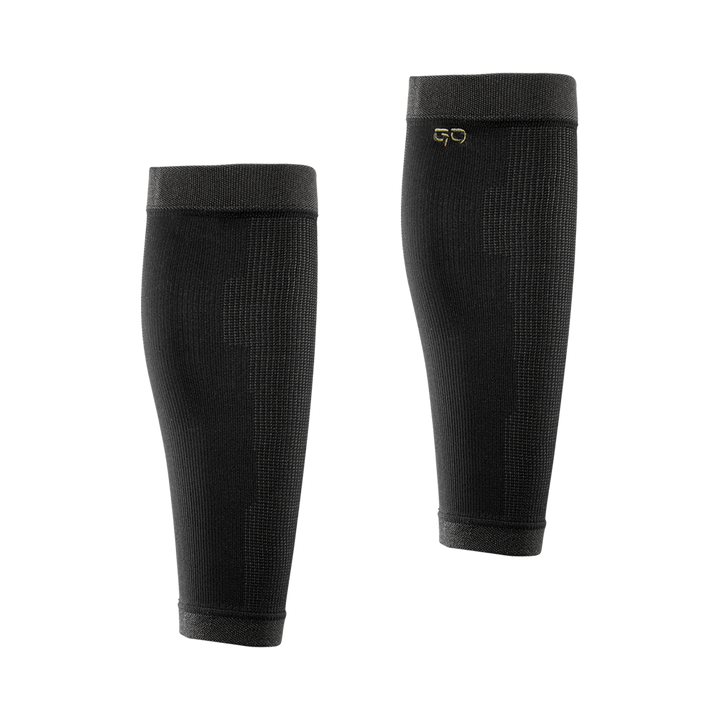
GO Kinesiology + Compression Calf Sleeves
$99.95
Just pull them on, and off you go! GO Sleeves® Calf Sleeves are the world’s only compression sleeves with built-in kinesiology strips to secure, correct, and support key ligaments, tendons, and muscles in and around your calf and shin. Unlike… Read More
Why Knee Support Becomes Important as Fatigue Builds
As long runs stack up, fatigue can subtly change knee mechanics — especially during downhill running, deceleration, and late-race fatigue. Even without injury, this can increase joint stress and post-run stiffness.
Compression around the knee enhances joint awareness and movement control, helping runners maintain cleaner mechanics when the nervous system is tired.
When it helps most:
Back-to-back long training weeks
Recovery runs when legs feel unstable
Downhill-heavy courses
Post-race recovery periods
GO Kinesiology + Compression Knee Sleeve
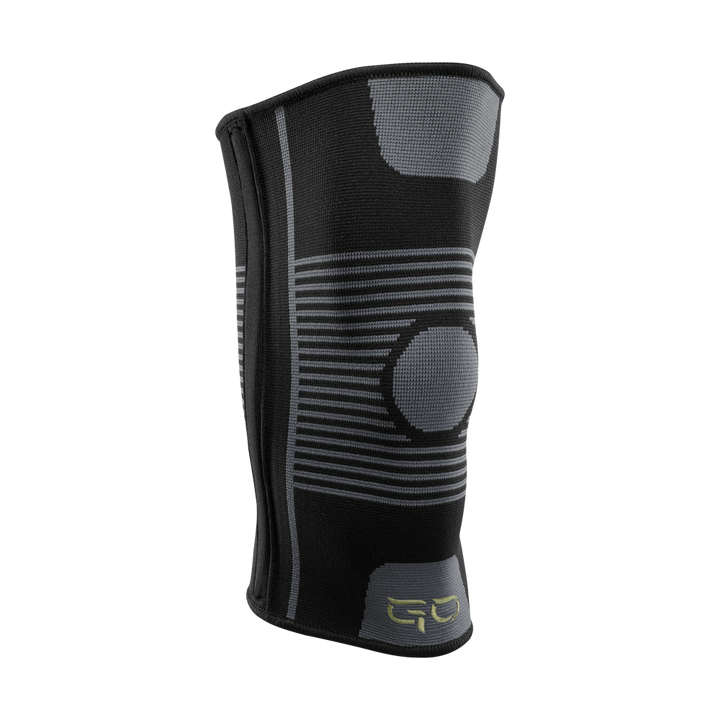
$89.95
Don’t let knee pain sabotage your plans! Reduce pain, swelling, and soreness in and around your knee—and accelerate your body’s ability to recover and rebound so you can keep moving. Unlike compression sleeves which just compress, GO Sleeves® Knee Sleeves… Read More
The Bottom Line
Effective marathon recovery is what turns training stress into performance gains — without it, even the best plan breaks down.
Marathon training breaks you down. Recovery builds you back stronger.
You don't get faster on the road. You get faster in the 23 hours between runs when your body is repairing damage and adapting to stress.
Prioritize the fundamentals: nutrition within 30 minutes post-run, 8-10 hours of sleep, strategic compression use, active recovery movement, and deload weeks when needed.
Recovery isn't passive. It's the most active part of your training.
Do the work off the road, and your legs will be ready to deliver on race day.
Shop all marathon recovery products
Related Resources
Continue Learning: