
Table of Contents
- Why Athletes Get Reinjured
- The 5-Phase Return to Sport After Injury Protocol
- Sport-Specific Functional Testing
- Psychological Readiness Assessment
- How Compression Supports Return to Sport
- Red Flags: When to Stop Progression
- Working With Your Medical Team
- FAQs About Return to Sport After Injury
- FAQs
- Choose the Right Sleeve for Your Return
- The Bottom Line
- Related Resources
Return to sport after injury is one of the most common—and most misunderstood—phases of athletic recovery.
Six weeks into rehab. Your knee feels good. You're cleared to return. First practice back, you're tentative. Every cut feels risky. You're playing scared.
Third week back, you push a little harder. The pain returns. Not as bad as before, but it's there. You've reinjured it.
This happens to 30-70% of athletes depending on the injury. They return too soon, with incomplete rehab, before tissue is truly ready. The body compensates. The injury recurs. The cycle repeats.
Returning to sport after injury isn't just about pain-free movement. It's about restored strength, regained proprioception, psychological confidence, and sport-specific function.
Rush any of these, and you'll be back in rehab within weeks.
This guide breaks down the evidence-based 5-phase return to sport protocol that reduces reinjury risk and gets you back performing at your pre-injury level.
Why Athletes Get Reinjured
The statistics are sobering:
ACL reconstruction: 20-30% reinjury rate within 2 years
Ankle sprains: 40-70% experience recurrent sprains
Hamstring strains: 30-50% reinjury rate within first year
Shoulder dislocations: 50%+ recurrence in athletes under 25
These aren't random. Reinjuries happen for predictable reasons.
Incomplete Tissue Healing
The problem: Pain resolves before tissue is fully healed. You feel good at 80% healed. But that remaining 20% leaves you vulnerable.
Example: Hamstring strain feels fine after 3 weeks. But muscle fibers aren't fully repaired for 6-8 weeks. Return too early, and the weakened area tears again.
Strength Deficits
The problem: Injured limbs lose strength rapidly during rest. Even after pain resolves, you might be 20-30% weaker than your uninjured side.
Research shows: Most athletes return with significant strength asymmetries. These deficits increase injury risk and reduce performance.
Proprioceptive Impairment
The problem: Injury damages mechanoreceptors in joints, muscles, and fascia. Even after structural healing, your joint's sense of position is impaired.
Impact: Your ankle doesn't detect instability as quickly. Your knee doesn't sense poor alignment. Your body can't react fast enough to prevent reinjury.
Timeline: Proprioceptive deficits persist 6-12 months after injury, even when strength is restored.
Psychological Fear
The problem: Fear of reinjury causes protective movement patterns. You avoid certain movements. You don't commit fully. You play tentatively.
Impact: Altered mechanics create abnormal stress on other structures. The compensation patterns lead to secondary injuries.
Premature Return
The problem: External pressure (team needs you, playoffs, scholarship concerns) or internal pressure (feeling fine, boredom with rehab) drives early return.
Reality: Most reinjuries occur within 4-8 weeks of return when athletes increase intensity too quickly.
The 5-Phase Return to Sport After Injury Protocol
This evidence-based framework guides progression from injury through full return.
Phase 1: Acute Management (Days 1-7)
Goals:
Reduce pain and inflammation
Protect healing tissue
Maintain fitness in uninjured areas
Activities:
RICE protocol (Rest, Ice, Compression, Elevation)
Pain-free range of motion exercises
Upper body or opposite limb training
Core work
Progression criteria: Pain reduced to 2-3/10 or less at rest
Compression use: Wear compression continuously to manage swelling and support circulation. GO Sleeves provide both compression and proprioceptive support once initial swelling decreases.
Phase 2: Early Rehabilitation (Weeks 1-4)
Goals:
Restore full range of motion
Begin strength rebuilding
Address muscle imbalances
Start proprioceptive training
Activities:
Progressive resistance exercises (bodyweight → light resistance → moderate load)
Balance training on stable surfaces
Flexibility work
Low-impact cardio (swimming, cycling)
Example for knee injury:
Terminal knee extensions (VMO strengthening)
Wall sits
Single-leg balance (eyes open)
Calf raises
Hip strengthening (glute bridges, clamshells)
Progression criteria:
Full pain-free range of motion
No swelling after activity
Strength at least 70% of uninjured side
Single-leg balance 30+ seconds eyes open
Compression use: Wear during exercises and throughout day. The proprioceptive feedback from GO Sleeves helps retrain movement patterns as you rebuild strength.
Phase 3: Late Rehabilitation (Weeks 4-8)
Goals:
Restore 90%+ strength symmetry
Progress proprioceptive training
Introduce sport-specific movements
Build movement confidence
Activities:
Progressive loading (reaching 80-90% of pre-injury weights)
Balance training on unstable surfaces
Sport-specific drills at 50-75% intensity
Plyometric progressions (if appropriate for injury)
Agility work (cutting, stopping, starting)
Example for ankle sprain:
Single-leg balance on wobble board
Lateral hops and bounds
Cutting drills (progressively sharper angles)
Sport-specific footwork patterns
Perturbation training (reacting to pushes)
Progression criteria:
Strength within 10% of uninjured side
Single-leg balance 30+ seconds eyes closed
No pain during sport-specific movements at 75% intensity
Psychological comfort with movements
Compression use: Wear during all training. Many athletes continue wearing GO Sleeves during this phase for proprioceptive support as they increase movement complexity and intensity.
Phase 4: Return to Training (Weeks 8-12)
Goals:
Full-intensity training
Sport-specific skill work
Psychological confidence building
Final strength/power restoration
Activities:
Full team practices (modified contact if applicable)
Position-specific drills at full intensity
Scrimmages (limited minutes initially)
Continued strength maintenance
Ongoing proprioceptive work
Monitoring:
Track soreness (should not exceed 3/10 or last >24 hours)
Monitor swelling (minimal to none)
Assess movement quality (no compensations)
Evaluate psychological state (confidence, not fear)
Progression criteria:
Strength equal to or exceeding uninjured side
Sport-specific testing passed (see below)
Psychological readiness confirmed
No pain or swelling after full-intensity training
Compression use: Many athletes continue wearing compression during training and competition. The enhanced proprioception helps maintain mechanics under fatigue—when reinjury risk is highest.
Phase 5: Return to Competition (Week 12+)
Goals:
Full competitive participation
Continued injury prevention work
Long-term maintenance
Guidelines:
First competitions: Limited minutes or modified role
Gradual return to full playing time over 2-4 weeks
Continue strength and proprioceptive training 2-3x per week
Monitor for any returning symptoms
Long-term maintenance:
Ongoing strength training (maintenance, not building)
Weekly proprioceptive work (balance drills)
Warm-up protocols emphasizing injured area
Use compression proactively during high-risk situations
Sport-Specific Functional Testing
Before full return, you must pass sport-specific tests that prove readiness.
Universal Tests (All Sports)
Single-Leg Hop Test:
Hop forward on injured leg
Measure distance
Compare to uninjured side
Should be within 90% symmetry
Single-Leg Vertical Jump:
Jump as high as possible on one leg
Measure height
Should be within 90% symmetry
Single-Leg Balance:
Eyes closed, 30+ seconds without major wobbling
On both stable and unstable surfaces
Y-Balance Test:
Stand on one leg, reach in three directions
Tests dynamic balance and control
Should be within 90% symmetry
Sport-Specific Tests
For Cutting Sports (Soccer, Basketball, Tennis):
505 agility test (sprint, turn 180°, sprint back)
T-test (forward sprint, lateral shuffles, backward run)
Within 95% of pre-injury time
For Jumping Sports (Volleyball, Basketball):
Repeated vertical jumps (10 consecutive)
Drop jump from box (land and immediately jump)
Height and landing quality assessed
For Running Sports:
Progressive running test (jog → stride → sprint)
No limping, no compensations
Symmetrical gait pattern
For Overhead Sports (Baseball, Tennis, Volleyball):
Throwing/serving progression
Pain-free at full velocity
Mechanics unchanged from pre-injury
Psychological Readiness Assessment
Physical readiness is necessary but not sufficient. Psychological readiness matters equally.
The ACL-RSI Scale
The ACL Return to Sport after Injury scale assesses psychological readiness. Score yourself 0-10 on these questions:
- Are you confident you can perform at your previous level of sport participation?
- Are you confident in your ability to perform well in your sport?
- Do you feel relaxed when thinking about playing your sport again?
Do you believe your injured body part can handle the demands of your sport?
Are you confident your injury will not give way or fail during sport participation?
Do you feel your injury is completely healed?
Are you confident your body will hold up under pressure during competition?
Are you fearful of reinjuring yourself while playing your sport?
Are you worried about accidentally injuring yourself during sport participation?
Do thoughts of going through injury and rehabilitation again prevent you from fully committing to your sport?
Do you find it frustrating to think about your injury when considering returning to sport?
Are you nervous about playing your sport again?
Scoring: Add scores. Total >60 indicates psychological readiness. <50 suggests more time/work needed.
Note: This scale was developed for ACL injuries but applies broadly to return after any significant injury.
Addressing Fear
Graded exposure: Gradually expose yourself to feared movements in controlled settings before competition.
Visualization: Mental practice of successful sport-specific movements.
Progressive confidence building: Start with low-stakes situations (practice) before high-stakes (competition).
Professional support: Sports psychologist if fear is significant barrier.
How Compression Supports Return to Sport
GO Sleeves provide specific benefits during the return to sport process.
Proprioceptive Restoration
Injury damages mechanoreceptors. Even after healing, proprioceptive deficits persist for months.
GO Sleeves use embedded silicone patterns that activate mechanoreceptors in your fascia. These patterns enhance proprioceptive feedback during movement.
Better proprioceptive input helps your nervous system relearn proper movement patterns. Your joint senses position more accurately. Your muscles activate with better timing. Movement quality improves.
Psychological Confidence
The feeling of support from compression can reduce fear of reinjury. Many athletes report feeling more confident moving in sleeves during return to sport.
This isn't placebo—the enhanced proprioception does provide real functional benefit. But the psychological comfort also matters for full engagement in movement.
Continued Support During Competition
Many athletes continue wearing GO Sleeves during competition long after full return. The proprioceptive enhancement helps maintain mechanics under fatigue and high-intensity demands.
GO Sleeves use the same biomechanical principles as kinesiology taping—skin stretch to activate mechanoreceptors and enhance proprioception—but built into a reusable sleeve.
No learning curve. Pull it on and go. No figuring out which tape pattern to use or how to apply it correctly.
No daily cost. Tape costs $15-20 per roll and lasts 3-5 days. GO Sleeves last 6-12 months.
No skin irritation. No adhesive residue. No painful removal after sweaty workouts.
Consistent support. Same positioning every time. Tape effectiveness varies based on who applies it and degrades during activity.
Same science. Zero hassle.
Red Flags: When to Stop Progression
Stop and reassess if you experience:
Pain:
Sharp pain during activity (not just mild discomfort)
Pain that increases during session
Pain lasting >24 hours after activity
Pain at rest
Swelling:
Visible swelling after activity
Joint feels hot
Decreased range of motion
Mechanical symptoms:
Catching, locking, or giving way
Instability during movement
Grinding or popping with pain
Movement quality:
Limping or altered gait
Avoiding certain movements
Visible compensations
If any of these occur: Take 3-7 days off, address the issue (rest, ice, reduce load), then restart progression from earlier phase.
Working With Your Medical Team
When to see doctor:
Pain not improving after 2 weeks of rehab
Swelling persists despite treatment
Mechanical symptoms develop
You're unsure about progression timeline
When to see physical therapist:
Any significant injury (ligament, tendon, muscle tear)
Persistent weakness or movement dysfunction
Need for guided progression through phases
Confidence issues with returning
When to see sports psychologist:
Fear of reinjury limiting performance
Difficulty committing to movements
Performance anxiety after injury
FAQs About Return to Sport After Injury
FAQs
How long should I wait before returning to sport?
It depends on injury severity. Minor sprains: 2-4 weeks. Moderate injuries: 6-12 weeks. Major injuries (ACL, Achilles): 9-12 months. But time alone isn't enough—you must pass functional tests and strength criteria.
Why does my injury hurt when I try to return even though I'm cleared?
Pain-free at rest doesn't mean tissue is fully healed. Pain during sport-specific loading often indicates incomplete strength restoration or tissue that needs more time. Back off intensity for 1-2 weeks then progress more gradually.
Can I play through mild discomfort?
Mild discomfort (2-3/10) that doesn't worsen during activity is usually okay. Pain that increases, causes limping, or lasts >24 hours after means stop and reassess.
Why do I feel weak even though my injury healed?
Muscles lose 10-20% strength in the first week of disuse. Even 3-4 weeks of modified activity creates significant strength loss. Full strength restoration takes dedicated training over 6-12 weeks.
How do I know if I'm really ready or just feeling good?
Pass objective functional tests (strength within 90%, hop tests symmetrical, balance restored). Don't rely on feeling alone. Most reinjuries happen to people who felt ready.
Do compression sleeves actually help prevent reinjury?
GO Sleeves enhance proprioception, which helps restore normal movement patterns. This reduces compensations that lead to reinjury. They're not a replacement for rehab but support better mechanics during return to sport.
Should I wear a brace when I return?
For some injuries (ACL reconstruction, severe ankle instability), bracing provides mechanical protection initially. As strength and proprioception improve, many athletes transition to compression that enhances proprioception without restricting movement. Discuss with your PT or doctor.
How long should I do rehab exercises after returning?
Continue maintenance work indefinitely. 2-3x per week strength and proprioceptive training reduces reinjury risk long-term. Treat it like brushing teeth—ongoing prevention, not temporary treatment.
Can I do my own return to sport protocol or do I need a PT?
Minor injuries (grade 1 sprains) might be manageable independently if you're educated. Moderate to severe injuries benefit significantly from PT guidance. They assess movement quality, progress loading appropriately, and catch issues before they become problems.
Choose the Right Sleeve for Your Return
Why Knee Proprioception Matters During Return to Sport
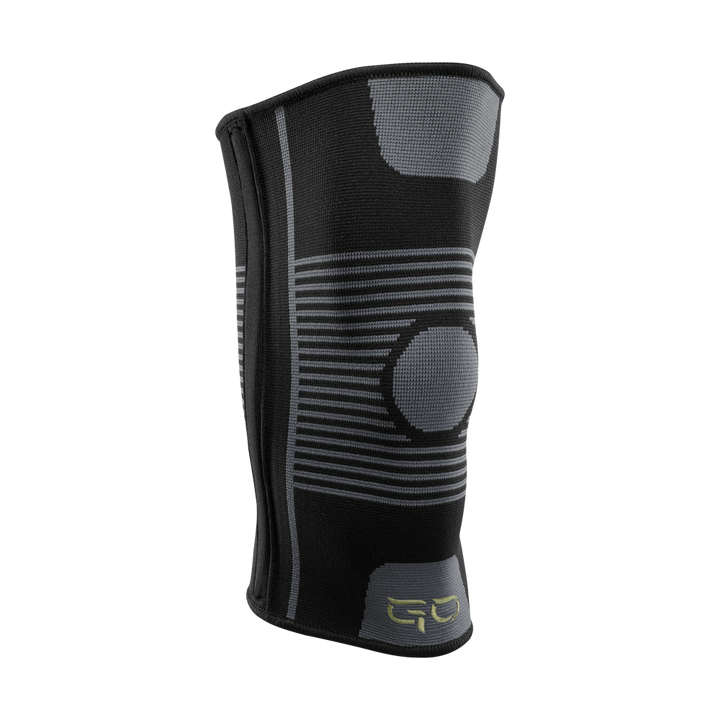
Knee injuries (ACL, meniscus, patellar tendon) disrupt joint position sense more than almost any other injury. Even after strength returns, delayed neuromuscular firing increases reinjury risk—especially during cutting, deceleration, and landing.
Compression around the knee enhances sensory input to the nervous system, improving joint awareness and movement control during high-risk actions.
When it helps most:
Late rehab (Phase 3)
Return to training (Phase 4)
Early competition under fatigue
GO Kinesiology + Compression Knee Sleeve
$89.95
Don’t let knee pain sabotage your plans! Reduce pain, swelling, and soreness in and around your knee—and accelerate your body’s ability to recover and rebound so you can keep moving. Unlike compression sleeves which just compress, GO Sleeves® Knee Sleeves… Read More
Why Elbow Proprioception Is Critical for Upper-Body Return to Sport
Elbow injuries affect precision and load tolerance in throwing, racquet sports, and weight-bearing movements. Subtle proprioceptive deficits can alter mechanics, increasing strain on the shoulder or wrist.
Compression provides consistent sensory feedback that helps athletes maintain efficient movement patterns as intensity increases.
When it helps most:
Sport-specific loading phases
Return to full velocity throwing or lifting
Managing volume during early competition
GO Kinesiology + Compression Elbow Sleeve
$89.95
Accelerate recovery and reduce pain, swelling, and soreness related to Golf and Tennis Elbow with the world’s only compression sleeves with built-in kinesiology strips to secure, correct, and support key ligaments, tendons, and muscles in and around your elbow. Unlike compression… Read More

How Calf Proprioception Supports Lower-Limb Stability
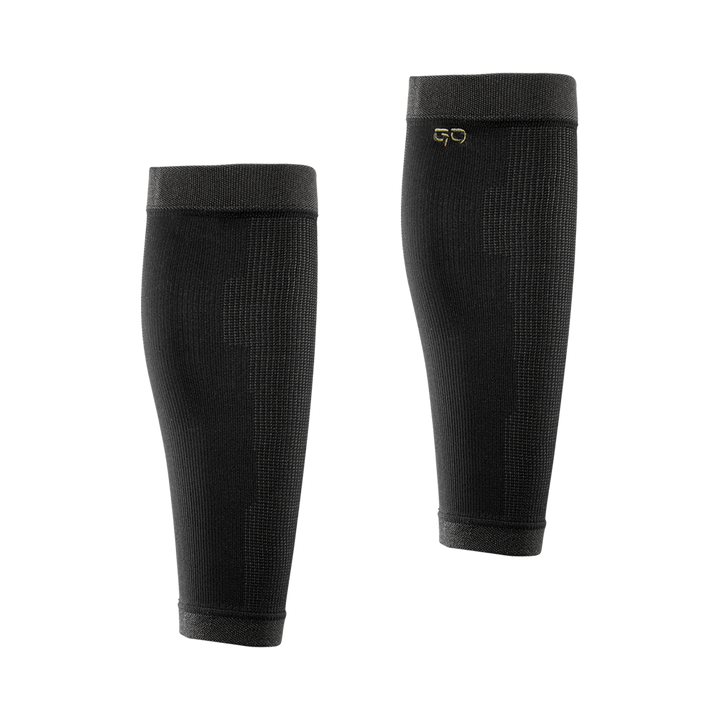
The calf complex plays a central role in shock absorption, balance, and rapid force production. After ankle, Achilles, or lower-leg injuries, delayed calf activation increases risk of recurrent injury higher up the chain.
Calf compression enhances proprioceptive input and supports consistent muscle activation during running, jumping, and change of direction.
When it helps most:
Plyometric progression
Running and sprint return
Fatigue-heavy training and competition
GO Kinesiology + Compression Calf Sleeves
$99.95
Just pull them on, and off you go! GO Sleeves® Calf Sleeves are the world’s only compression sleeves with built-in kinesiology strips to secure, correct, and support key ligaments, tendons, and muscles in and around your calf and shin. Unlike… Read More
The Bottom Line
Seventy percent of athletes who rush back get reinjured—not because they’re unlucky, but because they return before tissue is healed, strength is restored, proprioception is regained, and confidence is rebuilt.
A successful return to sport after injury isn’t driven by time or how “good” you feel. It’s earned through measurable progress: restored strength symmetry, retrained proprioception, psychological readiness, and sport-specific capacity.
Pass functional tests. Restore strength symmetry. Retrain proprioception. Build confidence. Progress gradually.
Do the work, and you won’t just return to play—you’ll return performing at your pre-injury level, without hesitation or fear of reinjury.
Shop compression sleeves for injury recovery
Related Resources
Continue Learning: