Table of Contents
- Why Standard Warm-Ups Aren't Enough
- What GO Sleeves Taught Me About Movement Care
- The Between-Game Window
- Why I'm Anti-Gear (And Why GO Sleeves Is Different)
- Testing the Movement Care Hypothesis
- The Achilles Factor
- Movement Care for Aging Athletes
- Building Your Own Movement Care for Volleyball Protocol
- Why This Matters for Youth Athletes
- The Category GO Sleeves Is Creating
- What Elite Athletes Actually Do
- Tournament Season Is Here
- Frequently Asked Questions About Movement Care for Volleyball
- FAQs
- Final Thoughts
- About Coach Donny
- Related Content:
- Movement Care Tools for Volleyball
- See All Movement Care Products
Most players warm up before the first game. Elite players practice movement care for volleyball between games.
I've been coaching volleyball for over a decade, training everyone from 6-year-olds learning to pass to a 76-year-old who still competes. I've worked with Division 1 collegiate athletes and weekend warriors nursing creaky joints. And I've noticed something across every age group and skill level: the players who stay healthy and perform consistently all share one habit.
They're doing something between their warm-up and their workout that most athletes ignore.
I didn't have a name for it until I met the team at GO Sleeves. They called it "movement care" — and that phrase changed how I think about training, recovery, and performance.
Tournament season is here. You're playing multiple matches in a single day. Your body cools down between games, sitting in folding chairs or standing on the sidelines. Your Achilles tendons stiffen. Your knees get achy. By game three or four, you feel tight and slow.
Here's what changed my approach to coaching and competing, and why I believe movement care is the most overlooked performance tool in volleyball.
Why Standard Warm-Ups Aren't Enough
Walk into any volleyball tournament and you'll see the same routine. Dynamic stretches before game one. Maybe some light jogging. Arm circles. High knees. Players go through the motions because they're supposed to.
Then they play. Then they sit. For 30 minutes. An hour. Sometimes longer depending on the bracket.
When their next game starts, they jump back on the court without reactivating anything. Cold muscles. Stiff joints. Decreased proprioception. The body isn't ready for explosive movement, but the game demands it anyway.
This is where injuries happen. This is where performance drops. And this is where most players think "I just need to push through it" instead of recognizing the pattern.
A proper warm-up prepares you for game one. Movement care for volleyball keeps you ready for games two, three, and four.
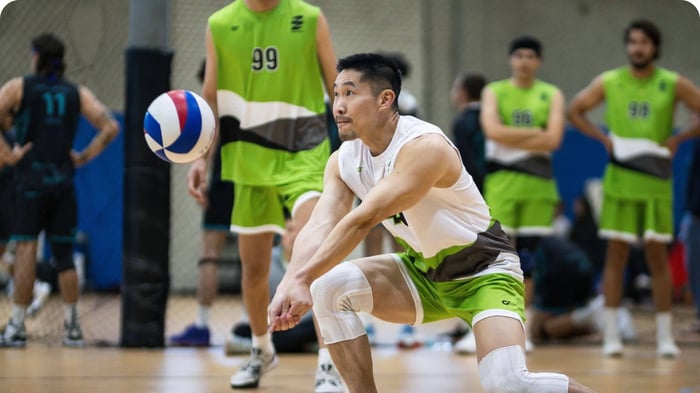
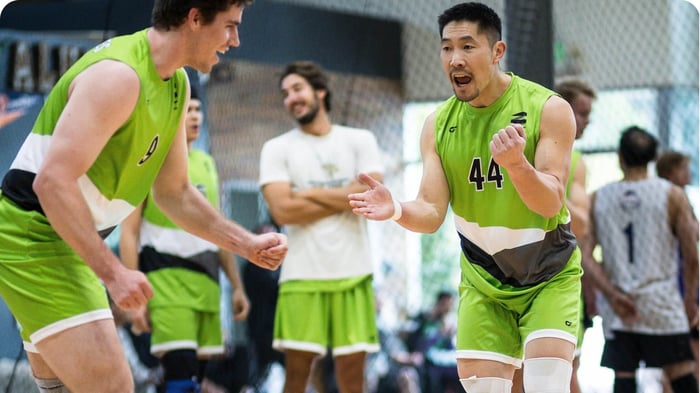 Coach Donny Hui working with athletes during tournament competition.
What GO Sleeves Taught Me About Movement Care
When the GO Sleeves team first reached out, I was skeptical. I've turned down probably 90% of companies that want me to promote their products. Most volleyball gear focuses on one of two things: supporting injuries after they happen, or providing compression that supposedly helps recovery.
I'm not interested in either approach. I coach athletes to build their own stability and strength, not depend on external support.
But GO Sleeves was talking about something different. They kept using this phrase: "movement care." Not injury treatment. Not post-workout recovery. Movement care.
Here's how they explained it to me: Most athletes think about their bodies in binary terms. Either you're healthy and training, or you're injured and recovering. But there's a massive middle ground that everyone ignores — the ongoing maintenance that keeps tissues healthy and function optimal so problems don't develop in the first place.
Movement care is the practice of maintaining optimal tissue health and joint function before problems develop. It's proactive, not reactive.
The analogy they used stuck with me. You brush your teeth daily to prevent cavities, not just to fix them after they form. You don't wait until your teeth hurt to start caring about oral health. You wear sunscreen before you burn, not after.
Movement care works the same way. You're keeping tissues warm, blood flowing, and proprioceptive feedback sharp throughout the day. You're preventing the stiffness and dysfunction that lead to compensation patterns, which eventually lead to injury.
For volleyball players, this means paying attention to your body between games. Staying warm. Keeping joints mobile. Maintaining blood flow to muscles and tendons that are about to be loaded again.
That's when it clicked for me. I'd been seeing this pattern in elite athletes for years without having language for it. The players who stay healthy aren't just warming up better or recovering harder. They're maintaining tissue quality continuously. This is why movement care for volleyball becomes critical during long tournament days.
The Between-Game Window
Here's what happens physiologically when you sit for 45 minutes after playing a hard match.
Your core temperature drops. Muscles cool down and lose elasticity. Blood flow to extremities decreases. Synovial fluid in your joints becomes more viscous, reducing lubrication. Proprioceptors in your fascia and tendons become less responsive.
Then the ref blows the whistle for your next match. You have maybe two minutes to get back on the court. Your body hasn't transitioned back into performance mode yet, but you're asking it to jump, sprint, dive, and hit at full intensity.
This is mechanical stress on cold tissues. This is how overuse injuries develop over the course of a season. Not from one traumatic event, but from cumulative strain on tissues that never quite got back to optimal temperature and function between loads.
I see this constantly with the athletes I train. The players who treat the between-game window seriously stay fresher throughout the day. Their movement quality doesn't degrade as much by the final match. They report less soreness the next day.
The players who ignore this window break down faster. They develop nagging pains that become chronic issues. They lose explosiveness as the tournament progresses.
Why I'm Anti-Gear (And Why GO Sleeves Is Different)
I need to be honest about my baseline philosophy. I don't like braces and sleeves.
For years, I've coached athletes to build their own stability through strength and coordination, not become dependent on external support. No ankle braces. No knee sleeves. No wrist wraps.
Your body should be its own brace. Training should develop the muscular control and joint stability you need to move safely under load.
I've seen too many athletes overuse support gear. They become psychologically dependent on it. They stop training the underlying weakness. Eventually, the brace becomes a crutch that actually accelerates injury risk instead of preventing it.
So when GO Sleeves reached out, I was prepared to say no.
But they weren't selling me a brace. They were selling me on a completely different category of product.
Here's what they explained: Traditional compression sleeves work by squeezing. They might reduce swelling or provide psychological comfort, but they don't actively improve movement quality. Heavy compression can actually displace blood flow in ways that slow recovery. And restrictive braces limit range of motion to protect injured structures — which is useful after acute injury, but terrible for athletes trying to maintain function.
GO Sleeves doesn't work like that. The technology is based on kinesiology taping principles. There's an adhesive material on the inside that creates directional pull on fascia and skin as you move. This enhances proprioceptive feedback without restricting motion.
The embedded patterns manipulate fascia to increase blood and lymphatic flow. You're getting mechanical stimulation that helps tissues stay ready for the next bout of activity.
This isn't bracing injured structures. This isn't compensating for weakness. This is enhancing the body's natural movement patterns and tissue health.
That's a fundamentally different philosophy. And it's exactly what movement care is about — maintaining optimal function, not protecting dysfunction.
Testing the Movement Care Hypothesis
I agreed to test their products at tournaments. If the movement care philosophy was real, I'd see the difference in exactly the scenario they described — between games, when most athletes let their bodies cool down completely.
First tournament wearing the knee and calf sleeves, I put them on in the car before arriving at the gym. My Achilles tendons take forever to warm up, especially now that I'm 38. GO Sleeves told me this was intentional. Start the fascia manipulation early, let the blood flow enhancement begin before you even step on the court.
By the time I arrived, my lower legs already felt loose. That was different.
Between games, I kept the sleeves on while watching other matches. This is when I usually feel cold and stiff. My knees get achy. My calves tighten up. But the sleeves stayed in place (which alone was remarkable — most sleeves slide down constantly), and more importantly, I noticed I didn't feel that same stiffness when my next game started.
The sleeves didn't restrict my range of motion during deep defensive positions or when I jumped. I could move naturally. But I felt warmer, more ready, more connected to my movement.
After the tournament, I wore them for another 20-30 minutes during the drive home. The next day, I was noticeably less sore than usual after a full day of competition.
That's when the movement care concept became real for me. I wasn't just wearing a product. I was practicing ongoing tissue maintenance throughout the entire competition day.
GO Sleeves wasn't exaggerating. These weren't braces. They were exactly what they claimed: tools designed specifically for movement care.
The Achilles Factor
One specific benefit deserves attention. My Achilles tendons became a consistent issue for one year between 37-38 years old.
Cold starts before games felt achy. That weird stretching sensation in the tendon when I'd plant and jump without being fully warm. The next-day stiffness that made walking downstairs uncomfortable.
The calf sleeves changed this. The embedded patterns run along the gastrocnemius and soleus, exactly where the Achilles experiences the most loading during volleyball. The fascia manipulation helps the tendon stay warm and maintains blood flow to the area.
Even though I was managing and rehabbing my left Achilles tendon, I was still able to train hard, improve my athletic performances in the weightroom with the calf sleeve (feeling springier, dynamically loading calf raises, recovering faster)! Best of all, the GO Sleeves calf sleeves allowed me to play some of the best volleyball of my career at the age of 38 because they gave me the confidence to play through my Achilles issue with minimal to no pain. Plus, I recovered faster from training sessions. When your body feels good, you can play your best consistently.
Movement Care for Aging Athletes
I'm passionate about helping athletes stay competitive as they age. Your 20s and early 30s are forgiving. You can get away with poor recovery habits, inadequate warm-ups, and inconsistent movement care because your body bounces back quickly.
That changes. By your late 30s, 40s, and beyond, what you do between training sessions matters as much as the training itself.
Recovery takes longer. Tissues stiffen faster when inactive. Old injuries flare up more easily. The margin for error gets smaller.
This is exactly when movement care becomes non-negotiable. You can't out-train poor tissue management anymore. You have to be systematic about keeping your body ready to perform.
I work with competitive athletes in their 40s, 50s, and 60s. The ones who continue performing well all share this trait. They're meticulous about movement care. They warm up properly. They stay active between training bouts. They use tools that support tissue health without creating dependency.
GO Sleeves fit naturally into this approach. You're not bracing injured structures or compensating for weakness. You're maintaining the tissue quality that allows you to keep training and competing at a high level.
Building Your Own Movement Care for Volleyball Protocol
Here's what tournament-day movement care actually looks like.
Pre-tournament: Put on sleeves 20-30 minutes before arriving at the gym. Start the fascia manipulation and blood flow enhancement early. Do your standard dynamic warm-up before game one.
Between games: Keep sleeves on while resting. Stay lightly active instead of sitting completely still. Walk around the gym. Do gentle mobility work for your shoulders and hips. Don't try to do another full warm-up, but don't let your body completely cool down either.
Pre-game activation: Five minutes before your next match, do brief plyometric movements. A few approach jumps. Some lateral shuffles. Quick arm swings. You're reactivating the nervous system, not warming up from scratch.
Post-tournament: Keep sleeves on for 20-30 minutes after your last game. Let the fascia manipulation continue working while your body transitions back to rest mode. This is when recovery actually begins.
Next-day protocol: If you're sore, wear sleeves during light movement. Walking. Easy cardio. The enhanced proprioception helps you move better even when fatigued, preventing compensatory patterns that could lead to injury.
This isn't complicated. It's systematic. You're treating movement care as seriously as you treat skill training.
Why This Matters for Youth Athletes
I work with a lot of young players. Parents ask me constantly about injury prevention and what gear their kids need.
Here's what I tell them. Young athletes have incredible resilience, but they're also developing movement patterns that will follow them for years. Teaching movement care early creates habits that protect them as training volume increases.
Youth athletes are playing year-round now. Multiple clubs. Travel tournaments. High school teams. Beach volleyball in summer. The volume is huge, and their bodies are still developing.
Movement care gives them a framework for managing load. They learn to pay attention to how their body feels. They understand the difference between productive soreness and early warning signs of injury. They develop habits around warming up, staying ready during competitions, and recovering properly.
GO Sleeves work well for this population because they're not restrictive braces. Young athletes can move naturally while getting the proprioceptive and circulatory benefits. They're learning to enhance their body's function, not depend on external support.
The younger you build these habits, the longer you get to compete.
The Category GO Sleeves Is Creating
Here's what GO Sleeves helped me understand about the athletic gear market. Most companies build products that fit into two existing categories:
Prevention through training (strength work, mobility drills, technique coaching)
Treatment after injury (rest, physical therapy, bracing to protect damaged structures)
Movement care is the missing middle. It's the daily, ongoing maintenance that keeps tissues healthy and function optimal so problems don't develop in the first place.
GO Sleeves is building an entirely new category around this concept. They're not competing with braces or compression sleeves because those products serve completely different purposes. GO Sleeves is designed for maintaining optimal function during activity, not restricting motion to protect injury.
That's the key insight they brought to me: support tools shouldn't make you move worse to protect injury. They should help you move better to prevent injury from developing.
This is where I think athletic training is heading. We're going to treat movement care the same way we treat nutrition and sleep. As a non-negotiable part of performance, not something you think about only when problems arise.
GO Sleeves is ahead of this curve. They're not just making better compression sleeves. They're defining what movement care actually means for athletes and building the tools to support it.
What Elite Athletes Actually Do
I've trained with professional athletes. I've watched how Olympic-level players prepare and recover. And I've noticed they all have detailed routines around tissue care.
It's not accidental. It's not something they think about only when competing. Movement care is integrated into everything they do.
They're putting time into mobility work daily. They're managing training load carefully. They're using modalities that enhance tissue health between sessions. They're paying attention to early warning signs before they become injuries.
Most recreational and youth athletes don't have access to full-time trainers and physical therapists. But they can adopt the same principles. Treat your body like an athlete who plans to compete for decades, not someone who's just trying to survive the current season.
Movement care is how you do that. It's the systematic approach to tissue health that doesn't require a massive support team or expensive interventions. It requires attention, consistency, and the right tools.
Tournament Season Is Here
February through May is when volleyball gets intense. Club tournaments every weekend. Regional qualifiers. National championship bids. Spring college practice ramping up.
This is when movement care separates players who stay healthy and perform consistently from players who break down and miss time.
You're asking your body to do a lot. Multiple matches in single days. Back-to-back tournament weekends. Training between competitions. If you're not maintaining tissue health throughout this period, something's going to give.
I see it every season. Players who were fine in December start developing pain in March. Achilles tendinitis. Patellar tendinitis. Shoulder impingement. These aren't freak injuries. They're cumulative stress on tissues that never got adequate recovery between loads.
Movement care for volleyball prevents this. You're keeping tissues in the optimal state to handle training volume. You're not waiting for problems to develop before addressing mechanical stress.
The players who adopt this approach play better throughout tournament season. They maintain their vertical jump. They stay explosive in the fourth game of the day. They recover faster between weekends.
The players who ignore it either get injured or watch their performance decline as fatigue accumulates. This is exactly why movement care for volleyball becomes essential during long tournament weekends.
Frequently Asked Questions About Movement Care for Volleyball
FAQs
What is movement care for volleyball?
Movement care for volleyball is the practice of maintaining tissue health, joint mobility, and proprioceptive feedback between matches and training sessions — not just before the first game.
Instead of treating warm-ups and recovery as separate events, movement care focuses on keeping muscles, tendons, and fascia ready to perform throughout an entire tournament day. It is proactive maintenance designed to reduce stiffness, preserve explosiveness, and lower injury risk.
How do you stay warm between volleyball games?
To stay warm between volleyball games:
Keep your body lightly active instead of sitting completely still
Walk around the gym
Perform gentle mobility for hips and shoulders
Do short reactivation drills 5 minutes before the next match
Use movement care tools that help maintain tissue warmth and proprioception
The goal isn’t to redo a full warm-up — it’s to prevent your body from fully cooling down so you’re ready to jump and sprint again.
Why do knees and Achilles tendons get stiff during tournaments?
During tournaments, players often sit for 30–60 minutes between matches. When this happens:
Core temperature drops
Tendons lose elasticity
Blood flow decreases
Joint lubrication becomes less efficient
In volleyball, the patellar tendon and Achilles tendon take repeated high loads from jumping and landing. When those tissues cool down, they become more vulnerable to strain and overuse irritation. Movement care helps maintain readiness between matches.
Is movement care for volleyball important for youth players?
Yes. Youth athletes are often playing year-round across club, school, and beach seasons. Teaching movement care early helps them:
Manage increasing training volume
Recognize early signs of overuse
Develop healthy warm-up and recovery habits
Maintain movement quality as they grow
Because movement care tools do not restrict motion, they can support developing athletes without creating dependency on rigid bracing.
Does movement care help prevent jumper’s knee?
Movement care supports the tissues most involved in jumper’s knee (patellar tendinopathy), especially during high-volume tournament play.
While no product can prevent injury on its own, maintaining tissue warmth, blood flow, and proprioception between matches may reduce cumulative mechanical stress on the patellar tendon. Movement care works best when combined with proper strength training and load management.
What’s the difference between warm-up and movement care for volleyball?
A warm-up prepares you for your first match.
Movement care keeps you ready for every match after that.
Warm-ups increase temperature and activate muscles. Movement care maintains that readiness throughout the day, especially during long rest periods when the body would otherwise cool down.
Final Thoughts
I've been coaching and competing in volleyball for over a decade. I've trained thousands of athletes. I've experienced my own share of injuries and recovery challenges.
Movement care is the single biggest factor separating athletes who compete successfully for years from athletes who break down and quit.
It's not about talent. It's not about how hard you train. It's about how well you maintain the tissues and joints that allow you to train hard consistently.
GO Sleeves gave me the framework to understand what elite athletes have been doing intuitively for years. And they built products that make movement care accessible to everyone, from weekend warriors to semi-pro competitors.
The sleeves work. They help me stay warm between games. They support tissue health during training. They enhance recovery after competition. And they do all of this without restricting my movement or creating the dependency I've always warned athletes about.
That's rare. Most products either compromise function to provide protection, or they provide minimal benefit beyond psychological comfort. GO Sleeves actually improves how I move while supporting long-term tissue health.
If you're serious about volleyball, especially during tournament season, adopt a movement care protocol. Make it as routine as your pre-game warm-up. Treat it like brushing your teeth or wearing sunscreen — that's GO Sleeves' analogy, and it's the right one.
Your body will thank you. Not just this season, but for every season after.
Medical Disclaimer: The information provided in this article is for educational purposes only and does not constitute medical advice, diagnosis, or treatment. Always seek the advice of your physician or other qualified health provider with any questions you may have regarding a medical condition or injury. Never disregard professional medical advice or delay in seeking it because of something you have read on this website.
About Coach Donny
Donny Hui is a volleyball coach, semi-pro player, and athletic performance trainer with over a decade of experience working with athletes from ages 6 to 76. He runs Elevate Yourself, where he shares training content with 600,000+ followers on YouTube. Coach Donny specializes in jump training and movement quality for athletes who want to compete at high levels while staying healthy long-term. Learn more at ElevateYourself.org.
Related Content:
- Daily Movement Care Basics: The 5-Minute Foundation Every Active Person Needs
- Marathon Recovery: How to Recover Faster and Train Stronger Between Runs
- Return to Sport After Injury: Evidence-Based Protocols That Prevent Reinjury
Movement Care Tools for Volleyball
Movement care only works if you’re supporting the tissues that take the highest load during competition. In volleyball, that load is predictable: knees, calves/Achilles, and elbows.
Here’s how each sleeve fits into a tournament-day protocol:
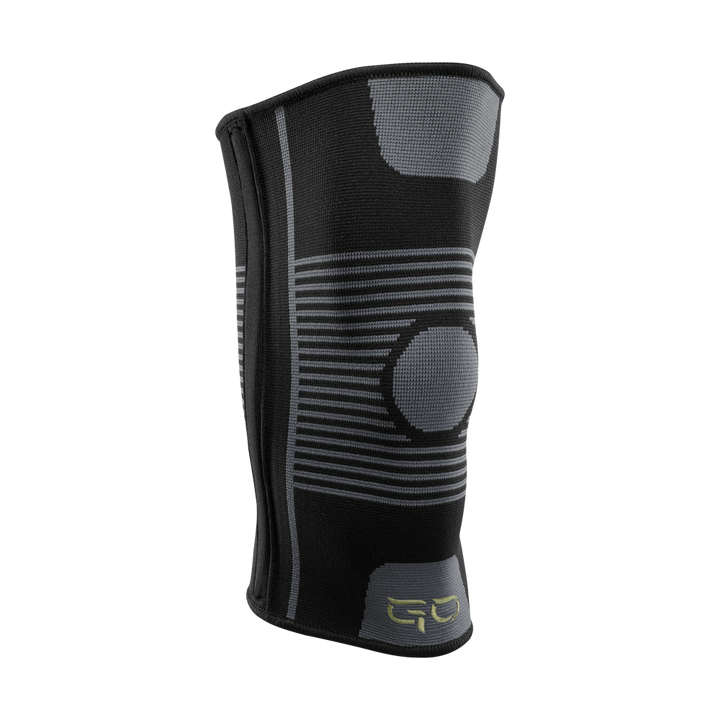
GO Knee Sleeves — For Patellar Load + Jump Repetition
Volleyball is a jump sport. Every approach, block, and defensive drop loads the patellar tendon and surrounding fascia.
Between matches, that tendon cools down. Synovial fluid thickens. Tissue elasticity drops. By game three or four, players often feel that familiar ache below the kneecap.
The GO Knee Sleeve is anatomically mapped to:
Support patellar tracking
Stimulate fascia around the quad tendon + patellar tendon
Maintain warmth and blood flow between games
Instead of restricting motion like a brace, it enhances proprioception during repeated jumps and lateral movement — helping maintain explosiveness deeper into tournament play.
Best for: Outside hitters, middle blockers, and any athlete managing jumper’s knee history.
GO Kinesiology + Compression Knee Sleeve
$89.95
Don’t let knee pain sabotage your plans! Reduce pain, swelling, and soreness in and around your knee—and accelerate your body’s ability to recover and rebound so you can keep moving. Unlike compression sleeves which just compress, GO Sleeves® Knee Sleeves… Read More
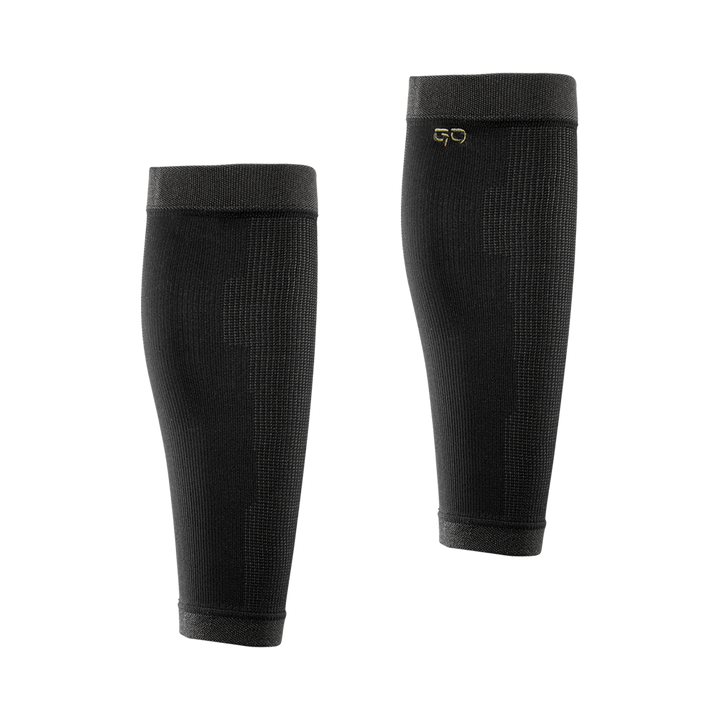
GO Calf Sleeves — For Achilles + Lower-Leg Elasticity
The Achilles tendon absorbs massive load in volleyball. Every jump and landing relies on elastic recoil from the calf complex.
After 30–60 minutes of sitting between games:
Calves tighten
Tendons stiffen
Reactive strength drops
The GO Calf Sleeves follow the gastrocnemius and soleus lines to:
Maintain tissue warmth
Enhance proprioceptive feedback
Support elastic rebound under repeated load
For athletes with Achilles sensitivity — or anyone over 30 who feels slow to warm up — this becomes a critical between-game tool.
Best for: Aging athletes, high-volume jumpers, and players prone to calf tightness.
GO Kinesiology + Compression Calf Sleeves
$99.95
Just pull them on, and off you go! GO Sleeves® Calf Sleeves are the world’s only compression sleeves with built-in kinesiology strips to secure, correct, and support key ligaments, tendons, and muscles in and around your calf and shin. Unlike… Read More
GO Elbow Sleeves — For Overhead Stability + Hitting Volume
Volleyball isn’t just lower body. Hitting, serving, and blocking load the elbow joint repeatedly.
As fatigue accumulates during tournaments:
Overhead mechanics degrade
Micro-instability increases
Medial elbow strain becomes more likely
The GO Elbow Sleeve enhances proprioception around the joint without limiting range of motion — helping maintain clean mechanics late into long competition days.
Best for: Outside hitters, opposites, and heavy servers.
GO Kinesiology + Compression Elbow Sleeve

$89.95
Accelerate recovery and reduce pain, swelling, and soreness related to Golf and Tennis Elbow with the world’s only compression sleeves with built-in kinesiology strips to secure, correct, and support key ligaments, tendons, and muscles in and around your elbow. Unlike compression… Read More
See All Movement Care Products
Movement care isn’t about bracing injuries. It’s about maintaining tissue quality and joint function throughout training and competition.
Explore the full system of movement care for volleyball tools designed for athletes who want to stay explosive — not just get through the season.