
Table of Contents
Jeff Galloway, creator of the Run Walk Run method, died this week at 80, as reported by Runner’s World. He was weeks away from attempting something no one had ever done — completing a marathon in eight consecutive decades of life. He'd already run more than 230 of them. He survived a heart attack in 2021 and kept going. He broke his kneecap in December and was already planning his next race.
The stroke took him before he could finish that chapter. But the way he was still writing it at 80 says more about his philosophy than any finish line ever could.
If you've never heard of Jeff Galloway, here's what you need to know: he was a 1972 U.S. Olympian who spent the next 50 years helping everyday people run distances they never imagined finishing.
What Is the Run Walk Run Method?
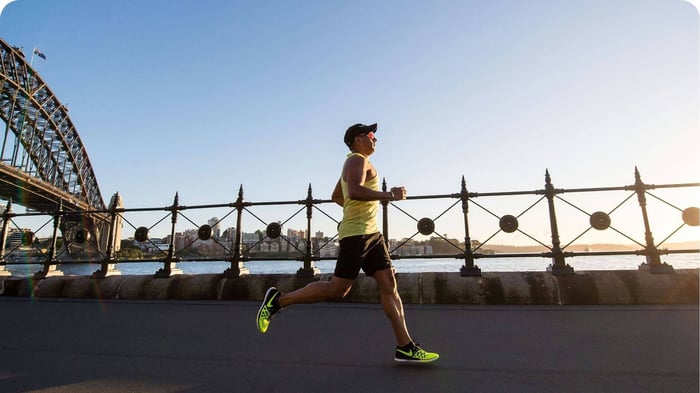
His method — the Run Walk Run method, or “Jeffing” as his followers call it — was elegantly simple. Take planned walking breaks during training and races. Adjust the ratio based on your body, your pace, your needs. Keep moving. He championed this at a time when running culture said the only acceptable pace was faster, and the only acceptable response to fatigue was to push through it.
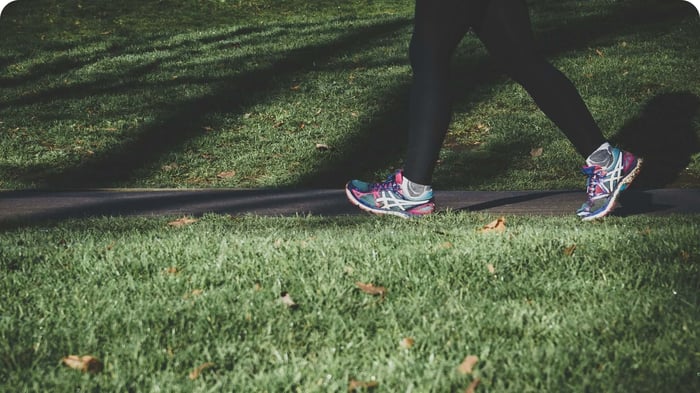 Planned walk breaks are the foundation of the Run Walk Run method.
Planned walk breaks are the foundation of the Run Walk Run method.Why the Run Walk Run Method Works
His insight was biomechanical as much as psychological. Continuous impact compounds. Knees, Achilles, calves, plantar fascia — they all accumulate stress with every mile, and when you never give that tissue a recovery window, breakdown follows. A one-minute walk break every eight minutes doesn't feel like much. Over 26 miles, it can mean the difference between crossing the finish line and calling someone for a ride at mile 22.
When I read about Galloway, I thought about the one and only marathon I ever ran. I was a soccer player growing up — my body understood lateral cuts and burst sprints, but … not sustained long-distance pounding.
When I decided to take on a marathon in my early 20s, I trained hard and ignored everything my knees were telling me in the final weeks. A few weeks before race day, I was in a doctor's office getting a cortisol shot because I couldn't stand the idea of not finishing after everything I'd put in. I crossed the finish line. And yes, knee surgery followed in my early 30s.
Galloway was already teaching a better way when I was in high school. The problem was the culture hadn't caught up. An entire generation of athletes in the 80s and 90s — soccer kids, baseball players, weekend warriors training for their first race — grew up inside a sports culture that treated rest as weakness and walking as failure. No pain, no gain was a phrase and the operating system. And I’m pretty sure plenty of us paid for it later, in doctors' offices and on the operating table, convinced we'd just been unlucky rather than undereducated.
I didn't have the language for what Galloway was already teaching: that smart structure is how you finish things, and keep finishing them, for decades. The walk break isn't a concession. It's a strategy. It's the difference between one marathon in your 20s and 230 marathons across eight decades.
Galloway once walked through every water station during a Houston marathon and ran a faster time than he'd clocked in previous all-out races. His philosophy wasn't about doing less. It was about doing it longer — and understanding that your body is the asset you're protecting, not the obstacle you're overcoming.
When you start treating movement like something you maintain instead of something you survive, the decisions look different. You warm up because it matters, not because you have five extra minutes. You take the walk break because the next ten miles depend on it. You wear the knee sleeve on the long run, not just when something already hurts.
The running community is full of tributes to Galloway right now, and most of them say some version of the same thing: he made me believe I could do this. That's a rare kind of legacy for an Olympian — not a medal, but a permission slip. Millions of people who never saw themselves as runners finished races because he told them that walking wasn't quitting.
He was right. And he ran 230 marathons to prove it.
If his approach resonates with you — the idea that proactive care keeps you in the game longer — that same philosophy is built into how we design GO knee and calf sleeves: consistent support during training, not just when something already hurts.
How to Use the Run Walk Run Method in Your Training
The Run Walk Run method is simple in theory and highly customizable in practice. Instead of running continuously, you alternate structured running intervals with planned walking breaks.
A beginner might run for 30 seconds and walk for 30 seconds.
An experienced runner might run for eight minutes and walk for one.
The key is that the walk break is scheduled — not reactive. You don’t wait until you’re exhausted. You build recovery into the structure.
Over time, this approach:
Reduces cumulative joint stress
Lowers muscular fatigue
Improves endurance consistency
Allows for higher overall mileage with fewer setbacks
The goal isn’t to run less. It’s to run longer — across miles, seasons, and decades.
FAQs
What is the Run Walk Run method?
The Run Walk Run method is a structured training approach that alternates timed running intervals with planned walking breaks. Instead of running continuously, runners schedule recovery into their workouts to reduce cumulative stress and improve endurance consistency.
Who should use the Run Walk Run method?
The Run Walk Run method works for beginners training for their first race, experienced runners aiming to reduce injury risk, and athletes returning from time off. The intervals can be customized based on pace, fitness level, and goals.
Does walking during a race slow you down?
Not necessarily. Many runners using the Run Walk Run method maintain faster overall race times because early walk breaks reduce fatigue and preserve form in later miles.
What is “Jeffing”?
“Jeffing” is a nickname for the Run Walk Run method, referring to Jeff Galloway’s approach of alternating running and walking intervals.
How long should my run and walk intervals be?
Intervals vary depending on experience. Beginners might start with 30 seconds of running and 30 seconds of walking. More experienced runners might use ratios like 8 minutes running and 1 minute walking. The key is scheduling the walk break before fatigue sets in.
Does the Run Walk Run method reduce injury risk?
By incorporating planned recovery into training, the method helps manage cumulative joint and muscle stress. Many runners find it supports long-term durability and consistency.
Should I use supportive gear with the Run Walk Run method?
The Run Walk Run method focuses on managing cumulative stress through structured recovery. Many runners also incorporate supportive gear — such as compression sleeves or joint support — to help improve circulation, reduce muscle vibration, and support consistency during training. The key is using support proactively as part of a long-term strategy, not only after discomfort appears.
Keep Moving for Decades, Not Just Miles
Jeff Galloway’s Run Walk Run method is built on one simple idea: reduce cumulative stress so you can keep showing up.
Support works the same way.
When you’re managing load intentionally — building recovery into your training instead of waiting for pain — consistent joint and muscle support becomes part of the structure, not a reaction.
Our GO sleeves are designed around that same philosophy.
GO Knee Sleeve
Support the joint you’re protecting, not just the pain you’re chasing.
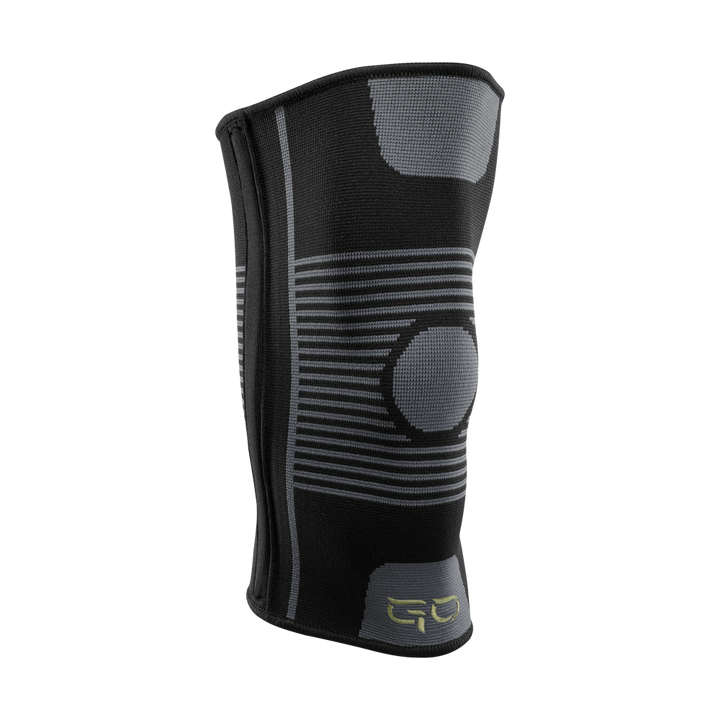
Long runs, walk breaks, and interval training all place repetitive load through the knee. Our knee sleeves provide graduated compression and built-in kinesiology strips to stimulate your body’s natural ability to recover and heal before, during, and after activity.
Reduce cumulative joint stress
Improve circulation during long sessions
Support patellar tracking
Promote recovery between workouts
GO Kinesiology + Compression Knee Sleeve
$89.95
Don’t let knee pain sabotage your plans! Reduce pain, swelling, and soreness in and around your knee—and accelerate your body’s ability to recover and rebound so you can keep moving. Unlike compression sleeves which just compress, GO Sleeves® Knee Sleeves… Read More
GO Calf Sleeves
Support the tissue that absorbs every stride.
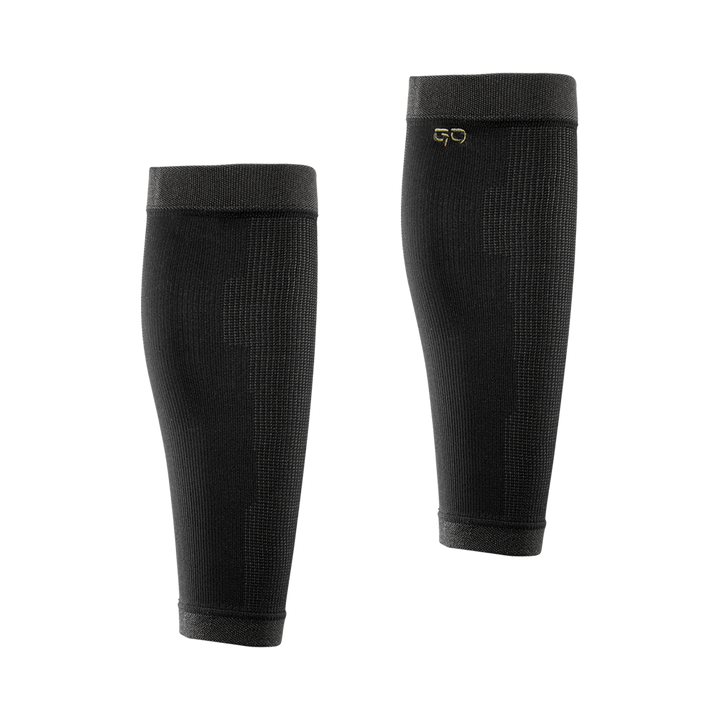
The calves and Achilles take on constant impact — especially during longer efforts. Go Sleeves offers the world’s only compression sleeves with built-in kinesiology strips to secure, correct, and support key ligaments, tendons, and muscles in and around your calf and shin.
Improve blood flow
Reduce muscle vibration
Minimize fatigue during extended runs
Support recovery post-training
GO Kinesiology + Compression Calf Sleeves
$99.95
Just pull them on, and off you go! GO Sleeves® Calf Sleeves are the world’s only compression sleeves with built-in kinesiology strips to secure, correct, and support key ligaments, tendons, and muscles in and around your calf and shin. Unlike… Read More
Explore the Full Movement Care Collection
Jeff Galloway built recovery into motion. The Run Walk Run method wasn’t about doing less — it was about structuring training so the body could keep adapting.
Movement care works the same way. It’s proactive support. Load management. Consistency built into the plan — not added after something breaks.
Shop All Movement Care Products
Related Resources
Continue Learning:
- Marathon Recovery: How to Recover Faster and Train Stronger Between Runs
- Return to Sport After Injury: Evidence-Based Protocols That Prevent Reinjury
- Proprioception and Aging
Daily Movement Care Basics: The 5-Minute Foundation Every Active Person Needs
Medical Disclaimer: The information provided in this article is for educational purposes only and does not constitute medical advice, diagnosis, or treatment. Always seek the advice of your physician or other qualified health provider with any questions you may have regarding a medical condition or injury. Never disregard professional medical advice or delay in seeking it because of something you have read on this website.